The Green Evolution: Shaping Tomorrow’s Tech Through Sustainable Manufacturing
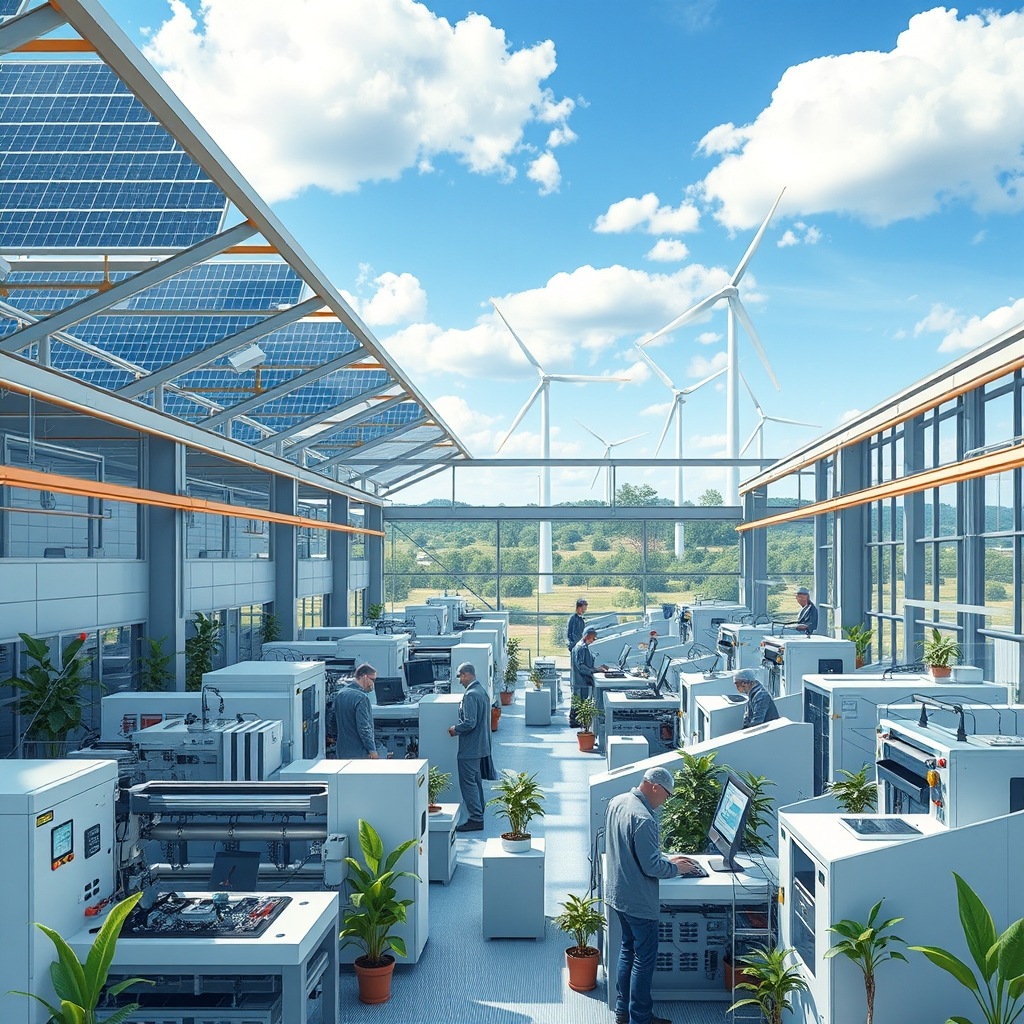
In the heart of a bustling tech hub, a revolution is quietly unfolding. It’s not about the latest gadget or the fastest processor, but about how these innovations are brought to life. Welcome to the world of sustainable tech manufacturing, where the future is being crafted with a green touch.
Circular Design Processes: The New Norm
Gone are the days when products were designed with a linear lifecycle in mind—manufacture, use, dispose. Today, circular design processes are taking center stage. This approach ensures that products are designed with their entire lifecycle in mind, from creation to end-of-life. It’s about creating products that can be easily disassembled, repaired, and recycled, reducing waste and conserving resources.
Green Electronics Production: A Necessity, Not a Luxury
Green electronics production is no longer a niche concept but a necessity. It involves minimizing the environmental impact at every stage of the production process, from sourcing raw materials to manufacturing and distribution. This includes using renewable energy sources, reducing water usage, and minimizing carbon emissions.
Renewable Energy Integration: Powering the Future
Renewable energy integration is a cornerstone of sustainable tech manufacturing. By harnessing the power of the sun, wind, and other renewable sources, manufacturers can significantly reduce their carbon footprint. This not only benefits the environment but also makes economic sense, as renewable energy costs continue to decrease.
Ethical Material Sourcing: The Foundation of Sustainability
Ethical material sourcing is crucial for sustainable tech manufacturing. It involves ensuring that raw materials are sourced responsibly, with minimal environmental impact and respect for human rights. This includes using recycled materials, sourcing from suppliers with strong environmental and social standards, and avoiding materials that contribute to deforestation or conflict.
Closed Loop Manufacturing: The Circular Economy in Action
Closed loop manufacturing is a key component of the circular economy. It involves designing products so that they can be easily disassembled and their components reused or recycled. This not only reduces waste but also conserves resources and creates a more sustainable supply chain.
Low Carbon Tech Prototyping: Innovating Responsibly
Low carbon tech prototyping is about innovating responsibly. It involves using materials and processes that minimize carbon emissions during the prototyping phase. This includes using recycled materials, reducing energy consumption, and minimizing waste.
Eco Conscious Engineering: Designing for the Planet
Eco conscious engineering is about designing products with the planet in mind. It involves considering the environmental impact of every design decision, from material selection to manufacturing processes. This includes using recycled materials, reducing energy consumption, and minimizing waste.
Waste Reduction Strategies: Every Bit Counts
Waste reduction strategies are essential for sustainable tech manufacturing. It involves minimizing waste at every stage of the production process, from design to manufacturing and distribution. This includes using recycled materials, reducing packaging, and optimizing production processes to minimize waste.
Life Cycle Assessment: Understanding the Impact
Life cycle assessment is a crucial tool for understanding the environmental impact of products. It involves evaluating the impact of a product from cradle to grave, including raw material extraction, manufacturing, use, and disposal. This helps manufacturers identify areas for improvement and make more sustainable design decisions.
Transparent Green Supply: Building Trust
Transparent green supply is about building trust with customers. It involves being open and honest about the environmental impact of products and the steps taken to minimize it. This includes providing detailed information about material sourcing, manufacturing processes, and end-of-life disposal options.
Sustainable Component Innovation: The Future of Tech
Sustainable component innovation is the future of tech. It involves developing new components that are more sustainable, from materials to manufacturing processes. This includes using recycled materials, reducing energy consumption, and minimizing waste.
Resource Efficient Production: Doing More with Less
Resource efficient production is about doing more with less. It involves optimizing production processes to minimize resource consumption and waste. This includes using recycled materials, reducing energy consumption, and minimizing water usage.
Bio Based Tech Materials: Nature’s Gift
Bio based tech materials are nature’s gift to sustainable tech manufacturing. They involve using materials derived from renewable sources, such as plants and algae. These materials are not only more sustainable but also often have unique properties that can enhance product performance.
Climate Positive Manufacturing: Going Beyond Neutral
Climate positive manufacturing is about going beyond neutral. It involves not just reducing carbon emissions but actively removing carbon from the atmosphere. This includes using renewable energy sources, planting trees, and investing in carbon capture technologies.
Energy Optimized Fabrication: Efficiency at Its Best
Energy optimized fabrication is about efficiency at its best. It involves using manufacturing processes that minimize energy consumption. This includes using renewable energy sources, optimizing production processes, and minimizing waste.
Minimalist Tech Design: Less is More
Minimalist tech design is about the philosophy of ‘less is more.’ It involves designing products that are simple, elegant, and functional, with a focus on sustainability. This includes using recycled materials, reducing energy consumption, and minimizing waste.
Recyclable Product Architecture: Designing for the Future
Recyclable product architecture is about designing for the future. It involves creating products that can be easily disassembled and their components reused or recycled. This not only reduces waste but also conserves resources and creates a more sustainable supply chain.
Conscious Innovation Workflows: The Path Forward
Conscious innovation workflows are the path forward for sustainable tech manufacturing. It involves integrating sustainability into every stage of the innovation process, from ideation to commercialization. This includes using recycled materials, reducing energy consumption, and minimizing waste.
As we look to the future, the path forward is clear. Sustainable tech manufacturing is not just a trend but a necessity. It’s about creating products that are not only innovative and functional but also kind to the planet. By embracing circular design processes, green electronics production, renewable energy integration, ethical material sourcing, and other sustainable practices, we can shape a future where technology and sustainability go hand in hand. It’s a future where every product tells a story of innovation, responsibility, and care for the planet. And it’s a future that is within our reach, if we choose to embrace it.