
Green Hydrogen: The Next Frontier in Clean Energy
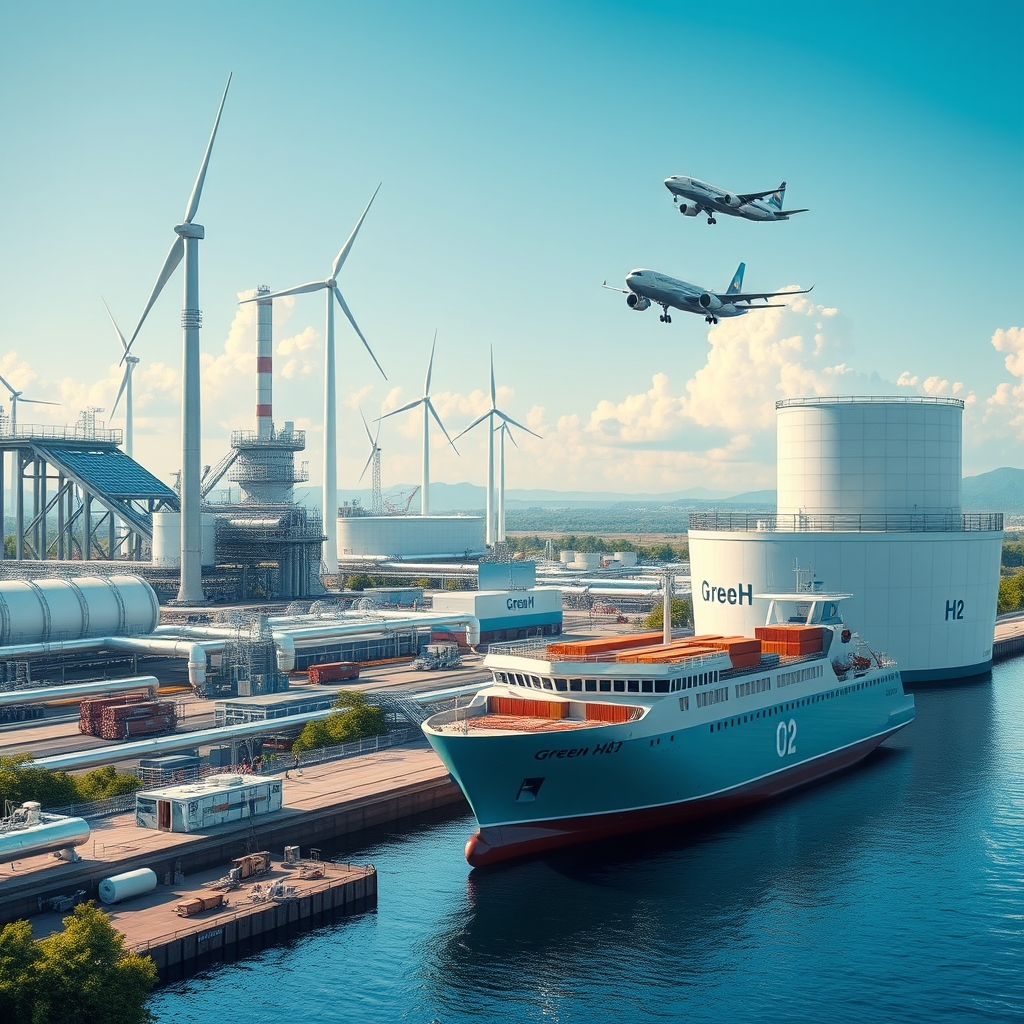
As the world grapples with the urgent need to transition away from fossil fuels, green hydrogen has emerged as a beacon of hope in the quest for sustainable energy solutions. Unlike conventional hydrogen, which is derived from natural gas and contributes to carbon emissions, green hydrogen is produced using renewable energy sources like wind and solar power. This makes it a truly zero-emission fuel, capable of revolutionizing industries that have long been considered difficult to decarbonize.
The Production of Green Hydrogen
Green hydrogen is generated through a process called electrolysis, where electricity from renewable sources splits water into hydrogen and oxygen. This method is not only clean but also highly efficient when powered by surplus renewable energy. Advances in electrolysis technology, such as proton exchange membrane (PEM) and alkaline electrolyzers, are making the process more scalable and cost-effective. Countries like Germany, Australia, and Saudi Arabia are already investing heavily in large-scale green hydrogen projects, signaling a shift toward a hydrogen-based economy.
Electrolyzer Innovations
Recent breakthroughs in electrolyzer efficiency are driving down costs and improving performance. For instance, high-temperature electrolysis, which uses waste heat from industrial processes, can achieve efficiencies of up to 80%. Meanwhile, research into new catalysts, such as platinum-free alternatives, is further reducing the financial barriers to green hydrogen production. These innovations are critical for making green hydrogen competitive with fossil fuel-based alternatives.
Storage and Transportation Challenges
While green hydrogen holds immense promise, its widespread adoption faces hurdles in storage and transportation. Hydrogen is a lightweight gas with low energy density, meaning it requires high-pressure tanks or cryogenic temperatures to store efficiently. Liquid organic hydrogen carriers (LOHCs) and ammonia are emerging as viable solutions for long-distance transport, as they can be stored and shipped more easily than pure hydrogen. However, these methods add complexity and cost to the supply chain, necessitating further innovation.
Infrastructure Development
Building a robust hydrogen infrastructure is essential for its success. This includes pipelines for domestic distribution, specialized ships for international trade, and refueling stations for hydrogen-powered vehicles. The European Union, for example, has outlined a comprehensive hydrogen strategy that includes the development of a pan-European hydrogen pipeline network by 2030. Similarly, countries like Japan and South Korea are investing in hydrogen import terminals to secure their energy futures.
Decarbonizing Hard-to-Abate Industries
Green hydrogen’s true potential lies in its ability to decarbonize sectors where electrification is not feasible. Industries like steel, shipping, and aviation are among the largest emitters of greenhouse gases, and green hydrogen offers a pathway to reducing their carbon footprints.
Steel Production
Traditional steelmaking relies on coal to reduce iron ore, a process that emits vast amounts of CO2. Green hydrogen can replace coal as a reducing agent, producing water vapor instead of carbon dioxide. Companies like SSAB in Sweden have already demonstrated this technology, producing the world’s first fossil-free steel using green hydrogen. As the cost of green hydrogen decreases, this method could become the standard for sustainable steel production.
Shipping and Aviation
The shipping and aviation industries are exploring green hydrogen and its derivatives, such as ammonia and synthetic fuels, to replace heavy fuel oil and kerosene. For instance, ammonia can be used directly in modified ship engines or cracked back into hydrogen for fuel cells. Meanwhile, synthetic kerosene, produced by combining green hydrogen with captured CO2, offers a carbon-neutral alternative for aviation. These developments are crucial for achieving the International Maritime Organization’s goal of halving shipping emissions by 2050.
Policy Support and Economic Viability
Governments and international organizations are playing a pivotal role in accelerating the adoption of green hydrogen. Subsidies, tax incentives, and carbon pricing mechanisms are making green hydrogen more economically attractive. The European Green Deal, for example, aims to produce 10 million tons of green hydrogen annually by 2030, backed by significant public and private investment. Similarly, the U.S. Inflation Reduction Act includes tax credits for clean hydrogen production, further boosting its competitiveness.
Market Growth and Investment
The global green hydrogen market is projected to grow exponentially in the coming decades. According to the International Energy Agency (IEA), green hydrogen could meet up to 10% of global energy demand by 2050. This growth is attracting billions of dollars in investment from energy giants like Shell, BP, and Siemens Energy, as well as startups focused on hydrogen innovation. As economies of scale drive down costs, green hydrogen is poised to become a cornerstone of the clean energy transition.
While challenges remain, the momentum behind green hydrogen is undeniable. From powering industries to fueling transportation, its versatility and zero-emission profile make it a game-changer in the fight against climate change. As technology advances and policies align, green hydrogen could very well redefine the energy landscape, offering a sustainable future for generations to come. The journey has just begun, and the possibilities are as vast as the renewable resources that power it.


