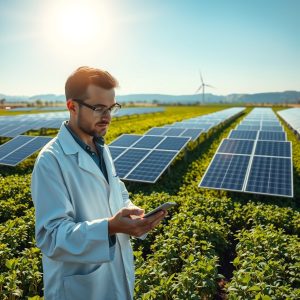
The Solar-Bio Nexus: How Synthetic Biology and Photovoltaics Are Crafting the Next Era of Self-Sustaining Energy Ecosystems
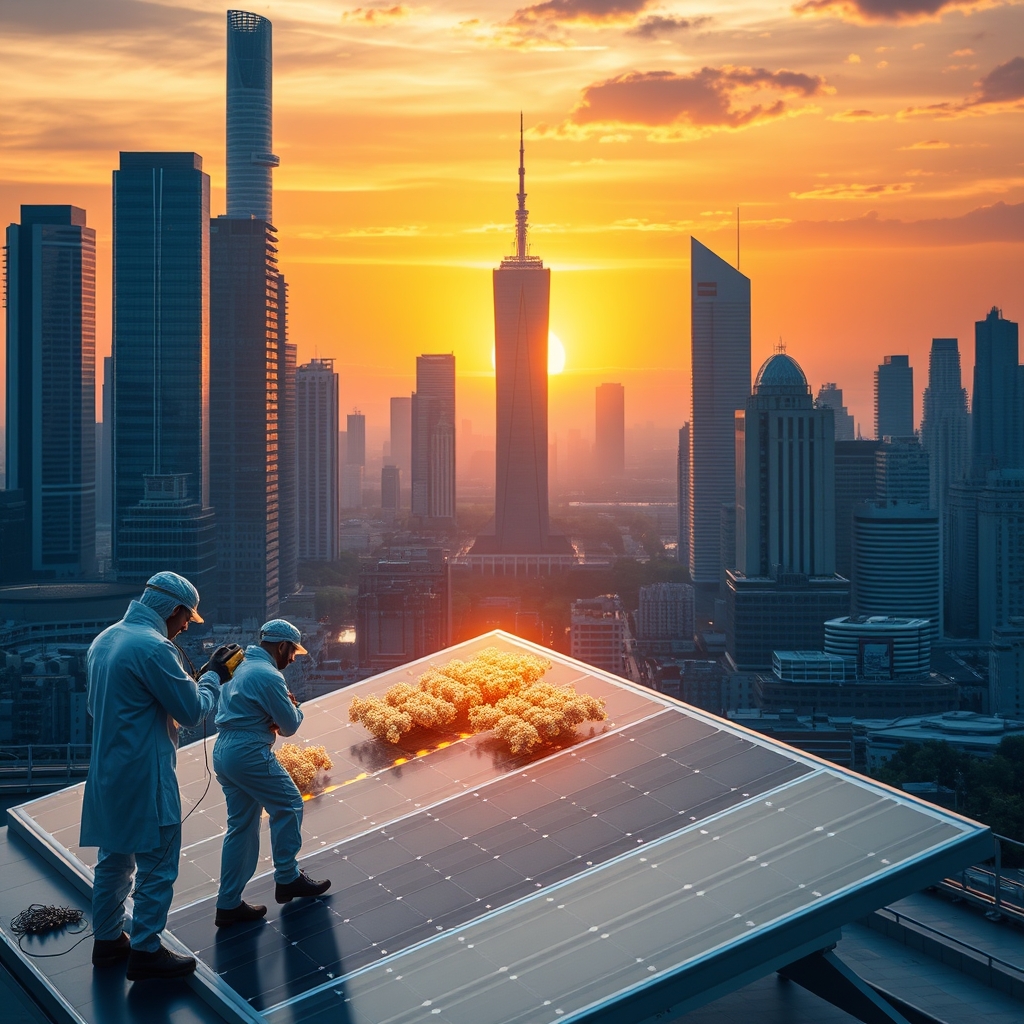
In the heart of a bustling city, where skyscrapers pierce the sky and the hum of activity is a constant companion, a quiet revolution is unfolding. It’s not the kind of revolution that makes headlines with explosions and chaos, but one that’s happening at the molecular level, quietly transforming the way we think about energy. This revolution is the marriage of synthetic biology and photovoltaics, and it’s set to redefine the future of renewable energy.
The Birth of a New Era
The story begins with the sun, our most reliable and abundant energy source. Photovoltaic technology, which converts sunlight into electricity, has been around for decades. However, the efficiency of traditional solar panels has been a constant point of discussion. Enter synthetic biology, a field that combines the precision of engineering with the complexity of living systems.
Synthetic Biology: The Alchemist’s Craft
Synthetic biology is like an alchemist’s craft, where scientists manipulate living organisms to perform tasks that were once thought to be the domain of non-living systems. In the context of solar energy, synthetic biologists are engineering microorganisms to enhance the efficiency of photovoltaic systems. These bioengineered organisms can perform tasks such as capturing sunlight more efficiently, converting it into chemical energy, and storing it for later use.
Photovoltaics: The Sun’s Powerhouse
Photovoltaics, on the other hand, is the process of converting light into electrical energy using semiconducting materials that exhibit the photovoltaic effect. Traditional solar panels are made up of silicon cells, which have a certain level of efficiency. However, the integration of synthetic biology into photovoltaic systems is set to push this efficiency to new heights.
The Solar-Bio Nexus: A Symbiotic Relationship
The marriage of synthetic biology and photovoltaics is creating a symbiotic relationship that’s set to redefine the energy landscape. This nexus, or intersection, is where the two fields’ strengths are combined to create something greater than the sum of its parts.
Enhanced Efficiency
One of the key benefits of this marriage is enhanced efficiency. Bioengineered organisms can capture a broader spectrum of sunlight, including wavelengths that traditional solar panels can’t. This means that more of the sun’s energy is being harnessed and converted into electricity.
Improved Energy Storage
Another significant advantage is improved energy storage. Synthetic biology allows for the creation of microorganisms that can store energy in the form of chemical bonds. This stored energy can then be released on demand, providing a reliable source of power even when the sun isn’t shining.
Sustainability
Sustainability is at the heart of this revolution. By harnessing the power of the sun and using bioengineered organisms to enhance the efficiency and storage of this power, we’re creating a more sustainable energy ecosystem. This ecosystem is self-sustaining, with the organisms feeding on waste products and excreting energy-rich compounds, creating a closed-loop system.
The Future of Energy
The future of energy is bright, and it’s powered by the sun and the ingenuity of scientists. The marriage of synthetic biology and photovoltaics is not just a fleeting trend, but a paradigm shift that’s set to redefine the way we think about and use energy. As we continue to explore and harness the power of the sun, we’re not just creating a more sustainable energy ecosystem, but also paving the way for a brighter, cleaner future.