
Revolutionizing Tech: The Path to Sustainable Manufacturing
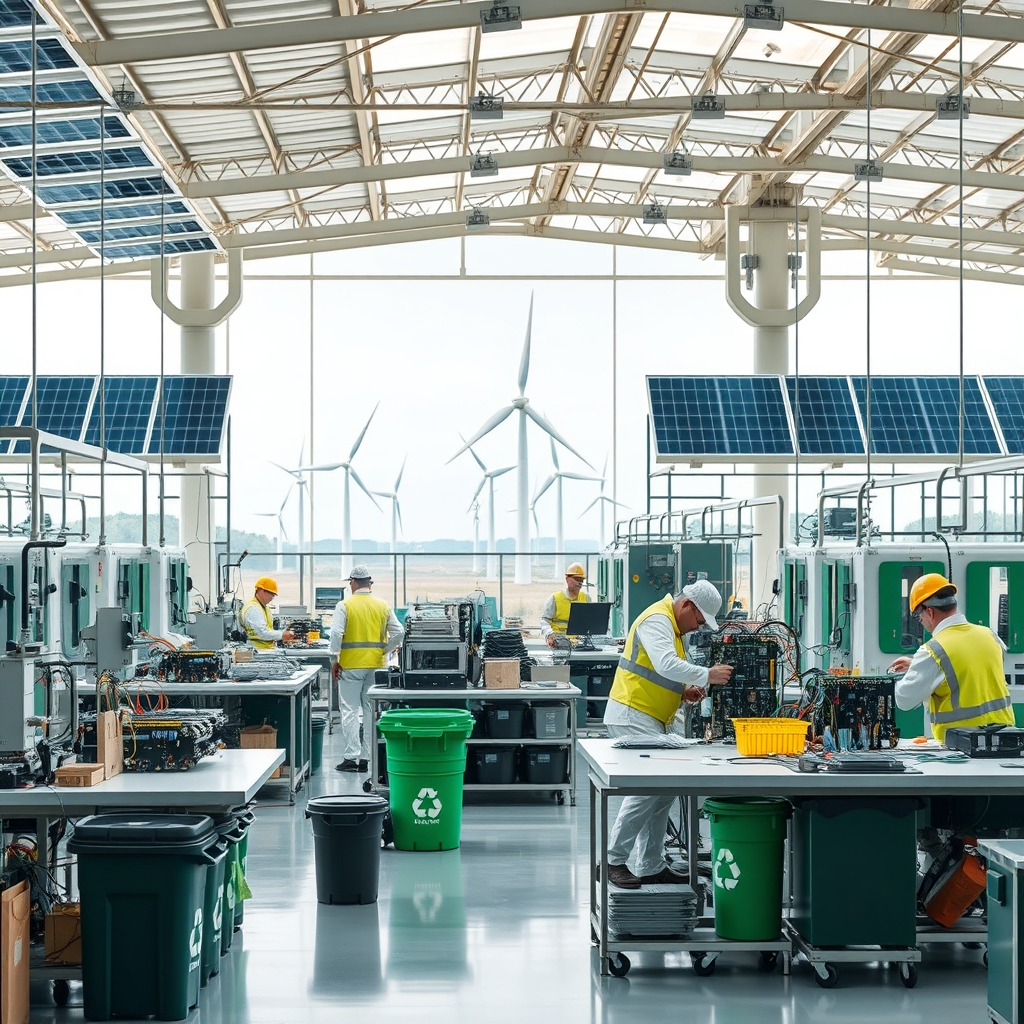
In the rapidly evolving world of technology, the pursuit of innovation often comes at a significant environmental cost. However, a paradigm shift is underway, driven by the principles of sustainable tech manufacturing. This movement is not just about creating greener products but about rethinking the entire lifecycle of technology from design to disposal.
Circular Design Processes: The Foundation of Sustainable Tech
At the heart of sustainable tech manufacturing lies the concept of circular design processes. Unlike traditional linear models, which follow a ‘take, make, waste’ approach, circular design aims to eliminate waste and the continual use of resources. This is achieved through strategies such as closed loop manufacturing, where products are designed with end-of-life in mind, ensuring that materials can be easily recycled or repurposed.
Green Electronics Production: A Holistic Approach
Green electronics production goes beyond just reducing carbon emissions. It encompasses a holistic approach that includes ethical material sourcing, renewable energy integration, and waste reduction strategies. By sourcing materials ethically, manufacturers can ensure that their supply chains are free from exploitation and environmental degradation. Integrating renewable energy into production processes further reduces the carbon footprint, while waste reduction strategies minimize the environmental impact of manufacturing.
Low Carbon Tech Prototyping: The First Step Towards Sustainability
Prototyping is a critical phase in the development of new technologies. By adopting low carbon tech prototyping methods, companies can significantly reduce their environmental impact from the very beginning. This involves using eco-conscious engineering practices, such as resource-efficient production and the use of bio-based tech materials. These materials, derived from renewable sources, offer a sustainable alternative to traditional petroleum-based plastics.
Life Cycle Assessment: Measuring Sustainability
Life cycle assessment (LCA) is a powerful tool for measuring the environmental impact of products throughout their lifecycle. By conducting LCAs, manufacturers can identify areas for improvement and make data-driven decisions to enhance sustainability. This includes evaluating the environmental impact of raw material extraction, manufacturing processes, product use, and end-of-life disposal.
Transparent Green Supply: Building Trust Through Transparency
Transparency is key to building trust in sustainable tech manufacturing. A transparent green supply chain ensures that consumers are informed about the environmental and social impacts of the products they purchase. This involves providing detailed information about material sourcing, manufacturing processes, and the environmental credentials of the final product. By embracing transparency, manufacturers can foster a deeper connection with consumers who are increasingly concerned about sustainability.
In conclusion, the journey towards sustainable tech manufacturing is complex and multifaceted. It requires a commitment to circular design, green electronics production, low carbon prototyping, and transparent supply chains. By embracing these principles, the tech industry can lead the way in creating a more sustainable future. The time for action is now, and the potential for positive change is immense. As consumers, we have the power to drive this transformation by demanding more from the products we use and the companies we support. Together, we can revolutionize the tech industry and pave the way for a greener, more sustainable world.


