Bioengineering’s Bright Future: Catalyzing Clean Energy Innovation
The relentless march of technological progress is often perceived as a series of distinct, albeit interconnected, fields. We speak of biotechnology, of renewable energy, of smart grids, and of advanced materials as separate domains. Yet, beneath the surface of these disciplines, a powerful synergy is emerging, one that promises to redefine our approach to sustainability and energy independence. At the heart of this transformation lies bioengineering, a field that, by understanding and manipulating the fundamental building blocks of life, is unlocking unprecedented potential in green technology and climate solutions.
The Living Battery: Bio-Inspired Energy Storage
One of the most significant hurdles in the widespread adoption of renewable energy sources like solar and wind is their inherent intermittency. The sun doesn’t always shine, and the wind doesn’t always blow, necessitating robust and efficient energy storage systems. Traditional battery technologies, while improving, often face limitations in terms of cost, lifespan, and environmental impact. This is where bioengineering is stepping in, drawing inspiration from nature’s own incredibly efficient energy storage mechanisms.
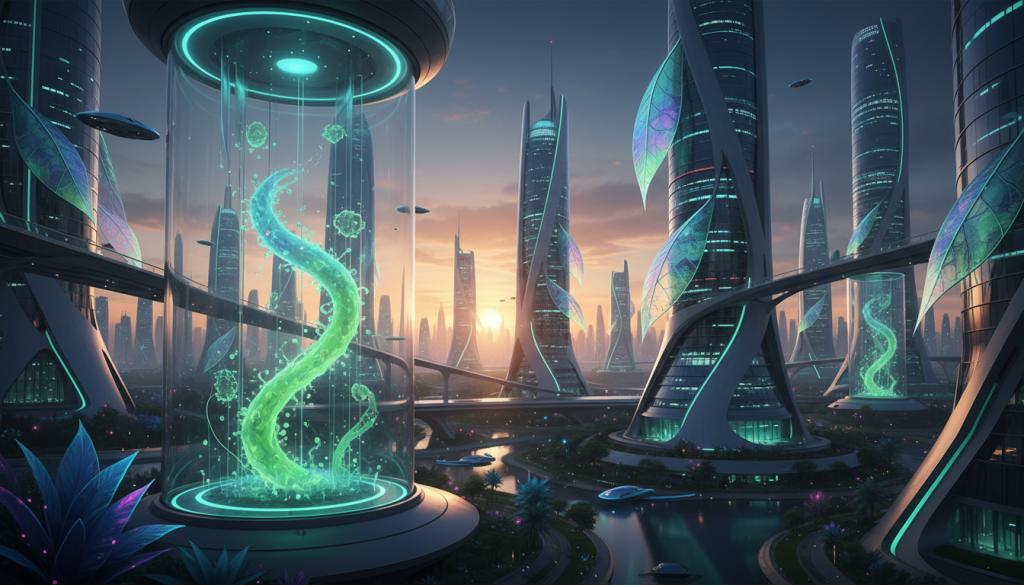
Consider the humble bacterium. Over millennia, certain microorganisms have evolved sophisticated biochemical pathways to store and release energy with remarkable efficiency. Bioengineers are now working to harness these natural processes. Through genetic engineering and synthetic biology, researchers are developing novel bio-batteries that utilize living cells or bio-derived materials to store electrical energy. These ‘living batteries’ could offer a more sustainable, biodegradable, and potentially cheaper alternative to conventional lithium-ion batteries. Imagine vast arrays of engineered microbes, quietly storing excess solar energy during the day and releasing it on demand at night, all within contained bioreactors. This approach not only addresses the storage challenge but also offers a path towards truly circular energy systems, where spent biological components can be safely recycled.
Bio-Integrated Solar Technologies: Beyond Silicon
Solar energy is undeniably the cornerstone of a clean energy future, but current photovoltaic technology, primarily silicon-based, has its limitations. Efficiency gains are becoming incremental, and manufacturing processes can be energy-intensive and reliant on rare earth minerals. Bioengineering is pushing the boundaries of solar technology by looking to nature’s most efficient solar collectors: plants. Photosynthesis, the process by which plants convert sunlight into chemical energy, is a marvel of natural engineering. While replicating it perfectly is a monumental task, bioengineers are making significant strides in developing bio-integrated solar cells.
This involves using bio-inspired materials, such as proteins or light-harvesting pigments found in algae and bacteria, to create new types of solar cells. These ‘bio-photovoltaics’ could be more flexible, transparent, and even self-repairing than their silicon counterparts. Furthermore, by engineering specific biological components, researchers aim to capture a broader spectrum of sunlight and convert it more efficiently. This could lead to solar panels that are not only more performant but also aesthetically versatile, capable of being integrated into windows, fabrics, or even the very structure of buildings, blurring the lines between energy generation and architectural design.
Bioremediation and Sustainable Materials for a Greener Grid
The transition to a clean energy economy also requires a fundamental shift in how we source and manage materials. The production of renewable energy infrastructure, from wind turbines to solar panels, often involves resource-intensive manufacturing processes and can generate waste. Bioengineering offers solutions here too, particularly in the realm of bioremediation and the development of sustainable materials.
Engineered microorganisms can be designed to break down pollutants and toxic byproducts from manufacturing processes, cleaning up industrial waste and reducing the environmental footprint of green technology production. Simultaneously, bioengineering is enabling the creation of novel, biodegradable materials from renewable biological sources, such as algae or agricultural waste. These materials could replace plastics and other petroleum-based products currently used in various components of energy systems, from insulation to structural elements. This bio-based approach not only reduces reliance on fossil fuels but also creates materials that can be composted or naturally degraded at the end of their lifecycle, contributing to a truly circular economy.
The Convergence: A Bio-Powered Future
The integration of bioengineering into the fabric of renewable energy technologies is not a distant dream; it is a rapidly unfolding reality. From creating more efficient and sustainable energy storage solutions inspired by microbial life to developing next-generation solar cells that mimic the elegance of photosynthesis, bioengineering is providing the innovative tools needed to accelerate our transition to a clean energy future. These advancements are not merely incremental improvements; they represent a paradigm shift, moving us towards a world where energy systems are not only sustainable but also harmonious with the natural world. As research continues to deepen our understanding of biological processes, we can expect even more revolutionary breakthroughs, paving the way for a truly bio-powered planet.