Electrical And Interconnection Solutions For Modern HVAC Systems
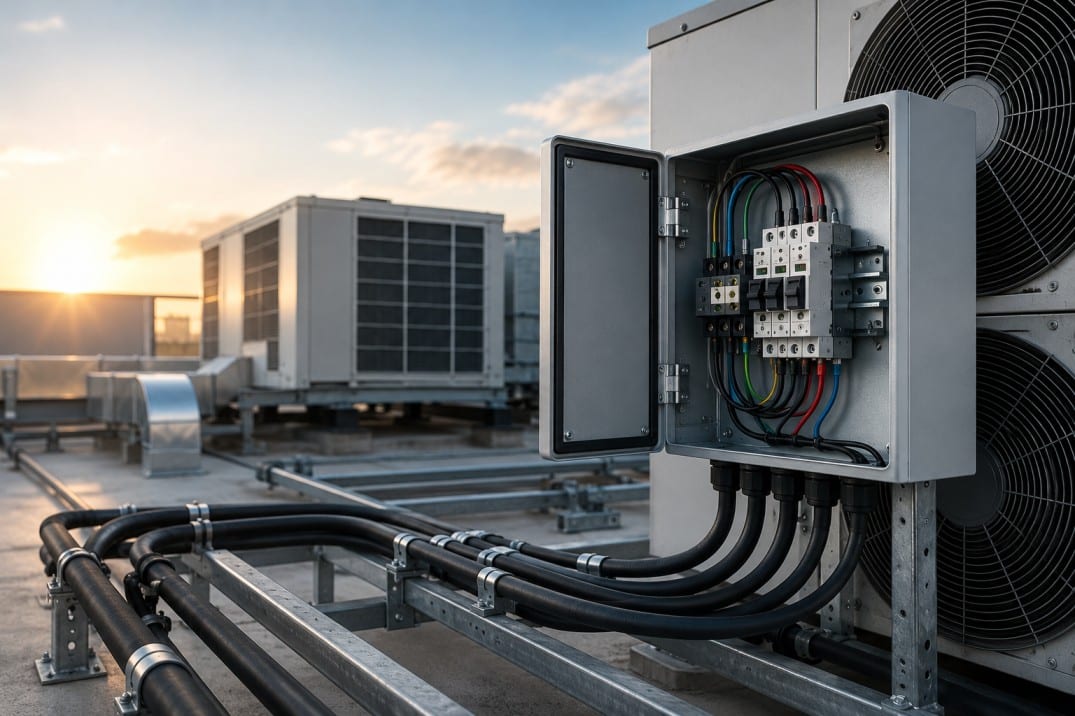
Switching is a key component for variable-speed compressors, electronics, and sensors. Relay contacts, connectors, terminals, and wire splices provide a reliable means of electrical connection for HVAC systems.
Modern HVAC systems contain components like compressors, motors, fans, heat exchangers, sensors, and electronics. Sensors detect temperature, pressure, humidity, and airflow, and electronics control the equipment and communicate with other systems.
Relays, connectors, terminals, PCB connectors, wire splices, and wiring harnesses serve as the means for transferring the electrical power and signals from circuit boards, sensors, actuators, and other subsystems. Component selection is done based on load, switching, signal requirements, space availability, and environment.
The HVAC electrical connections must be capable of carrying the high current that occurs during the startup of the compressor, switching, temperature variation, vibration, condensation, and moisture. Relays must be able to carry their respective loads, and connectors and terminals must have good contact.
The Electrical Demands Of Modern HVAC Systems
HVAC systems of today have variable-speed compressors, motor drives controlled electronically, sensors, connectivity, and automation. All these technologies impact power distribution, signal transmission, and component integration in air conditioners and heat pumps.
The output of variable-speed compressors and motor drives changes depending on the need for heating and cooling. Their electrical systems require power electronics and switches corresponding to appropriate voltage, current, temperature, and number of switching cycles.
Control panels control compressor speed and operation of motors and other equipment. Taking into account the increasing integration of processes in small devices, it is necessary that connector modules provide easy connection with external wiring. Wiring of sensors should avoid interference from adjacent power supply wiring.
Connectivity and automation ensure remote monitoring, diagnostics, planning, and energy management. Data from sensors and building needs can be taken into account for HVAC system control.
Managing Power And Loads Across HVAC Systems
HVAC systems require electricity to run compressors, fans, pumps, valves, actuators, and control circuits.
Compressor switching
Compressors are major electrical loads because their motors drive the refrigerant-compression process. A compressor motor may draw substantially more current at start-up than during normal operation. Select a relay or contactor based on both the starting and operating currents, as well as the switching frequency.
- PB298-ND and PB487-ND: The T92 Series two-pole power relays from TE Connectivity Potter & Brumfield Relays are rated 30 A per normally open contact at 277 VAC. With a DC coil and both poles switching one load, the relay is rated 110 locked-rotor amperes (LRA) / 25.3 full-load amperes (FLA), which TE states suits compressor loads up to 3.5 tons. AC-coil versions are rated lower, at 60 LRA / 14 FLA. The PB298-ND uses a 12 V DC coil, while the PB487-ND uses a 24 V AC coil and suits smaller compressor loads. The relays meet UL 508 and VDE spacing requirements, including 4 kV coil-to-contact dielectric strength
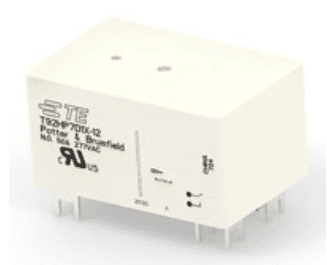
- 41-T92HP7D1X-24-ND: This TE Connectivity Potter & Brumfield Relays device has a 50 A contact rating (277 VAC, resistive), a DPST-NO configuration and a maximum switching voltage of 600 VAC. The 24 V DC coil must match the control supply voltage, and the coil uses a UL Class F insulation system. The relay supports a maximum switching load of 30,000 VA and has Class F coil insulation.
In this case, an HVAC controller monitors the temperature indoors and activates a relay that starts up the compressor when there is need for cooling. The compressor works by circulating the refrigerant that absorbs the heat from the room. When the desired temperature is attained, the controller deactivates the relay.
Switching other HVAC loads
In addition to the compressor, HVAC systems also have other electrical loads such as fans, pumps, valves, dampers, actuators, and motors. The fans help move air, the pumps move the fluids, the valves control the flow of fluids, the dampers control the flow of air, and the actuators control the movement of mechanical devices.
- PB1210-ND: The MSR general-purpose relay from TE Connectivity Potter & Brumfield Relays suits HVAC applications. It has a single-pole 8 A changeover (1 Form C) contact and a 12 V DC coil. Its AgSnO₂ contacts handle high inrush currents and carry a UL TV-4 rating for tungsten lamp loads. The relay provides 4 kV/8 mm coil-to-contact separation and reinforced insulation according to protection class II. It can operate at ambient temperatures up to 85 °C at 8 A, and its plastic materials comply with IEC 60335-1 requirements for domestic appliances.
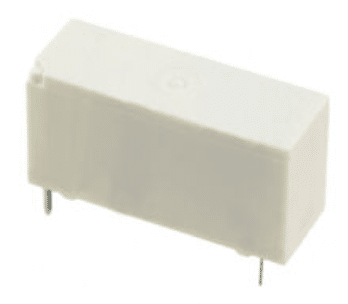
For example, the low-voltage HVAC control system can control the water valve actuator, which has an option of being open or closed to control the movement of fluid through it. The relay that will be used will depend on the operating voltage and current of the actuator, which could be different from that of the compressor motor. An example of a relay suitable for high in-rush currents would be useful here.
Building Reliable HVAC Wiring And Interconnections
Once the switching devices supply power to HVAC loads, wiring harnesses connect the system’s electrical components, including connectors, terminals and splices.
Connecting control and signal circuits
The HVAC wiring links the control circuits with sensors, actuators, fans, valves, displays, and other subsystems. With increasing miniaturisation of equipment and densification of wiring, the connectors have to ensure reliable electrical conductivity as well as mechanical strength. The use of twisted pair/shielded cables is advisable to eliminate electrical interference in those places where it is necessary.
- 17-1-2232979-2-ND: Rectangular connector housing from TE Connectivity AMP Connectors is a two-position plug with female socket contacts and a 2.00 mm pitch. It features a free-hanging, in-line mounting design, crimp contact termination, and a latch-holder fastening mechanism. The housing is made of natural-coloured thermoplastic insulation material and operates over a temperature range of −40 °C to 105 °C.
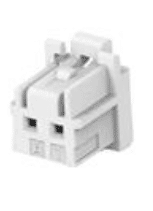
As one such example, the control harness could link the HVAC control system to a temperature sensor or a valve actuator. This two-position connector housing serves as an in-line connector linking the harness and the component.
Making wiring easier to assemble and service
The use of appropriate wire sizes, terminals, contact materials, and coating is vital in ensuring proper electrical connections. The terminals must be compatible in terms of size and shape to the terminal it is going to be mated with.
- A09050CT-ND/A09050TR-ND: The TE Connectivity AMP Connectors FASTON PIDG quick-disconnect terminal has a female brass contact with a tin finish and crimp termination for 18–22 AWG wires. It accepts a 2.79 mm × 0.51 mm tab. The terminal has red insulation, supports insulation diameters up to 3.43 mm, and operates at up to 105 °C and 300 V. Its copper sleeve supports the wire insulation and provides vibration resistance, while inner serrations improve electrical contact and tensile strength.
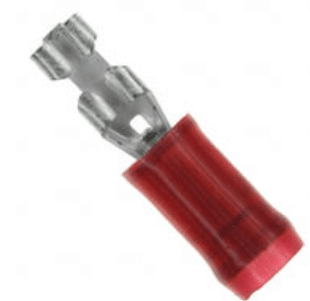
Such terminals serve as examples of the way that wire gauge and tab size influence the choice of terminals. A correct quick-disconnect terminal can be used by a technician to replace certain parts without cutting wires.
Splicing of wires in large HVAC wiring harnesses
In some cases, it is necessary to splice wires within large HVAC wiring harnesses in order to extend a run or connect branch circuits. When splicing wires with different gauges, one should select the splice approved for certain wire gauges.
- A124567-ND: The TE Connectivity AMP Connectors CoolSplice series wire splice connector is a fully insulated, two-entry butt splice designed for in-line wire connections. It supports the listed 12–14 to 14–16 AWG wire-gauge combinations and features step-up/step-down capability. Using insulation-displacement contact (IDC) technology, it eliminates the need to pre-strip wires.Its translucent blue and yellow housing helps identify the connector during assembly.
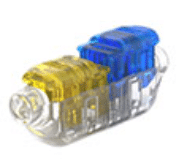
In an HVAC harness, a splice may join a larger-gauge wire to a wire supplying power to a compressor, fan, or other load. Selecting a splice suited to the wire gauge and current helps maintain connection reliability, while correct termination simplifies harness assembly.
Designing Connections For Compact And Harsh Environments
The connections of the HVAC system must have electrical stability even when there is limited PCB space and the presence of moisture, vibration and temperature fluctuations. Changes in temperature result in expansion and contraction of materials, while vibrations can loosen the connections or shift the terminals. Proper choice of components will ensure reliability.
Connection protection from moisture
Moisture condensation may form around evaporator coils and other cold surfaces if moisture-laden air touches them. Outdoor equipment and places where there are temperature changes are also subject to moisture formation. Moisture entering electrical parts or circuit boards will result in various faults.“The important distinction is that being weatherproof does not automatically make a component condensation-proof. Rooftop HVAC equipment needs protection against the actual conditions it will experience throughout its operating life, not merely the conditions under which it was tested in a factory”, said Rajeev YSR, Executive Director & CEO of ThunderPlus
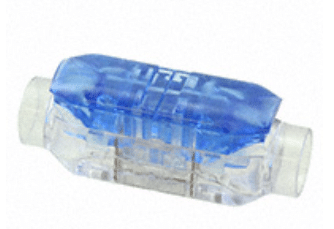
- A124765-ND: The CoolSplice series wire splice connector from TE Connectivity AMP Connectors is a fully insulated, two-entry, in-line butt splice for 18 AWG wire. It uses IDC termination with individual wire openings, and its gel filling seals the joint against moisture.It operates over a temperature range of −40 °C to 105 °C.
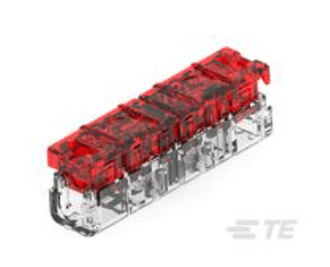
- 17-2378100-1-ND: The Compact Seal Splice wire connector from TE Connectivity AMP Connectors is a fully insulated, push-in butt splice designed for electrical power connections. It features two wire entries, an internal contact and two buttons that allow independent wire termination from either side. It supports 2.5 mm² (12–14 AWG) wire.
The following are examples of different types of connections that can be found in such products, but their effectiveness in wet environments will largely depend on how good the connector seals itself. For instance, connecting an outdoor fan motor will result in exposure to rain, condensation and temperature changes. A properly sealed connection needs to have the proper protection rating for that environment.
Connecting compact HVAC control boards
With more functions being integrated into HVAC devices within a smaller unit, the design of such a board will have to be planned with connecting these units in mind, without taking up too much space. Factors to consider include connector size, pin layout, and PCB design for control, power, and communication connections.
Also important is enough separation between different circuits on the board, depending on the type of electrical connection they require. The following is one way to choose board-level interconnections depending on the assembly process.
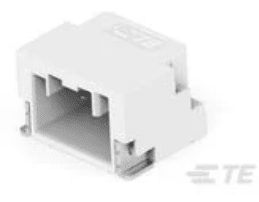
- 17-2360538-3TR-ND /17-2360538-3CT-ND/17-2360538-3DKR-ND: The Grace Inertia series board-to-wire header from TE Connectivity AMP Connectors features three positions, a 1.25 mm pitch and a right-angle, surface-mount design for compact PCB layouts. It has a single row of square male pins, a four-wall shroud, and a push-pull fastening mechanism. The connector operates from −40 °C to 105 °C and has a voltage rating of 50 VAC. Its latch secures the mated connector during assembly.
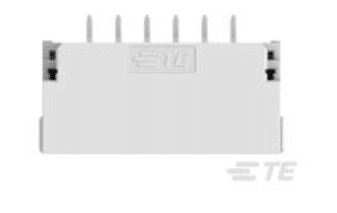
- 17-2360545-6TR-ND/17-2360545-6CT-ND/17-2360545-6DKR-ND: The Grace Inertia 1.5 series wire-to-board header from TE Connectivity AMP Connectors features six positions in a single row, a 1.50 mm mating pitch and a four-wall shroud, while the compact pitch suits board-to-board connections where PCB space is limited. Choose between these headers according to pitch, number of contacts and available space. Designed for right-angle surface mounting, it uses solder termination and includes solder-retention features. It supports a rated voltage of 50 VAC/DC and operates over a temperature range of −40 °C to 105 °C. Its push-pull fastening mechanism allows the connector to be mated and unmated, while the compact pitch suits board-to-board connections where PCB space is limited.
Choose among the following connector headers depending on the nature of the connection (board-to-wire or board-to-board) and available space and contacts.
Ensuring terminal position
Verify that each terminal is secured during the assembly of the connector to ensure that the wire is not able to move it. During inspection, check that the terminals are still in their right position.
- 17-2495492-2-ND and 17-2497469-2-ND: These terminal-position assurance (TPA) accessories from TE Connectivity AMP Connectors fit the QP 6.5 wire-to-board power connector, which is designed for HVAC equipment including air conditioners and water heaters. The TPA locks each terminal in position in the housing. The QP 6.5 connector comes in 2-, 4-, and 6-position versions with a 6.5 mm pitch, supports up to 10 A and 600 V, and accepts 22 AWG to 16 AWG wire.
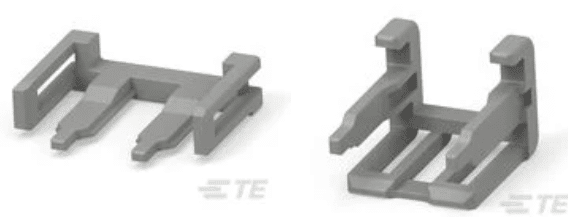
In one case, vibration caused by the fan motor and temperature changes might influence a wiring harness that joins the fan motor to the control board. When the terminal moves in the housing, the electrical connection is jeopardised. The terminal-position assurance in the QP 6.5 connector aids in maintaining the proper alignment during assembly and servicing; the internal lock prevents the unintended disconnection of the terminal.
“In commercial real estate, HVAC reliability is not merely an engineering concern; it is a business-performance imperative. Every electrical connection, sensor, and control system contributes to a building’s energy efficiency, operating cost, and occupant experience. The real measure of engineering excellence is not how efficiently a building operates on day one, but how reliably and economically it performs over its entire lifecycle”, said Rajeev YSR Executive Director & CEO of ThunderPlus
In addition, the introduction of inverter-driven compressors, electronic motors, and control boards in HVAC systems demands component selection based on electrical load and environmental exposure, among other factors.
| S.No. | DigiKey Part Number | Specs | Brand | Product Image | Direct Links |
| 1. | PB298-ND | General-purpose relay, DPST-NO (2 Form A), 12 V DC coil, chassis mount | TE Connectivity | 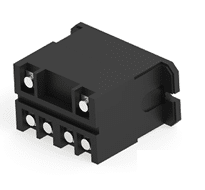 |
click here |
| 2. | PB487-ND | General-purpose relay, DPST-NO (2 Form A), 24 V AC coil, chassis mount | TE Connectivity | |
click here |
| 3. | 41-T92HP7D1X-24-ND | General-purpose relay, DPST-NO (2 Form A), 24 V DC coil, through-hole mounting | TE Connectivity | |
click here |
| 4. | PB1210-ND | General-purpose relay, SPDT (1 Form C), 12 V DC coil, through-hole mounting | TE Connectivity | |
click here |
| 5. | 17-1-2232979-2-ND | Two-position rectangular housing connector, plug, natural, 2.00 mm pitch | TE Connectivity | |
click here |
| 6. | A09050CT-ND/A09050TR-ND | 2.79 mm quick-connect female terminal, 18–22 AWG, crimp, insulated | TE Connectivity | |
click here |
| 7. | A124567-ND | Inline butt splice, individual openings, IDC, 12–14 to 14–16 AWG, translucent blue/yellow | TE Connectivity | |
click here |
| 8. | A124765-ND | Inline butt splice, individual openings, IDC, 18 AWG, translucent blue | TE Connectivity | |
click here |
| 9. | 17-2378100-1-ND | Butt splice, push-in, 2.5 mm², red | TE Connectivity | |
click here |
| 10. | 17-2360538-3TR-ND/17-2360538-3CT-ND/17-2360538-3DKR-ND | Three-position, right-angle surface-mount header, 1.25 mm pitch | TE Connectivity | |
click here |
| 11. | 17-2360545-6TR-ND/17-2360545-6CT-ND/17-2360545-6DKR-ND | Six-position, right-angle surface-mount connector header, 1.50 mm pitch | TE Connectivity | |
click here |
| 12. | 17-2495492-2-ND | Terminal-position assurance (TPA) accessory for QP 6.5 series connector | TE Connectivity | 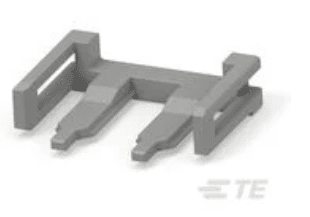 |
click here |
| 13. | 17-2497469-2-ND | Terminal-position assurance (TPA) accessory for QP 6.5 series connector | TE Connectivity | 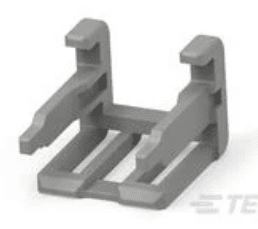 |
click here |