
Romanian solar and storage: What gets financed and built?
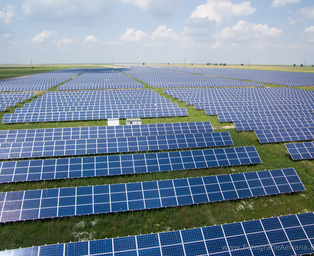
A Romanian solar project is offered for sale as “ready to build.” It has land rights, grid connection approval and a building permit. But what, exactly, is the buyer ready to build, when can the project export electricity, and which costs remain unresolved?
These questions deserve more attention as Romania attracts capital for solar and storage. The opportunity is real, but a project’s development status tells investors relatively little about the work still required to finance and deliver it.
The scale of development is striking. In its October 2026 update, Romania’s energy regulator, ANRE, reported 1,625 projects with valid grid connection approvals. Of those, 749 had both connection contracts and building permits. The figures cover renewable energy and storage projects with approved export capacity of at least 1 MW. They do not represent the number of solar plants under construction.
There is also evidence of substantial financing activity. In August, Econergy announced financing agreements totaling approximately €229 million ($250.6 million) for Părău 2, combining 342 MW of solar with 150 MW of storage. Such transactions demonstrate what can be achieved, but they should also prompt investors to examine the underlying financing arrangements.
The financing structure is more informative than the headline amount. According to the European Bank for Reconstruction and Development (EBRD), 125 MWac of solar capacity secured a 15-year contract for difference (CfD) at €49.40/MWh, while the remaining solar capacity has merchant exposure. An InvestEU first-loss guarantee of up to €115 million supports the EBRD’s A/B loan structure. The transaction therefore combines long-term price support, exposure to market revenues and public risk-sharing.
For other developers, the question is which elements of that structure their own projects can support.
Read the grid conditions
For international buyers, the first distinction to understand is between grid connection approval, known locally as an ATR, and the ability to operate under the conditions assumed in the financial model.
The ATR needs to be read alongside the connection contract, technical studies and delivery schedule. Which network upgrades are required? Who will carry them out? What must happen before the plant can export its intended output? Are there operating restrictions, and how are they reflected in revenue projections?
Consider a project whose generating equipment can be installed before the network reinforcements required for full export capacity are completed. The construction schedule may be credible, while the date at which the project starts generating its anticipated revenue remains uncertain. Investors need to understand that distinction before agreeing on an acquisition price or committing to equipment orders.
The financial impact can be substantial. Consider an illustrative 100 MWp project with annual generation of 140 GWh and a captured electricity price of €60/MWh. These assumptions yield annual gross revenue of €8.4 million. If export delays prevent the delivery of 35 GWh, €2.1 million in expected gross revenue falls outside the original schedule, before accounting for additional financing and holding costs. This is a sensitivity analysis, rather than a Romanian market forecast. The volume of generation affected depends on the season and any interim export arrangements.
Romania’s grid connection framework is also evolving. Transmission system operator Transelectrica now publishes available capacity by network area and allocation year as part of its capacity allocation process, alongside auction procedures and financial security requirements. Separately, ANRE’s May 2026 grid connection amendments address guarantees and authorization deadlines. Their application depends on the project’s procedural history and relevant transitional provisions.
For buyers, chronology matters. The dates of applications, approvals and contracts can affect the obligations they acquire. Any proposed project redesign, including the addition of storage, should be assessed against that history before its anticipated benefits are reflected in the valuation.
Agree on what ready to build means
In our work on Romanian energy transactions, a useful starting point is to ask the parties what they expect to happen immediately after the acquisition closes. Can construction begin? Can the lender disburse funds? Which outstanding obligations will the buyer assume?
Developers and investors may have different expectations of what constitutes a ready-to-build (RTB) project. A project may be sufficiently advanced for an experienced sponsor to acquire it but still require further work before a bank will finance construction. Transaction documents should make that distinction explicit.
Scatec’s entry into the Romanian market offers another financing example. The EBRD announced a loan of up to €34 million for two solar plants totaling 189.7 MW, alongside loans of up to €34 million from the European Investment Bank (EIB) and €17.5 million from BCR. The portfolio comprises a 61.9 MW merchant plant and a 127.8 MW plant supported by a 15-year CfD. The EBRD’s merchant tranche benefits from an InvestEU first-loss guarantee.
The transaction demonstrates that merchant exposure can attract financing within an appropriate structure. It does not, however, establish that other projects can secure equivalent leverage or financing terms. Buyers need to understand the revenue assumptions and risk mitigation measures underpinning each financing structure.
Land due diligence provides a practical example. Securing land rights for a solar array does not necessarily mean that the project has the rights required for its cable routes, substation and access roads. The duration and scope of those rights must also support construction, operation and financing.
Each outstanding item should be assigned a responsible party, budget and deadline. The parties can then distinguish between what must be resolved before acquisition and what is required before loan drawdown or construction. The purchase price and payment milestones should reflect those obligations.
Make storage earn its place
Storage offers another potential source of value, but its operating model requires separate analysis. DNV’s February 2026 assessment modeled a two-hour battery in Romania using historical electricity prices from 2025, optimizing wholesale electricity trading and ancillary services. Its monthly scenarios yielded annualized revenues of approximately €120,000 ($141,000) to €180,000 per megawatt of storage capacity. These figures represent historical optimization outcomes, rather than realized annual profits or revenue forecasts for new projects.
For lenders, the question is how much revenue remains reliable under less favorable market conditions and increased competition. Investors may attribute value to revenue opportunities that lenders will not include when sizing debt.
A battery can shift electricity sales to higher-priced periods and provide additional services. Its investment case nevertheless depends on how it will charge, when it can discharge, who controls dispatch and which revenue streams can realistically be combined.
These assumptions must be consistent with grid connection conditions, equipment warranties and operating contracts. If the financial model assumes frequent cycling but equipment warranties or service agreements support a different operating profile, the discrepancy needs to be resolved before financing.
Technical assumptions also affect trading margins. For example, buying 100 MWh at €50/MWh and selling 90 MWh at €100/MWh yields €4,000 after charging costs, before accounting for battery degradation, operating expenses and other charges. The apparent market price spread of €50/MWh is therefore not equivalent to the battery’s net return.
Investors should distinguish between revenue streams that support debt sizing and additional income that could enhance equity returns. A strong upside scenario does not, in itself, establish the cash flow available for debt servicing.
In our view, the next phase of Romania’s solar and storage market will reward developers who make these questions easier to answer. Earlier coordination between legal, technical and financial teams can help identify discrepancies while they are still manageable.
For investors, the practical step is to establish a clear path from acquisition to first revenue before using RTB status as a basis for valuation. A credible project should demonstrate which dependencies remain unresolved, how much they will cost and who is responsible for addressing them. That gives investors a firmer basis on which to commit capital.
Author: Horia Grigorescu
Horia Grigorescu is Managing Partner at Grigorescu Partners, a Bucharest law firm. He advises investors and developers on Romanian renewable energy projects and transactions, including solar and battery storage, with a focus on project development, grid access, regulatory matters and due diligence.


