
The Green Blueprint: How Advanced Biotech and Solar Synergy Are Crafting Tomorrow’s Sustainable Cities
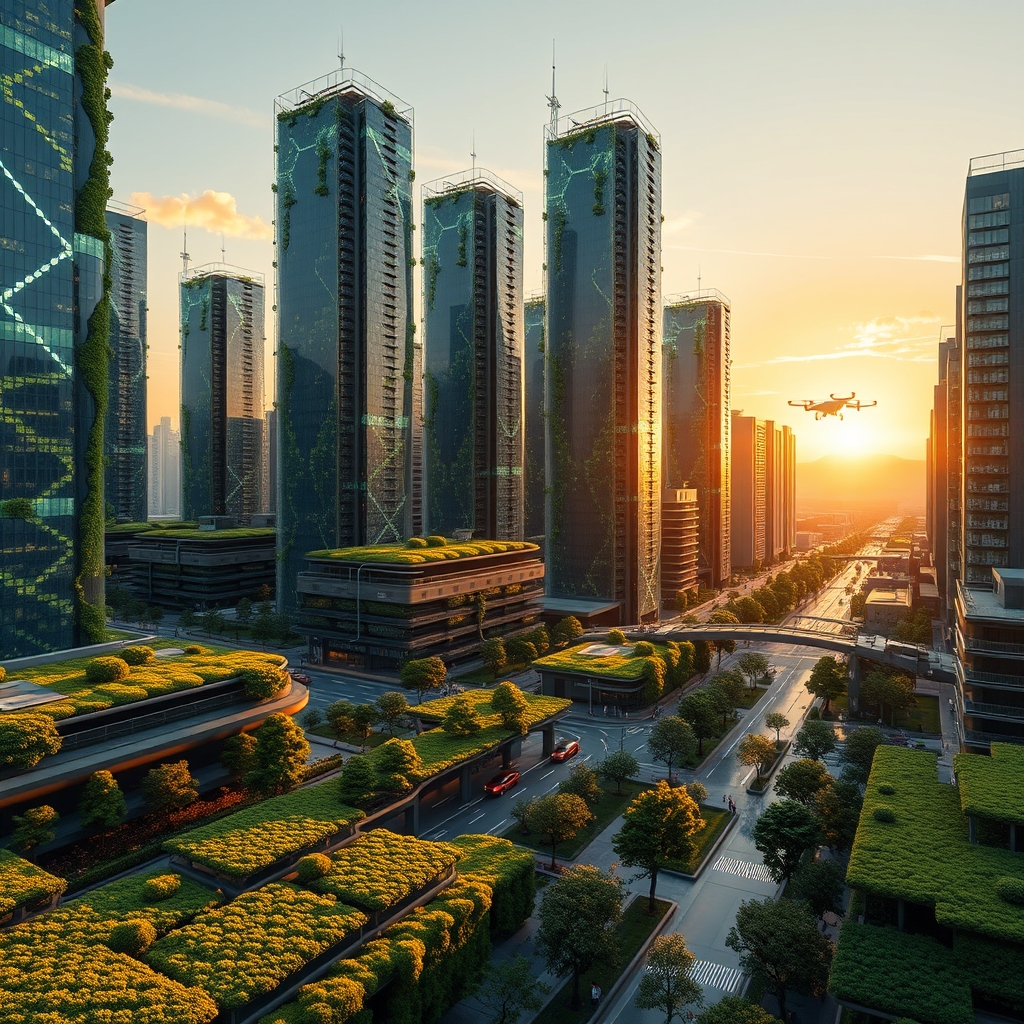
The hum of a city at dawn is no longer just the sound of engines and footsteps—it’s the quiet pulse of innovation, where skyscrapers breathe and streets harvest sunlight like leaves in a forest. This is not a scene from a distant utopia but a glimpse into the near future, where biotechnology and solar energy converge to redefine urban living. The fusion of these two fields is not merely an evolution; it’s a revolution, one that promises to weave sustainability into the very fabric of our cities, making them not just livable, but regenerative.
The Alchemy of Light and Life
At the heart of this transformation lies an unlikely partnership: the ancient process of photosynthesis and the cutting-edge science of photovoltaics. Researchers are now exploring how bioengineered organisms—from algae to genetically modified plants—can enhance solar energy systems. Imagine solar panels not as rigid, lifeless slabs, but as dynamic, living surfaces that adapt to their environment, self-repair, and even grow. These biohybrid systems could one day line our rooftops, roads, and facades, turning every urban surface into a potential energy generator.
One of the most promising advancements in this space is the development of bio-photovoltaic (BPV) systems, which use photosynthetic microorganisms to convert sunlight into electricity. Unlike traditional solar panels, BPVs can operate in low-light conditions and even generate power from ambient light, making them ideal for urban environments where space and sunlight are often limited. These systems are still in their infancy, but their potential is staggering. By integrating living organisms into solar technology, we’re not just capturing energy—we’re mimicking nature’s efficiency, creating systems that are as resilient as they are sustainable.
The Smart Grid: The Nervous System of Sustainable Cities
Yet, even the most advanced solar technology is only as powerful as the infrastructure that supports it. Enter smart grid technology, the digital backbone of the modern energy ecosystem. Smart grids use real-time data and advanced analytics to optimize energy distribution, reducing waste and ensuring that power is delivered where and when it’s needed most. When paired with solar energy systems, smart grids can dynamically balance supply and demand, storing excess energy in next-generation battery systems or even converting it into other forms, like hydrogen, for later use.
But the true magic of smart grids lies in their ability to integrate decentralized energy sources. In a city powered by a smart grid, every building, vehicle, and even streetlight becomes a node in a vast, interconnected network. Solar panels on rooftops feed energy into the grid, electric vehicles act as mobile storage units, and AI-driven algorithms predict energy needs before they arise. This level of integration doesn’t just make cities more efficient—it makes them adaptable, capable of responding to everything from daily fluctuations in energy demand to the unpredictable challenges of climate change.
The Role of Energy Storage: Bridging the Gap Between Supply and Demand
Of course, the sun doesn’t shine 24/7, and neither does energy demand remain constant. This is where energy storage systems come into play, acting as the bridge between supply and demand. Traditional batteries, while effective, are often limited by their capacity and environmental impact. However, recent breakthroughs in bioengineered energy storage are opening new doors. Scientists are exploring how biological materials—such as proteins and enzymes—can be used to create batteries that are not only more efficient but also biodegradable. These bio-batteries could one day replace lithium-ion cells, offering a cleaner, more sustainable solution for storing renewable energy.
Another exciting development is the use of flow batteries, which store energy in liquid electrolytes rather than solid materials. These systems can be scaled up easily, making them ideal for large-scale energy storage. When combined with solar power, flow batteries can store excess energy during the day and release it at night or during peak demand, ensuring a steady, reliable supply of clean energy. As these technologies mature, they will play a crucial role in making solar energy a viable, around-the-clock power source for cities.
Biotech’s Green Thumb: Engineering a Sustainable Future
Beyond energy generation and storage, biotechnology is also reshaping how we think about urban infrastructure. Genetic engineering is enabling the creation of plants and microorganisms that can purify air, clean water, and even break down pollutants. These bioengineered organisms could be integrated into urban landscapes, turning parks, green roofs, and even building materials into active participants in the city’s ecosystem. For example, scientists are developing air-purifying moss walls that absorb carbon dioxide and release oxygen, effectively turning walls into living filters. When combined with solar-powered irrigation systems, these green installations could transform cities into self-sustaining organisms.
Another area of innovation is biofabrication, where living cells are used to grow materials like leather, wood, and even concrete. These materials are not only sustainable but also self-healing, reducing the need for repairs and replacements. Imagine a city where buildings grow and repair themselves, where roads are made from biodegradable composites, and where every structure is designed to minimize waste and maximize efficiency. This is the promise of biotech—an urban environment that evolves alongside its inhabitants, adapting to their needs while nurturing the planet.
The Solar-Powered Metropolis: A Vision of Tomorrow
As these technologies mature, the line between nature and technology will continue to blur. Cities will no longer be concrete jungles but living, breathing entities, where every surface is an opportunity for energy generation, every structure a contributor to sustainability. Solar panels will no longer be eyesores but integral parts of the urban aesthetic, seamlessly blending into facades, windows, and even sidewalks. Smart grids will ensure that energy is used efficiently, while bioengineered systems will clean the air, purify the water, and create a healthier environment for all.
The journey toward this future is already underway, driven by the relentless pursuit of innovation and the urgent need to address climate change. The synergy between biotechnology and solar energy is not just a scientific breakthrough—it’s a cultural shift, a reimagining of what it means to live in harmony with our planet. As we stand on the brink of this new era, one thing is clear: the cities of tomorrow will not be built on steel and concrete alone, but on the principles of sustainability, resilience, and life itself. The green blueprint is being drawn today, and its lines are as bold as they are beautiful, promising a future where technology and nature coexist in perfect balance.


