The Solar Symbiosis: How Bioengineered Crops and Photovoltaics Are Cultivating a New Energy Ecosystem

The golden fields of the future may not just sway with wheat or corn, but with crops engineered to do more than feed—they could power our world. As the boundaries between biology and technology blur, a quiet revolution is taking root, one where photosynthesis doesn’t just sustain life but fuels it. This is the dawn of the solar-bio hybrid ecosystem, a fusion of bioengineering and photovoltaics that promises to redefine how we harvest energy from the sun.
The Roots of Innovation: Bioengineering Meets Solar
For decades, solar panels have been the poster child of renewable energy, silently converting sunlight into electricity with ever-increasing efficiency. Yet, despite their advancements, traditional photovoltaics face limitations—land use conflicts, intermittency issues, and the environmental cost of manufacturing. Enter bioengineering, a field that has long sought to mimic and enhance nature’s own energy-harvesting mechanisms. By integrating genetic engineering with solar technology, researchers are now cultivating crops that don’t just grow under the sun but collaborate with it.
At the heart of this innovation lies the concept of photosynthetic efficiency. Plants have evolved over millions of years to convert sunlight into chemical energy, but their natural processes are far from optimized for human energy needs. Through genetic modification, scientists are tweaking the very DNA of crops to enhance their photosynthetic pathways, enabling them to capture more sunlight and convert it into usable energy. Imagine fields of bioengineered sugarcane or switchgrass, not only producing biomass for biofuels but also hosting embedded photovoltaic cells that generate electricity as they grow. This dual-purpose approach could turn agricultural lands into power plants, maximizing land use while minimizing environmental disruption.
The Alchemy of Agrivoltaics: Where Crops and Panels Coexist
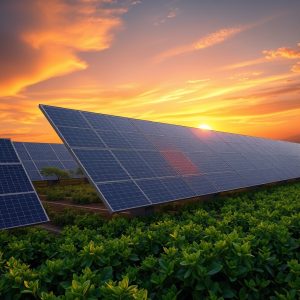
Agrivoltaics, the practice of co-locating solar panels with crops, has already demonstrated how these two systems can thrive together. Panels provide shade, reducing water evaporation and protecting plants from extreme heat, while crops help cool the panels, boosting their efficiency. But the next frontier goes beyond mere coexistence—it’s about symbiosis. Bioengineered crops could be designed to grow in specific patterns that optimize sunlight exposure for both themselves and the panels, creating a dynamic, self-regulating energy ecosystem.
One groundbreaking example is the development of transparent solar panels that can be integrated into greenhouse roofs. These panels allow visible light to pass through, nourishing the plants below, while capturing ultraviolet and infrared light to generate electricity. When combined with bioengineered crops that thrive under specific light spectra, this system could create a closed-loop energy cycle, where the greenhouse itself becomes a net-zero or even net-positive energy producer. The implications for urban farming and sustainable agriculture are profound, offering a glimpse into a future where food and energy production are seamlessly intertwined.
The Genetic Edge: Engineering Crops for Energy
The true potential of this hybrid ecosystem lies in the genetic modifications that make crops more than just passive participants in energy production. Researchers are exploring several avenues to enhance their role:
1. Enhanced Photosynthetic Pathways
Most plants use the C3 photosynthetic pathway, which is less efficient in hot, dry conditions. By introducing genes from C4 plants—like maize or sorghum—scientists are engineering crops with more efficient carbon fixation, allowing them to thrive in diverse climates while producing more biomass. This biomass can then be converted into biofuels or used as a substrate for microbial fuel cells, further extending the energy harvest.
2. Bio-Photovoltaic Integration
Some of the most exciting research involves embedding photovoltaic materials directly into plant tissues. For instance, scientists have experimented with plant-based solar cells, where photosynthetic proteins from algae or cyanobacteria are integrated into synthetic scaffolds to generate electricity. While still in its infancy, this technology could one day lead to living solar panels—plants that not only grow but also produce power as they do.
3. Self-Healing and Adaptive Crops
Bioengineered crops could also be designed to adapt to their environment, much like smart materials. For example, plants could be engineered to produce protective compounds that shield them from UV radiation, reducing the need for synthetic coatings on solar panels. Others might develop self-repairing mechanisms, ensuring longevity and reducing maintenance costs in agrivoltaic systems. These adaptive traits would make the entire ecosystem more resilient, capable of withstanding the challenges of climate change while continuing to produce energy.
The Smart Grid Connection: Orchestrating the Energy Ecosystem
No energy innovation exists in isolation, and the solar-bio hybrid ecosystem is no exception. Its success hinges on integration with smart grid technology, which can dynamically balance supply and demand across decentralized energy sources. Imagine a network where bioengineered crops and solar panels feed electricity into a grid that uses AI to predict energy needs, optimize storage, and distribute power efficiently. This grid could prioritize energy from the most productive sources at any given time—whether it’s a sun-drenched solar farm or a field of bioengineered crops at peak photosynthetic activity.
Energy storage systems, too, play a critical role. Advanced batteries and bioengineered storage solutions—like microbial fuel cells—could store excess energy generated during the day for use at night or during cloudy periods. This would address one of the biggest challenges of renewable energy: intermittency. By combining the strengths of solar, bioengineering, and smart grids, we could create a system that is not only sustainable but also reliable and resilient.
The Human Element: Cultivating a Sustainable Future
Beyond the technical marvels, the solar-bio hybrid ecosystem represents a shift in how we perceive our relationship with nature. For centuries, humans have viewed agriculture and energy production as separate endeavors, often competing for the same resources. This new paradigm blurs those lines, offering a vision where energy and food production are not just compatible but mutually reinforcing. It’s a future where farmers become energy producers, where rural communities thrive on the dual harvest of crops and kilowatts, and where the land itself becomes a living, breathing power plant.
The journey toward this future is not without challenges. Ethical considerations around genetic engineering, the need for robust regulatory frameworks, and the economic viability of these systems must all be addressed. Yet, the potential rewards—reduced carbon emissions, energy independence, and a more sustainable food supply—are too significant to ignore. As we stand on the brink of this new era, the fusion of bioengineering and solar technology offers a tantalizing glimpse of what’s possible when we dare to reimagine the boundaries of nature and innovation. The fields of tomorrow may not just feed us; they could power the world, one photon at a time.