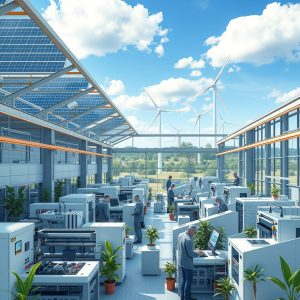
The Living Grid: How Virtual Power Plants and V2G Are Rewriting Energy Economics
The global energy transition is no longer solely about swapping out aging coal plants for sleek wind turbines and expansive solar panels. While scaling up renewable generation is the foundational step, the true revolution lies in how we intelligently manage, store, and distribute that power. We are rapidly moving from a unidirectional, centralized power model—where a single plant pumps electricity to passive consumers—to a highly dynamic, decentralized energy ecosystem. This monumental shift is turning everyday consumers into active energy participants, fundamentally rewriting the rules of energy economics, grid management, and environmental stewardship.
The Emergence of Virtual Power Plants
At the very heart of this decentralized revolution is the innovative concept of Virtual Power Plants (VPPs). Unlike traditional power stations that burn fossil fuels to spin massive turbines, a VPP does not exist in a single, towering physical location. Instead, it is a sophisticated, cloud-based distributed power plant that aggregates the capacities of heterogeneous Distributed Energy Resources (DERs). These diverse resources include residential rooftop solar arrays, home battery systems, smart thermostats, electric water heaters, and large-scale industrial loads.
By pooling these scattered resources together via the internet, a VPP can effectively replicate—and often exceed—the operations of a conventional power plant. When grid demand spikes on a sweltering summer afternoon, rather than firing up a highly polluting and expensive natural gas peaker plant, a VPP can automatically draw small amounts of stored energy from thousands of home batteries. Simultaneously, it can slightly adjust smart thermostats across an entire city to lower demand. This dual approach of managing both supply and demand not only reduces carbon emissions but also significantly lowers grid maintenance and operational costs, passing savings down to the consumer.
The Brains Behind the Operation: Smart Grid Optimization
A Virtual Power Plant, however, is only as effective as the software that orchestrates it. This is where Smart Grid Optimization enters the picture, acting as the central nervous system of the modern energy network. Utilizing advanced artificial intelligence, machine learning algorithms, and real-time data analytics, smart grids can predict both energy demand and generation with unprecedented accuracy.
Smart Grid Optimization ensures that electrons flow exactly where they are needed, precisely when they are needed. The system constantly monitors localized weather patterns to forecast solar and wind generation, tracks historical consumption data to predict peak loads, and continuously communicates with millions of connected IoT devices. This relentless, invisible digital orchestration prevents rolling blackouts, drastically reduces energy waste, and creates a highly resilient power infrastructure capable of adapting to sudden disruptions or equipment failures in mere milliseconds.
Vehicle To Grid Technology: Redefining Mobility and Storage
Perhaps the most exciting frontier in this interconnected energy ecosystem is Vehicle To Grid Technology (V2G). As the adoption of electric vehicles (EVs) accelerates globally, millions of massive, mobile batteries are hitting the streets. Historically, vehicles have been viewed solely as modes of transportation, sitting idle in driveways, parking garages, or office lots for up to 95% of their total lifespan. V2G technology flips this inefficient paradigm entirely on its head.
With bidirectional charging capabilities, an electric vehicle can draw power from the grid when electricity is abundant and cheap—such as during the middle of the day when solar production peaks. More importantly, it can discharge that stored power back into the grid during periods of high demand or grid instability. Imagine millions of EVs acting as a decentralized, continental-scale mega-battery, seamlessly absorbing excess renewable energy and deploying it precisely when the local grid is under severe stress.
Transforming Consumers into Prosumers
The integration of V2G technology fundamentally alters the historical relationship between the individual consumer and the monolithic utility company. EV owners can be financially compensated for allowing the grid to tap into a small, safe portion of their vehicle’s battery capacity. This transforms the everyday commuter into an energy prosumer—someone who actively produces, stores, and consumes energy. This financial incentive not only offsets the total cost of EV ownership but also democratizes the energy market, allowing everyday individuals to actively profit from participating in grid stabilization efforts.
The Backbone: Grid Scale Storage
While decentralized resources like VPPs and V2G are crucial for agility and local resilience, they must be anchored by robust, centralized infrastructure. This is where Grid Scale Storage becomes the vital backbone of the modern energy network. As we rely more heavily on intermittent renewable sources like wind and solar, the ability to store massive amounts of energy for days or even weeks—often referred to as Long Duration Energy Storage—is absolutely non-negotiable for a stable society.
Innovations in this sector are moving at breakneck speed. Beyond traditional lithium-ion mega-packs, we are witnessing the commercial rise of alternative chemistries. Sodium Ion Batteries, which rely on globally abundant and inexpensive materials, are emerging as a cost-effective alternative for stationary storage. Meanwhile, Solid State Storage promises significantly higher energy densities and enhanced safety profiles, eliminating the fire risks associated with liquid electrolytes. These massive storage installations act as the ultimate shock absorbers for the grid, smoothing out the natural fluctuations of renewable generation and ensuring a continuous, reliable power supply for heavy industry, hospitals, and sprawling urban centers.
The synergy between these rapidly evolving technologies paints a picture of a future where energy scarcity and grid fragility are relics of the past. By weaving together the localized agility of virtual power plants and electric vehicles with the massive, stabilizing force of utility-scale batteries, we are engineering an ecosystem of unparalleled resilience. Every rooftop, driveway, and community storage facility becomes a vital node in a living, breathing network. Ultimately, this intricate digital and physical orchestration does more than just keep the lights on; it empowers every individual to play a direct, meaningful role in forging a cleaner, more sustainable world.