The Solar Bloodline: How Genetic Engineering is Breeding Hyper-Efficient Photovoltaic Crops
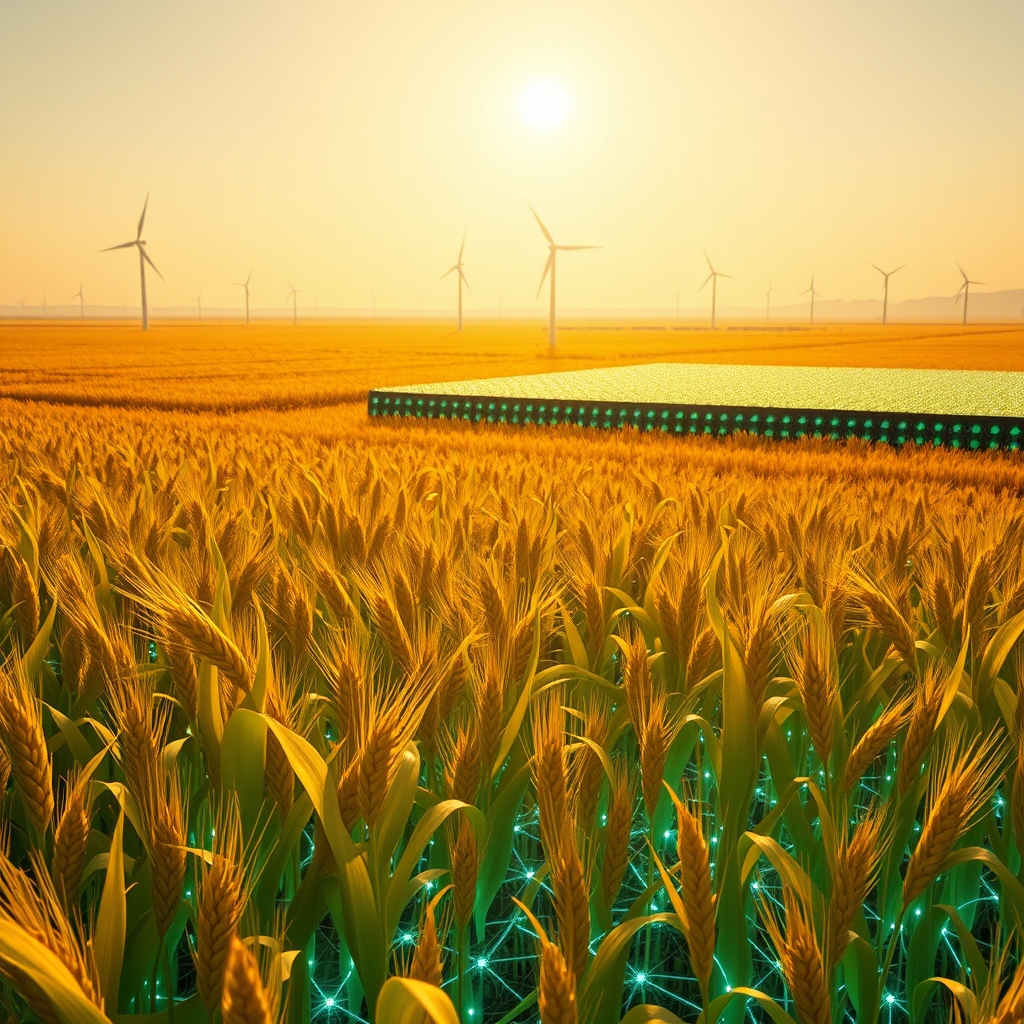
The golden fields of wheat swaying under the summer sun have long been a symbol of life’s quiet resilience, but what if those same fields could do more than feed us? What if they could power our homes, charge our devices, and fuel the engines of progress? The frontier of biotechnology is no longer confined to laboratories or petri dishes—it is taking root in the soil, where scientists are rewriting the genetic code of plants to transform them into living solar panels. This is not science fiction; it is the dawn of photovoltaic crops, a revolutionary fusion of agriculture and energy technology that could redefine the way we harvest the sun’s power.
The Science of Solar Photosynthesis
Photosynthesis, the process by which plants convert sunlight into chemical energy, has been fine-tuned by nature over millions of years. Yet, for all its elegance, it is far from perfect. Most plants convert only about 1% of the sunlight they absorb into usable energy, with the rest lost as heat or reflected wavelengths. This inefficiency has long been a bottleneck in our quest to harness solar power more effectively. But what if we could tweak the very fabric of photosynthesis to make it more efficient? That is precisely what researchers are attempting with genetic engineering.
At the heart of this innovation lies RuBisCO, an enzyme that plays a critical role in the Calvin cycle, the process by which plants fix carbon dioxide into sugars. RuBisCO is notoriously slow and prone to errors, often binding with oxygen instead of carbon dioxide—a phenomenon known as photorespiration, which wastes energy. By using CRISPR and other gene-editing tools, scientists are now able to modify RuBisCO and other key proteins to reduce photorespiration and boost photosynthetic efficiency. Early experiments with tobacco plants, a common model organism in genetic research, have shown a 40% increase in biomass production. Imagine applying these same modifications to crops like maize, sugarcane, or even algae—plants that could double as energy harvesters.
From Fields to Photovoltaic Farms
The concept of photovoltaic crops extends beyond mere efficiency gains. These genetically modified plants could be engineered to produce not just food, but also bioelectricity. Researchers at the University of Cambridge have already demonstrated that certain types of algae can generate a small electric current when exposed to light, a process known as biophotovoltaics. By embedding conductive nanomaterials into plant tissues or engineering them to express proteins that facilitate electron transfer, scientists believe it may be possible to create living solar cells that grow, self-repair, and even reproduce.
One of the most promising applications of this technology lies in agrivoltaics, the practice of co-locating solar panels and crops on the same land. Traditionally, agrivoltaic systems have faced challenges, such as shading that reduces crop yields or the high cost of installing and maintaining solar infrastructure. Photovoltaic crops could eliminate these trade-offs by integrating energy production directly into the plants themselves. Picture a field of genetically modified corn, where each stalk not only produces kernels but also channels electrons through its roots into a conductive soil matrix, generating electricity while it grows. The implications for rural communities, particularly in developing nations, are profound. Farmers could become energy producers, selling excess power back to the grid while continuing to cultivate food.
The Ethical and Environmental Crossroads
As with any groundbreaking technology, the rise of photovoltaic crops raises important ethical and environmental questions. Genetic engineering has always been a double-edged sword, offering the promise of solutions to global challenges like climate change and food security, while also posing risks such as unintended ecological consequences or corporate control over seed patents. The idea of releasing genetically modified organisms into the wild, even with the best intentions, demands rigorous oversight and public dialogue.
There are also concerns about the long-term stability of these engineered traits. Could modified plants outcompete their wild relatives, disrupting ecosystems? Might they become invasive, spreading beyond their intended boundaries? These are not hypothetical scenarios; history has shown that even well-intentioned introductions of non-native species can have catastrophic effects. To mitigate these risks, researchers are exploring gene drive technologies that could limit the spread of modified genes or even create plants that are sterile, ensuring they cannot reproduce outside controlled environments.
The Future of Energy Farming
The potential of photovoltaic crops is not limited to terrestrial agriculture. Scientists are also exploring their application in aquatic environments, where fast-growing algae and seaweed could be engineered to produce bioelectricity on a massive scale. Floating farms of genetically modified algae could cover vast stretches of ocean, turning barren waters into power stations while also sequestering carbon dioxide. These blue energy systems could complement traditional solar farms, providing a more diverse and resilient energy grid.
Moreover, the integration of photovoltaic crops with smart grid technology could create a dynamic, self-regulating energy network. Sensors embedded in the soil or within the plants themselves could monitor energy production in real-time, adjusting the flow of electricity to match demand. During periods of low sunlight, stored energy from bio-batteries—another emerging technology—could step in to fill the gap. This synergy between biotechnology and digital infrastructure could make renewable energy more reliable and accessible than ever before.
As the sun rises over the horizon, casting its golden light across the landscape, it is worth reflecting on how far we have come in our quest to harness its power. From the humble beginnings of silicon solar panels to the cutting-edge world of genetic engineering, each innovation has brought us closer to a future where energy is not just clean, but also alive. The fields of tomorrow may not just feed us—they may power our world, one photon at a time, growing not just crops, but a brighter, more sustainable future for all.