
The Silent Evolution: How Bio-Based Tech Materials Are Crafting the Future of Sustainable Manufacturing
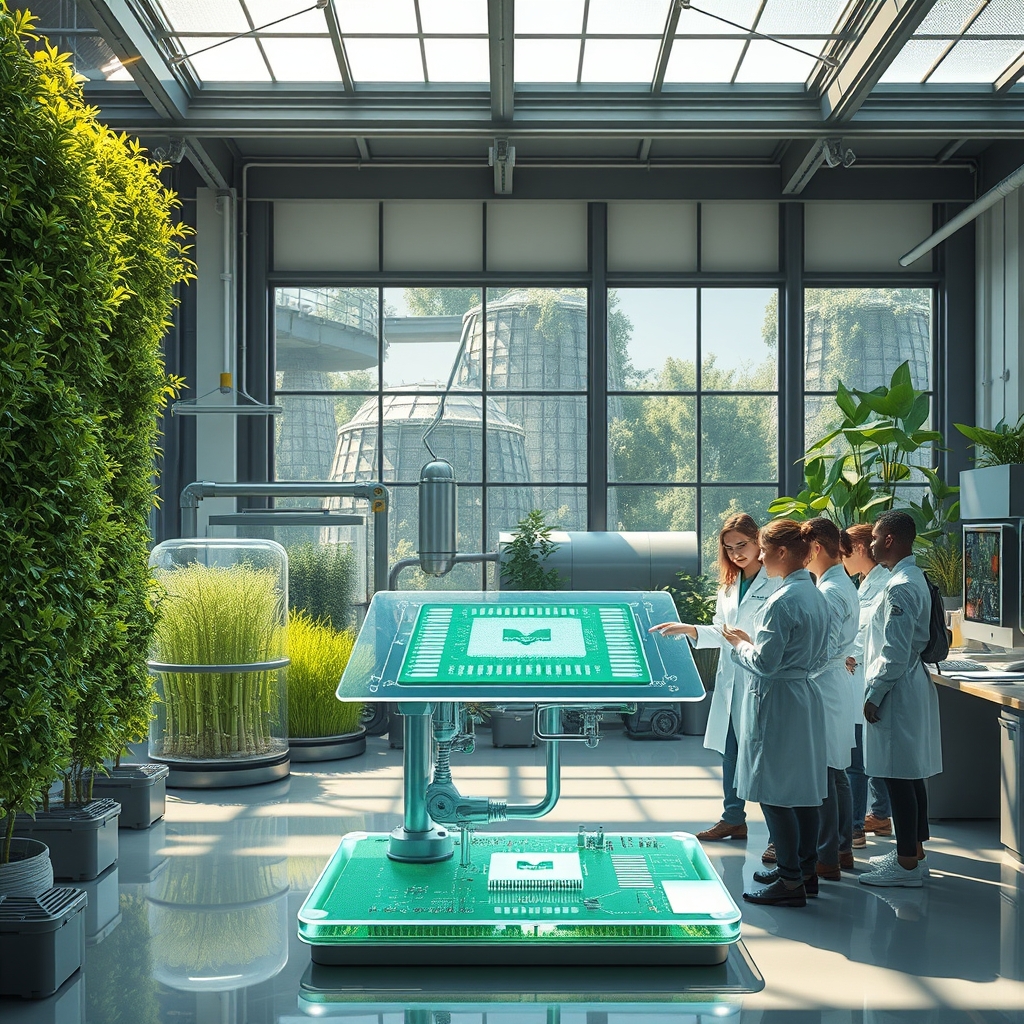
The hum of a modern factory floor is no longer just the sound of machinery—it’s the whisper of a revolution. A transformation so quiet, so seamless, that its impact is felt long before it’s seen. At the heart of this shift lies an unassuming yet radical idea: what if the materials we rely on to build the future weren’t extracted from the earth, but grown from it? Bio-based tech materials are not just an alternative; they are the next logical step in a world where sustainability is no longer a choice, but a necessity.
The Roots of Change
For decades, the tech industry has thrived on a linear model—extract, produce, discard. But as the consequences of this approach become impossible to ignore, a new paradigm is emerging. Bio-based materials, derived from renewable resources like algae, mycelium, bamboo, and even agricultural waste, are rewriting the rules of manufacturing. These materials don’t just reduce reliance on fossil fuels; they reimagine what it means to create without depleting.
Take mycelium, for instance—the root-like structure of fungi. When cultivated in controlled environments, it can be shaped into lightweight, durable packaging, insulation, or even structural components for electronics. Unlike traditional plastics, mycelium-based materials decompose naturally, leaving no toxic residue behind. Similarly, algae-based bioplastics offer a compelling alternative to petroleum-based polymers, absorbing CO2 as they grow and breaking down harmlessly at the end of their lifecycle.
The Alchemy of Innovation
The magic of bio-based materials lies not just in their sustainability, but in their versatility. Engineers and designers are pushing the boundaries of what these materials can achieve, blending them with cutting-edge technology to create products that are as high-performing as they are eco-conscious. For example, researchers have developed biodegradable circuit boards using plant-based resins, reducing electronic waste while maintaining the conductivity and durability required for modern devices.
Another breakthrough comes in the form of bio-based composites, which combine natural fibers with recycled plastics or biopolymers to create materials that are stronger, lighter, and more adaptable than their conventional counterparts. These composites are already being used in everything from automotive parts to consumer electronics, proving that sustainability and performance are not mutually exclusive.
Closing the Loop
The true power of bio-based materials, however, lies in their ability to enable closed-loop manufacturing. Unlike traditional materials, which often end up in landfills or incinerators, bio-based alternatives can be designed to return to the earth or be reprocessed into new products. This circular approach minimizes waste, reduces resource consumption, and creates a system where every end is a new beginning.
Companies like Ecovative Design are leading the charge, using mycelium to create packaging that can be composted at home, eliminating the need for recycling facilities altogether. Meanwhile, startups like Algix are turning algae into high-performance foams and plastics, offering a scalable solution to the plastic pollution crisis. These innovations are not just theoretical—they are already reshaping industries, one material at a time.
The Challenges Ahead
Yet, the path to widespread adoption is not without obstacles. Scaling bio-based materials to meet global demand requires overcoming technical, economic, and logistical hurdles. For instance, while mycelium grows quickly, it requires precise conditions to ensure consistency and quality. Similarly, algae-based materials must be refined to match the performance of traditional plastics in high-stress applications.
Cost is another barrier. Bio-based materials often come with a higher price tag than their conventional counterparts, making them less accessible to smaller manufacturers. However, as demand grows and production processes become more efficient, economies of scale are likely to drive prices down. Governments and industry leaders are also stepping in, offering incentives and funding to accelerate research and development in this space.
A New Design Ethos
Perhaps the most significant shift, though, is cultural. The adoption of bio-based materials requires a fundamental rethinking of how we design, produce, and consume technology. It demands that engineers, designers, and manufacturers prioritize sustainability from the outset, rather than treating it as an afterthought. This means embracing minimalist design principles, where products are built to last, repair, and ultimately return to the earth without harm.
It also means fostering transparency in supply chains, ensuring that every material is sourced ethically and sustainably. Companies like Fairphone are already leading by example, creating modular smartphones with replaceable parts and responsibly sourced materials. Their approach proves that sustainability and profitability can go hand in hand, inspiring others to follow suit.
The Future, Grown from the Ground Up
As we stand on the brink of this silent evolution, it’s clear that bio-based materials are more than just a trend—they are the foundation of a new era in manufacturing. An era where technology is not just smart, but wise; where progress is measured not just in speed or efficiency, but in harmony with the planet. The factories of the future will not be filled with the acrid scent of chemicals, but with the earthy aroma of mycelium and the fresh tang of algae. The products they create will not be discarded, but returned to the cycle of life, nourishing the soil even as they once nourished our lives.
This is not a distant dream, but a tangible reality taking shape before our eyes. Every smartphone case made from flax fibers, every circuit board crafted from plant-based resins, every piece of packaging grown from fungi is a step toward a world where technology and nature coexist. The question is no longer whether we can build a sustainable future, but how quickly we can grow it.