
The Solar Alchemy: How Bioengineered Enzymes Are Transforming Waste into Clean Energy Gold
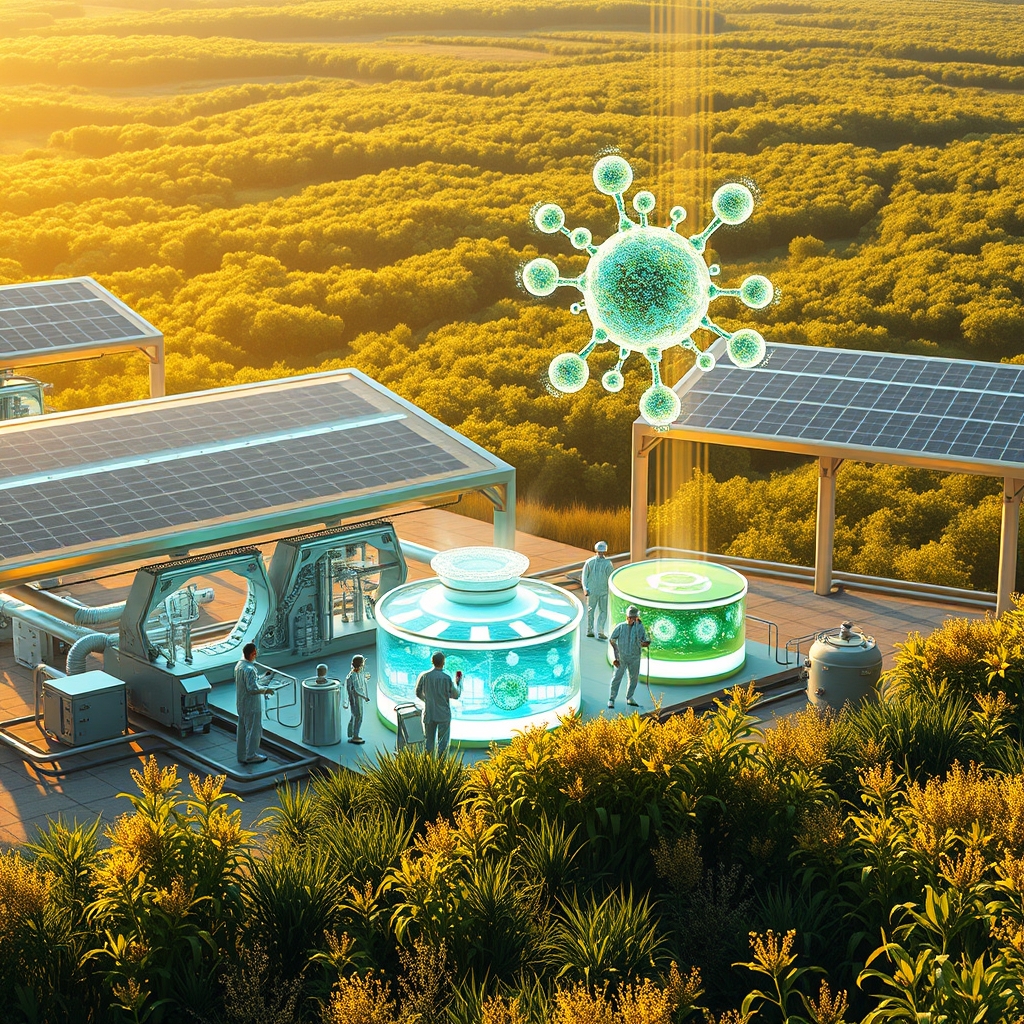
In the quiet hum of a laboratory, where the scent of sterile surfaces mingles with the faint tang of innovation, a revolution is brewing—one that promises to turn the most unlikely of resources into a wellspring of clean, renewable energy. This is not the alchemy of old, with its promises of turning lead into gold, but something far more profound: the transformation of organic waste into solar-powered electricity through the precision of bioengineered enzymes. It’s a fusion of biotechnology and solar energy that could redefine how we think about power, waste, and sustainability.
The Enzyme Advantage: Nature’s Tiny Powerhouses
Enzymes are the unsung heroes of the natural world, the microscopic catalysts that drive the biochemical reactions essential to life. From breaking down food in our stomachs to decomposing fallen leaves in a forest, these proteins are the invisible engines of Earth’s ecosystems. Now, scientists are harnessing their power in ways that could revolutionize renewable energy. By bioengineering enzymes to optimize their efficiency, researchers are creating systems that can convert organic waste—everything from agricultural residues to municipal trash—into biofuels and even electricity, all while being powered by the sun.
The process begins with the identification of enzymes that can break down complex organic molecules into simpler compounds. For instance, cellulases can degrade cellulose, the tough material that makes up plant cell walls, into sugars that can be fermented into bioethanol. But the real breakthrough lies in enhancing these enzymes through genetic engineering. By tweaking their genetic code, scientists can create variants that work faster, last longer, and operate under a wider range of conditions. Imagine an enzyme that thrives in the heat of a solar-powered reactor, breaking down waste with unparalleled efficiency, or one that can function in the cold, allowing for energy production in diverse climates.
Solar-Powered Waste Conversion: A Closed-Loop System
The marriage of bioengineered enzymes and solar technology is where the magic truly happens. Solar energy systems, particularly photovoltaic panels, can provide the electricity needed to power bioreactors where these enzymes do their work. But the synergy doesn’t stop there. The waste products of one process become the feedstock for another, creating a closed-loop system that minimizes waste and maximizes efficiency. For example, the sugars produced by enzyme-driven breakdown of agricultural waste can be fermented into biofuels, while the leftover biomass can be used to generate biogas through anaerobic digestion—a process that itself can be enhanced by enzyme additives.
This approach is already being tested in pilot projects around the world. In one such initiative, a solar-powered biorefinery in California uses genetically modified enzymes to convert corn stover—the leaves, stalks, and cobs left after harvest—into bioethanol. The facility is entirely off-grid, relying on solar panels to power the enzymatic reactions and the fermentation process. The result is a fuel that burns cleaner than gasoline, produced from a resource that would otherwise be discarded or burned in the field, releasing carbon into the atmosphere.
The Role of Smart Grids in Enzyme-Driven Energy
For this technology to reach its full potential, it must be integrated into the broader energy ecosystem, and this is where smart grid technology comes into play. Smart grids use digital communication tools to monitor and manage the flow of electricity, balancing supply and demand in real time. When paired with enzyme-driven bioenergy systems, they can ensure that the energy produced is used efficiently, stored when necessary, and distributed where it’s needed most.
Consider a rural community where agricultural waste is abundant but energy access is limited. A local biorefinery, powered by solar energy and equipped with bioengineered enzymes, could convert this waste into electricity. A smart grid would then manage the distribution of this power, ensuring that homes, schools, and businesses receive a steady supply. Excess energy could be stored in advanced battery systems or even used to produce hydrogen, a clean fuel that can be stored and transported. The possibilities are as vast as they are transformative.
Bioengineering’s Ethical and Environmental Promise
Of course, the rise of bioengineered enzymes in renewable energy is not without its challenges. Ethical considerations around genetic modification, the potential for unintended ecological consequences, and the need for robust regulatory frameworks are all critical issues that must be addressed. Yet, the promise of this technology is undeniable. By turning waste into energy, it offers a path to reducing landfill use, cutting greenhouse gas emissions, and creating a more circular economy—one where nothing is wasted and everything has value.
Moreover, the environmental benefits extend beyond waste reduction. Enzyme-driven bioenergy systems can operate with a significantly lower carbon footprint than traditional fossil fuel-based energy sources. When powered by solar energy, the entire process becomes a beacon of sustainability, a testament to what can be achieved when human ingenuity aligns with the rhythms of nature. The enzymes themselves, being biodegradable, leave no toxic residue, ensuring that the energy produced is as clean as the process that creates it.
The Future: A World Powered by Sun and Enzymes
As research advances, the potential applications of bioengineered enzymes in renewable energy continue to expand. Scientists are exploring ways to use enzymes to enhance the efficiency of solar panels themselves, perhaps by developing coatings that mimic the photosynthetic processes of plants. Others are investigating how enzymes can improve the performance of energy storage systems, such as batteries and supercapacitors, by facilitating faster chemical reactions and longer lifespans.
In the not-too-distant future, we may see entire cities powered by a network of solar-driven biorefineries, where waste is not a problem but a resource, and where energy is not extracted from the Earth but cultivated from the sun. This vision is not just about technology; it’s about reimagining our relationship with the planet, shifting from a mindset of extraction to one of regeneration. It’s about recognizing that the solutions to our greatest challenges—climate change, energy poverty, environmental degradation—lie not in dominating nature but in learning from it, in harnessing the quiet power of enzymes and the boundless energy of the sun to create a world that thrives in harmony with itself.
The laboratories where these innovations are born are more than just rooms filled with equipment; they are the crucibles of a new era. An era where waste is transformed into wealth, where energy is not a finite resource but a renewable cycle, and where the alchemy of science turns the ordinary into the extraordinary. As the sun rises on this new day, it illuminates not just the path forward but the promise of a future where clean energy is not just a possibility but a reality, powered by the invisible hands of bioengineered enzymes and the endless light of the sun.