The Green Fabric: How Renewable Energy Integration is Weaving Sustainability into Tech Manufacturing

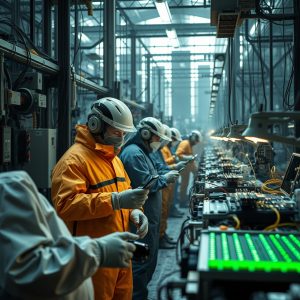
The hum of machinery in a modern tech manufacturing plant is no longer just the sound of progress—it’s the rhythm of a revolution. Factories once synonymous with energy gluttony and waste are transforming into beacons of sustainability, where every watt of power and every gram of material is accounted for in a delicate dance of efficiency and responsibility. At the heart of this transformation lies renewable energy integration, a practice that is not just reducing carbon footprints but redefining the very fabric of how technology is brought to life.
The Solar-Powered Assembly Line
Imagine a manufacturing floor where the primary source of energy is not a distant power plant burning fossil fuels, but the very roof above the workers’ heads. Solar panels, once a novelty, are now a staple in forward-thinking tech facilities, stretching across vast expanses of rooftops like a second skin. These arrays do more than generate electricity; they symbolize a commitment to a future where energy is harvested, not extracted. In regions bathed in sunlight, such as the deserts of Nevada or the plains of Spain, solar farms adjacent to manufacturing plants are becoming commonplace, feeding clean energy directly into the production process.
But the integration doesn’t stop at solar. Wind turbines, both onshore and offshore, are being paired with manufacturing hubs to create a symbiotic relationship between industry and nature. In Denmark, for instance, tech manufacturers are tapping into the country’s robust wind energy infrastructure, ensuring that the devices rolling off the assembly line are powered by the same gusts that sweep across the North Sea. This seamless fusion of renewable energy and manufacturing is not just a technical achievement; it’s a cultural shift, one where the boundaries between industry and ecology begin to blur.
The Alchemy of Energy Storage
Renewable energy, however, is not without its challenges. The sun doesn’t always shine, and the wind doesn’t always blow, which means that for manufacturing to remain uninterrupted, energy storage solutions must be as innovative as the products they help create. Enter the era of advanced battery systems, where lithium-ion and emerging technologies like sodium-ion or flow batteries are being deployed to store excess energy generated during peak production hours. These systems act as a buffer, ensuring that the factory floor remains operational even when the skies are overcast or the air is still.
Beyond batteries, manufacturers are exploring other creative storage solutions. Compressed air energy storage (CAES) and pumped hydro storage are being integrated into industrial parks, turning idle spaces into reservoirs of potential energy. In Germany, for example, a tech manufacturing plant has repurposed an old salt mine into a CAES facility, where excess renewable energy is used to compress air, which can later be released to generate electricity on demand. These innovations are not just about keeping the lights on; they’re about reimagining energy as a fluid, dynamic resource that can be captured, stored, and deployed with precision.
The Circular Energy Loop
Renewable energy integration is not just about sourcing clean power; it’s about creating a closed-loop system where energy, materials, and waste are continuously cycled back into the production process. In this model, the waste heat from manufacturing operations is captured and repurposed to warm buildings or generate additional electricity. Factories are being designed with energy recovery systems that ensure no joule of energy is wasted, turning what was once considered a byproduct into a valuable resource.
One striking example is the use of hydrogen fuel cells in manufacturing. Excess renewable energy is used to electrolyze water, producing hydrogen that can be stored and later used to power fuel cells. These cells generate electricity with only water vapor as a byproduct, creating a truly circular energy system. In Japan, tech manufacturers are leading the charge in hydrogen integration, using it not just to power their operations but also to fuel the vehicles that transport their products. This holistic approach to energy management is setting a new standard for what it means to be a sustainable manufacturer.
The Human Element: Engineering a Sustainable Mindset
Behind every kilowatt-hour of renewable energy and every gram of recycled material is a team of engineers, designers, and workers who are rethinking their roles in the manufacturing process. Sustainable tech manufacturing is as much about culture as it is about technology. Companies are investing in training programs to educate their workforce on the principles of eco-conscious engineering, from energy-efficient design to waste reduction strategies. These programs are fostering a new generation of innovators who see sustainability not as a constraint but as a catalyst for creativity.
In Sweden, a tech manufacturer has taken this a step further by implementing a