The Living Battery: How Bioengineered Energy Storage is Redefining the Future of Solar Power
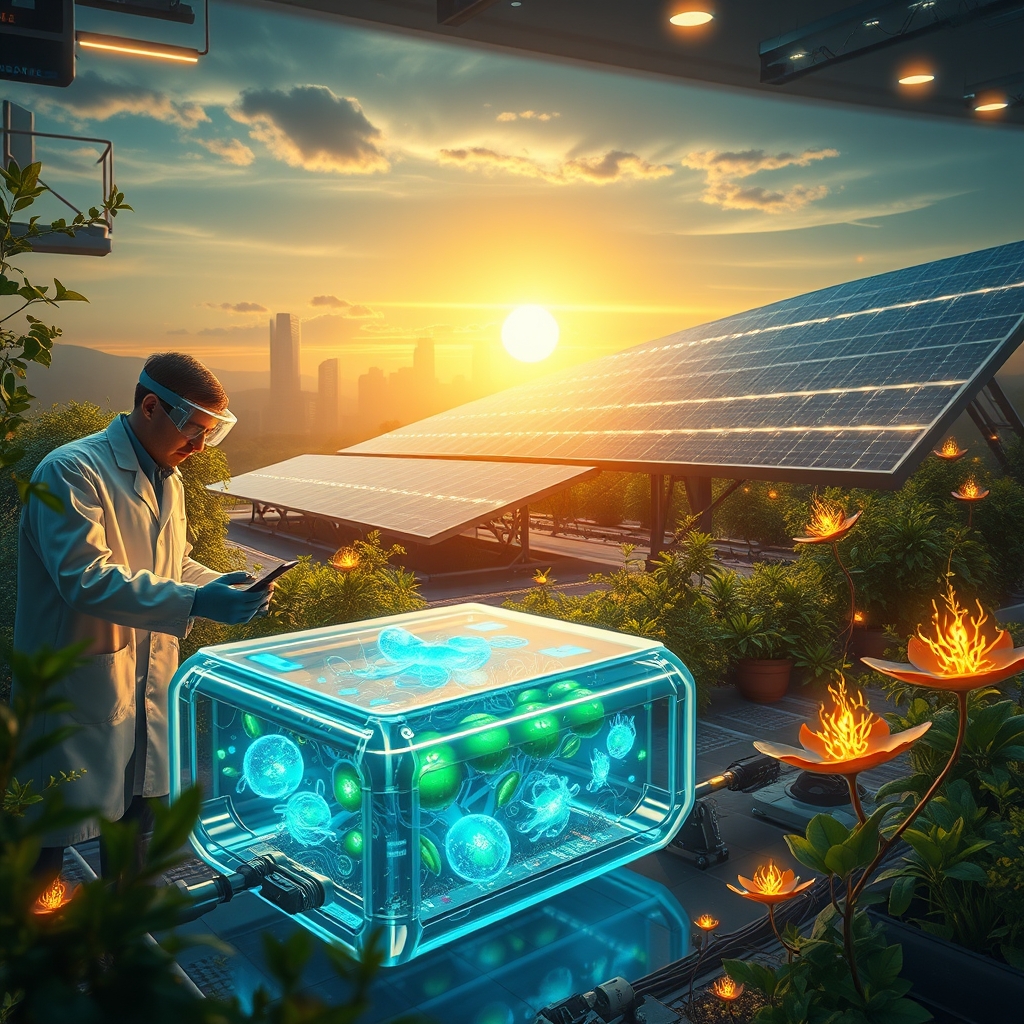
The sun has long been humanity’s most generous benefactor, casting its golden rays across the Earth and offering an endless reservoir of energy. Yet, for all its abundance, solar power has faced a persistent challenge: how to capture and store this energy efficiently when the sun isn’t shining. Traditional lithium-ion batteries have been the go-to solution, but they come with limitations—environmental concerns, resource scarcity, and finite lifespans. Now, a new frontier is emerging, one where biology and technology converge to create energy storage systems that are not just sustainable but alive. This is the dawn of bioengineered energy storage, a revolution that promises to redefine how we harness and hold onto the sun’s power.
The Marriage of Biology and Energy
At the heart of this innovation lies the fusion of biotechnology and renewable energy. Scientists are increasingly turning to nature’s own mechanisms—photosynthesis, enzymatic reactions, and microbial metabolism—to design storage systems that are more efficient, scalable, and eco-friendly. Unlike conventional batteries, which rely on chemical reactions within inert materials, bioengineered storage leverages living organisms or bio-inspired processes to store and release energy. Imagine a battery that doesn’t just degrade over time but grows, adapts, and even self-repairs. This is no longer the stuff of science fiction; it’s a rapidly unfolding reality.
Microbial Fuel Cells: The Tiny Powerhouses
One of the most promising developments in this space is the microbial fuel cell (MFC). These systems harness the natural metabolic processes of bacteria to generate and store electricity. Certain bacteria, such as Geobacter sulfurreducens, have the remarkable ability to transfer electrons outside their cells, a process known as extracellular electron transfer. When these bacteria are placed in an MFC, they can break down organic matter—such as wastewater or agricultural waste—and convert it into electrical energy. The beauty of this system lies in its dual functionality: it not only generates power but also helps in waste management, creating a closed-loop cycle that is as elegant as it is efficient.
Researchers are now exploring ways to enhance the efficiency of MFCs by genetically engineering bacteria to optimize their electron transfer capabilities. By tweaking their metabolic pathways, scientists can create strains of bacteria that produce more electrons, faster, and with greater stability. This bioengineering approach could lead to MFCs that rival the energy density of traditional batteries while being far more sustainable. The implications are vast, from powering remote communities with off-grid energy solutions to providing backup storage for large-scale solar farms.
Photosynthetic Energy Storage: Learning from Plants
Plants have been perfecting the art of energy storage for millions of years through photosynthesis. Now, scientists are taking inspiration from this natural process to develop biohybrid systems that mimic the way plants convert sunlight into chemical energy. One such innovation involves the use of artificial chloroplasts—synthetic structures that replicate the photosynthetic machinery of plants. These systems can capture solar energy and store it in the form of chemical bonds, much like plants store energy in glucose.
Recent advances in synthetic biology have enabled researchers to engineer microorganisms that can produce biofuels directly from sunlight. For example, cyanobacteria—often called blue-green algae—can be genetically modified to produce hydrogen or ethanol when exposed to light. These biofuels can then be stored and used as needed, providing a renewable and carbon-neutral energy source. The potential for scaling up this technology is immense, with applications ranging from portable energy devices to large-scale solar farms that double as biofuel production facilities.
Enzymatic Batteries: The Power of Bio-Catalysis
Enzymes are nature’s catalysts, speeding up chemical reactions with remarkable precision. In the realm of energy storage, enzymes are being harnessed to create batteries that are not only more efficient but also biodegradable. Enzymatic batteries use bio-catalysts to facilitate the flow of electrons, enabling faster charging and discharging cycles compared to traditional batteries. These systems are particularly promising for applications where sustainability is paramount, such as in medical devices or wearable technology.
One groundbreaking example is the development of a glucose-powered biobattery. By using enzymes to break down glucose—a simple sugar found in abundance in nature—these batteries can generate electricity in a way that is both renewable and non-toxic. Researchers are also exploring the use of enzymes to create redox flow batteries, which store energy in liquid electrolytes. Unlike conventional batteries, redox flow batteries can be easily scaled up by increasing the size of the electrolyte tanks, making them ideal for grid-scale energy storage.
The Road Ahead: Challenges and Opportunities
While the potential of bioengineered energy storage is undeniable, the path to widespread adoption is not without its hurdles. One of the primary challenges is scalability. Many of these technologies are still in the experimental phase, and scaling them up to meet the demands of large-scale energy storage will require significant investment and innovation. Additionally, there are technical challenges related to the stability and longevity of bioengineered systems. Living organisms, by their nature, are dynamic and can be sensitive to environmental conditions, which could impact their performance as energy storage devices.
Another consideration is the ethical and regulatory landscape surrounding biotechnology. As with any emerging technology, there are concerns about the potential risks of genetically modified organisms and their impact on ecosystems. Ensuring the safety and sustainability of these systems will be crucial as they move from the lab to the real world. However, with careful regulation and responsible innovation, bioengineered energy storage could become a cornerstone of the clean energy transition.
As we stand on the brink of this new era, it’s clear that the future of energy storage is not just about better batteries—it’s about reimagining what energy storage can be. By drawing inspiration from the natural world and leveraging the power of biotechnology, we are creating systems that are not only more efficient but also more harmonious with the planet. The sun’s energy has always been there, waiting to be harnessed. Now, with bioengineered storage, we are learning to hold onto it in ways that are as innovative as they are sustainable, lighting the way toward a future where energy is not just clean, but truly alive.