The Solar-Powered Microbiome: How Bioengineered Bacteria Are Revolutionizing Renewable Energy Storage
The sun has long been the cornerstone of renewable energy, its radiant power harnessed by photovoltaic panels to generate electricity. Yet, despite its abundance, solar energy faces a critical challenge: storage. Traditional battery systems, while improving, remain limited by cost, environmental impact, and scalability. But what if the solution to solar energy’s intermittency lay not in silicon or lithium, but in the microscopic world of bacteria? A groundbreaking convergence of biotechnology and renewable energy is now unlocking the potential of bioengineered microorganisms to store and even enhance solar power in ways once thought impossible.
The Microbial Battery: A Living Energy Reservoir
At the heart of this innovation are electroactive bacteria—microorganisms capable of transferring electrons to external surfaces, a process known as extracellular electron transfer (EET). Scientists have long studied these bacteria, particularly species like Geobacter sulfurreducens and Shewanella oneidensis, for their role in bioremediation and wastewater treatment. However, recent advances in genetic engineering have repurposed these microbes into living batteries, capable of storing solar energy in chemical bonds rather than conventional electrochemical cells.
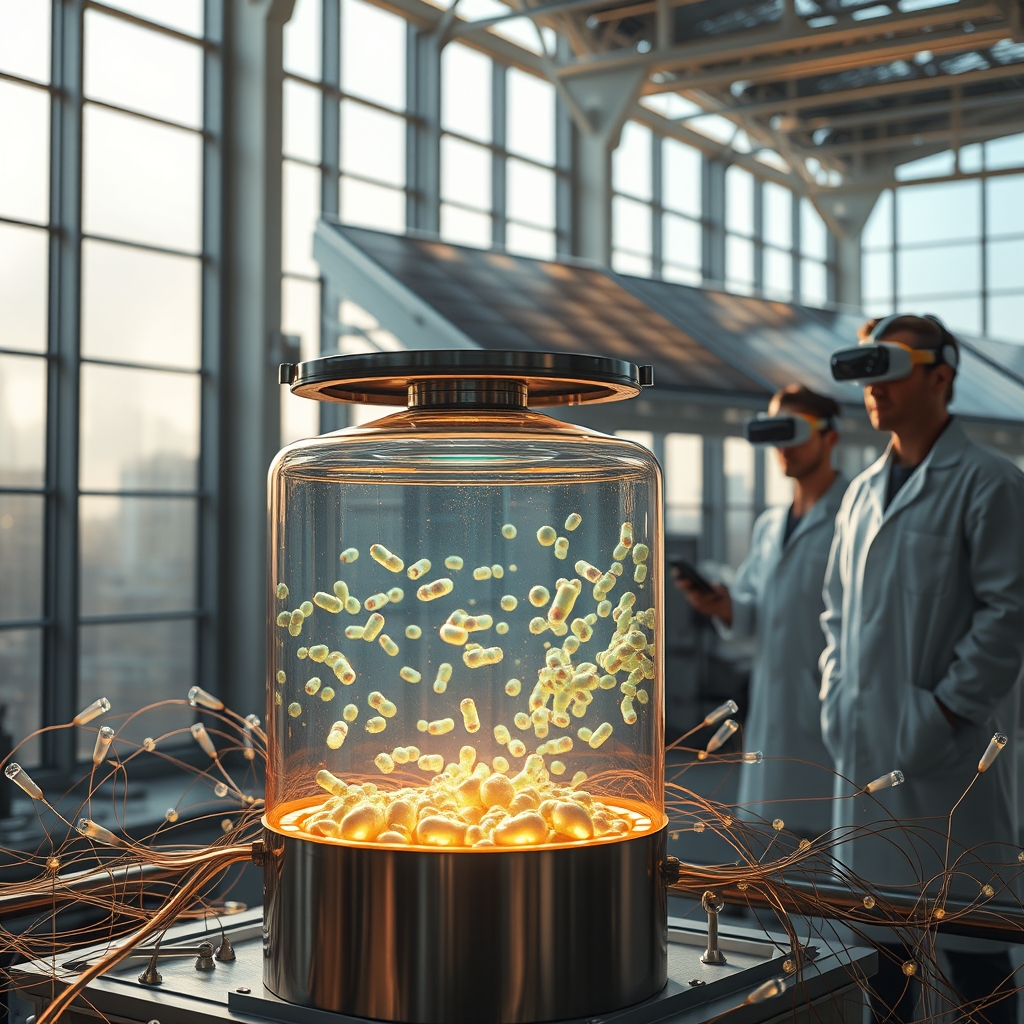
The concept is elegantly simple: excess solar energy generated during peak sunlight hours is used to power microbial electrosynthesis, a process where bacteria convert carbon dioxide and water into organic compounds like acetate or butyrate. These compounds act as energy-dense storage molecules, which can later be oxidized to release electrons when electricity is needed. Unlike lithium-ion batteries, which degrade over time, microbial systems can self-repair and even replicate, offering a theoretically limitless lifespan. The implications for off-grid solar systems, remote communities, and large-scale energy storage are profound.
From Lab to Grid: Scaling the Bio-Solar Revolution
While the science is compelling, translating microbial energy storage from petri dishes to power grids presents formidable challenges. One of the most promising approaches is the development of microbial solar cells (MSCs), hybrid systems that integrate photovoltaic panels with bioreactors. In these setups, solar electricity drives the metabolic activity of bacteria, which in turn produce storable biofuels or directly generate current through microbial fuel cells (MFCs). Researchers at the University of Cambridge and Harvard University have demonstrated prototypes capable of achieving energy conversion efficiencies exceeding 10%, a milestone that rivals early-stage silicon solar cells.
Yet, efficiency is only part of the equation. For bio-solar storage to compete with conventional batteries, it must also be cost-effective and scalable. Here, synthetic biology offers a path forward. By engineering bacteria to produce higher-value compounds—such as bioplastics or biofuels—the system can generate additional revenue streams, offsetting the costs of energy storage. Companies like Lanzatech and Electrochaea are already commercializing similar technologies, using microbes to convert industrial emissions into sustainable fuels and chemicals. The next frontier is adapting these platforms for solar energy storage, creating a closed-loop system where sunlight is captured, stored, and released on demand, all within a self-sustaining biological framework.
The Environmental Edge: Why Bio-Solar Storage Matters
The environmental benefits of bioengineered energy storage extend far beyond reduced reliance on rare earth metals. Traditional battery production is energy-intensive, often involving mining operations with significant ecological footprints. In contrast, microbial systems can be cultivated using minimal resources, with some strains thriving in wastewater or even seawater. This not only reduces the environmental impact of energy storage but also opens the door to decentralized, off-grid solutions in regions where conventional infrastructure is lacking.
Moreover, bio-solar storage aligns with the principles of a circular economy. The same bacteria that store energy can also be engineered to break down organic waste, turning agricultural residues or municipal trash into additional fuel sources. Imagine a solar-powered farm where crop waste feeds the very microbes that store the farm’s excess energy, creating a symbiotic cycle of energy production and waste valorization. This vision is not science fiction—pilot projects in Europe and North America are already testing integrated bio-solar systems, with early results suggesting a 30-50% reduction in energy costs compared to traditional battery storage.
Overcoming the Hurdles: Stability, Speed, and Public Perception
Despite its promise, bio-solar storage faces hurdles that must be addressed before widespread adoption. One of the most pressing challenges is the stability of engineered microbes. Like all living organisms, bacteria are susceptible to environmental fluctuations, contamination, and genetic drift. Ensuring consistent performance over years—or even decades—requires robust biocontainment strategies and fail-safe mechanisms to prevent unintended ecological consequences. Advances in CRISPR-based gene drives and synthetic biology safeguards are making these systems more reliable, but regulatory frameworks must evolve to keep pace with innovation.
Another limitation is the speed of energy storage and release. While microbial systems excel at long-term storage, they are currently slower than lithium-ion batteries when it comes to rapid discharge. This makes them less suitable for applications requiring instant power, such as electric vehicles or grid stabilization. However, hybrid systems that combine microbial storage with supercapacitors or flow batteries could bridge this gap, offering the best of both worlds: the scalability and sustainability of biology with the responsiveness of chemistry.
Public perception also plays a critical role in the adoption of bio-solar technologies. Genetic engineering, even when applied to microorganisms, can evoke concerns about safety and ethics. Transparent communication about the benefits, risks, and safeguards of bioengineered energy storage will be essential to gaining public trust. Educational initiatives, such as citizen science projects and open-access research, can demystify the technology and foster a more informed dialogue about its role in the energy transition.
The Future is Symbiotic: A New Paradigm for Renewable Energy
The fusion of biotechnology and solar energy is more than a technological breakthrough—it represents a fundamental shift in how we think about renewable power. For decades, the narrative around solar energy has focused on hardware: bigger panels, more efficient cells, and smarter grids. But the next chapter of the solar revolution may well be written in the language of biology, where living systems collaborate with human ingenuity to create energy solutions that are not just sustainable, but regenerative.
As research accelerates, we may soon see entire cities powered by bio-solar microgrids, where rooftop panels feed energy into microbial bioreactors, and waste streams are transformed into fuel. The boundaries between natural and artificial systems will blur, giving rise to an energy ecosystem that is as dynamic and adaptable as the organisms at its core. In this future, the sun’s energy is not just captured—it is cultivated, stored, and released by the very life forms that have sustained our planet for billions of years. The question is no longer whether bio-solar storage will become a reality, but how quickly we can harness its potential to light the way forward.