The Electrified Horizon: How Virtual Power Plants and Decentralized Energy Markets Are Revolutionizing Power Distribution
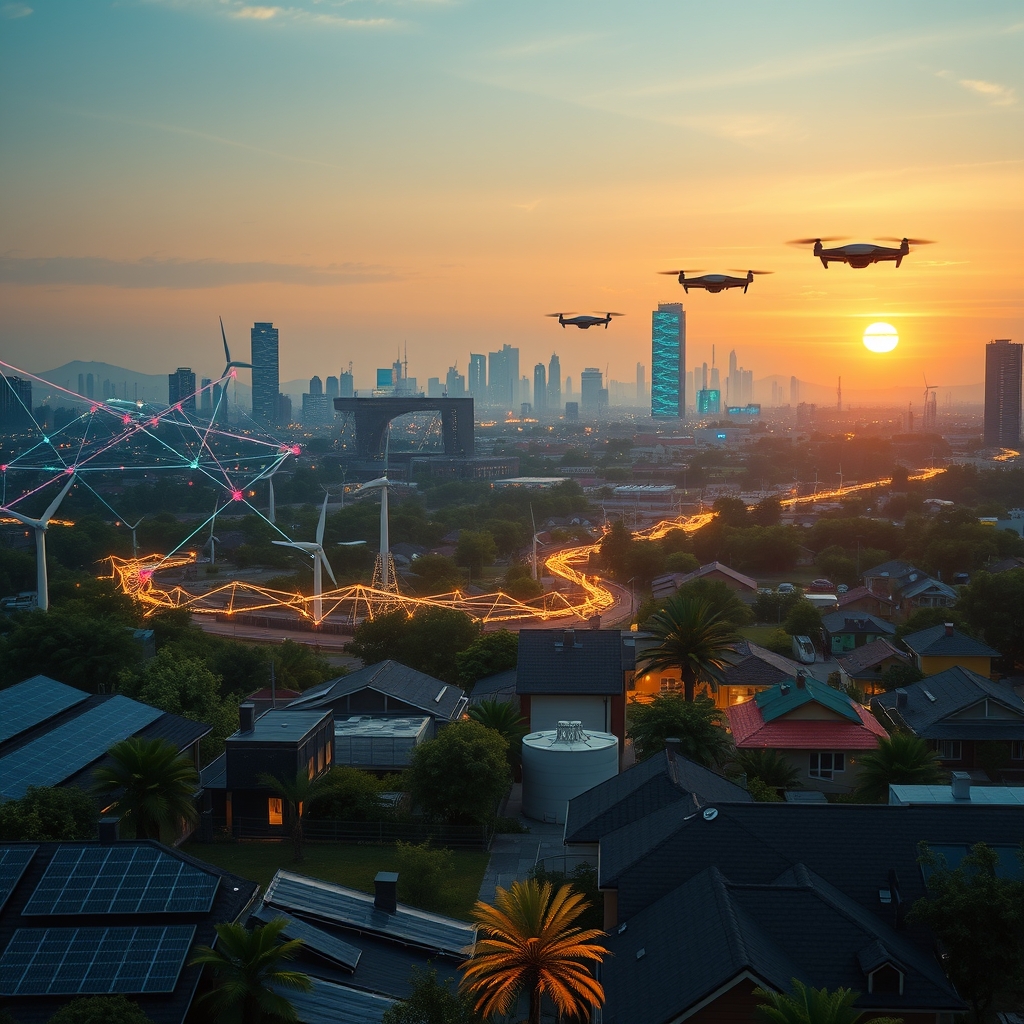
The hum of a city at dawn is no longer just the sound of engines roaring to life or the distant clatter of construction. Beneath the familiar rhythm of urban existence, a quieter, more profound transformation is underway—one that promises to redefine how we generate, distribute, and consume energy. At the heart of this shift lies an intricate dance between virtual power plants (VPPs) and decentralized energy markets, two innovations that are not just complementing the traditional grid but actively reshaping its very foundations.
The Rise of the Invisible Powerhouse
Imagine a power plant that doesn’t occupy a single acre of land, has no smokestacks, and emits no carbon. This is the essence of a virtual power plant—a network of distributed energy resources (DERs) that operate in unison to provide the same services as a conventional power station. These resources can include rooftop solar panels, home battery storage systems, electric vehicles, and even smart thermostats. By aggregating these disparate assets, VPPs create a flexible, responsive energy ecosystem that can balance supply and demand in real time.
The magic of VPPs lies in their ability to harness the collective power of thousands of small-scale energy producers. A homeowner with solar panels on their roof might generate excess energy during the day, which can then be stored in a battery or fed back into the grid. A VPP orchestrates these individual contributions, ensuring that the energy is used where and when it’s needed most. This not only reduces waste but also enhances grid stability, particularly during peak demand periods or unexpected outages.
The Decentralized Energy Revolution
While VPPs represent the technological backbone of this new energy paradigm, decentralized energy markets provide the economic framework that makes it all possible. Traditional energy markets are built around centralized utilities that control generation, transmission, and distribution. In contrast, decentralized markets empower individual consumers and businesses to buy, sell, and trade energy directly with one another, often through blockchain-based platforms or peer-to-peer (P2P) networks.
This shift is democratizing energy in ways previously unimaginable. In Brooklyn, New York, for example, the Brooklyn Microgrid project allows residents to trade locally generated solar energy with their neighbors, bypassing the traditional utility model. Similarly, in Australia, the Power Ledger platform enables households to sell excess solar power to others in their community, creating a dynamic, localized energy economy. These markets not only reduce reliance on fossil fuels but also foster energy independence and resilience, particularly in remote or underserved communities.
The Synergy of Technology and Policy
The success of VPPs and decentralized energy markets hinges on a delicate balance between technological innovation and supportive policy frameworks. On the technology front, advancements in smart grid management and energy efficiency AI are critical. Smart grids use real-time data and predictive analytics to optimize energy distribution, while AI-driven algorithms can forecast demand, detect anomalies, and even automate energy trading decisions. These tools are the nervous system of the modern grid, enabling it to respond dynamically to changing conditions.
Policy, however, is the backbone that holds it all together. Governments and regulators must create environments that encourage investment in DERs, incentivize energy storage, and establish fair, transparent rules for energy trading. In some regions, feed-in tariffs and net metering policies have already spurred the adoption of rooftop solar and battery storage. Meanwhile, initiatives like the European Union’s Clean Energy Package are pushing for greater consumer participation in energy markets, paving the way for a more decentralized future.
Overcoming the Challenges
Despite their promise, VPPs and decentralized energy markets face significant hurdles. One of the biggest challenges is interoperability—the ability of different energy assets and platforms to communicate and work together seamlessly. Without standardized protocols, integrating diverse technologies into a cohesive VPP can be complex and costly. Additionally, cybersecurity remains a critical concern, as the increasing digitization of the grid makes it more vulnerable to hacking and other malicious attacks.
Another obstacle is the need for public awareness and engagement. Many consumers are still unaware of the benefits of participating in decentralized energy markets or how to leverage technologies like VPPs. Education and outreach will be key to driving adoption, particularly among communities that have historically been excluded from the energy transition.
The Future: A Grid Without Boundaries
As VPPs and decentralized energy markets mature, they are poised to blur the lines between energy producers and consumers. The concept of the prosumer—a consumer who also produces energy—will become the norm, with households, businesses, and even entire communities playing an active role in the energy ecosystem. This shift will not only accelerate the transition to renewables but also create new economic opportunities, from energy trading to grid services.
Moreover, the integration of long-duration storage technologies, such as flow batteries or green hydrogen, will further enhance the flexibility and resilience of decentralized energy systems. Imagine a future where excess solar energy generated during the day is stored as hydrogen and then converted back to electricity at night, or where wind farms in remote locations feed energy into a global VPP that spans continents. The possibilities are as vast as they are exciting.
The grid of the future will not be a monolithic structure but a living, breathing network of interconnected nodes, each contributing to a larger, more sustainable whole. It will be a grid without boundaries, where energy flows freely and efficiently, powered by the collective ingenuity of millions. The transition won’t happen overnight, but with each solar panel installed, each battery deployed, and each energy trade executed, we move one step closer to a world where power is not just distributed—but truly democratized. The horizon is electrified, and the future is ours to shape.