The Unseen Revolution: How Closed Loop Manufacturing is Redefining Sustainable Tech

The hum of machinery in a modern tech manufacturing plant is no longer just a sound of progress—it is the rhythm of a revolution. Behind the sleek exteriors of smartphones, laptops, and wearable devices lies an evolving paradigm where waste is not an inevitability but a relic of an outdated era. Closed loop manufacturing is emerging as the cornerstone of this transformation, reimagining how technology is conceived, produced, and reborn.
The Philosophy of Circularity
At its core, closed loop manufacturing is a radical departure from the linear “take-make-dispose” model that has dominated industrial processes for centuries. Instead, it envisions a circular ecosystem where every material, component, and product is designed to re-enter the production cycle at the end of its life. This philosophy is not merely about recycling; it is about rethinking the very DNA of tech manufacturing to eliminate waste from the outset.
Companies pioneering this approach are embedding circularity into their design processes, ensuring that products are modular, repairable, and recyclable. For instance, some forward-thinking electronics manufacturers are now creating devices with standardized screws, easily replaceable batteries, and snap-fit components that can be disassembled in minutes. This shift is not just an environmental imperative but a strategic one, as consumers increasingly demand transparency and sustainability in the products they purchase.
Ethical Material Sourcing: The Foundation of Circularity
The journey toward closed loop manufacturing begins long before a product reaches the assembly line. Ethical material sourcing is the bedrock upon which sustainable tech is built. Traditional mining for rare earth metals—such as cobalt, lithium, and gold—has been plagued by environmental degradation, human rights violations, and geopolitical tensions. In response, innovators are turning to alternative materials and responsible sourcing practices.
Bio-based tech materials, derived from renewable resources like algae, mushrooms, and agricultural waste, are gaining traction as viable substitutes for petroleum-based plastics. These materials not only reduce dependency on finite resources but also offer lower carbon footprints and biodegradability. Additionally, initiatives like the Responsible Minerals Initiative are working to ensure that the metals used in electronics are sourced from conflict-free zones, adhering to strict environmental and social standards.
Energy-Optimized Fabrication: Powering the Future
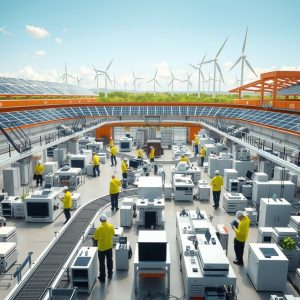
The energy demands of tech manufacturing are immense, but the integration of renewable energy sources is transforming factories into beacons of sustainability. Solar panels, wind turbines, and even kinetic energy recovery systems are being deployed to power production lines, drastically reducing greenhouse gas emissions. Some facilities are going a step further by implementing microgrids that combine renewable energy with battery storage, ensuring a steady and resilient power supply.
Beyond energy sourcing, energy-optimized fabrication techniques are minimizing waste at every stage of production. Advanced robotics and AI-driven systems are being used to precision-cut materials, reducing scrap and improving efficiency. Additive manufacturing, or 3D printing, is another game-changer, allowing for the creation of complex components with minimal material waste. These innovations are not just reducing the environmental impact of manufacturing but also lowering costs and increasing competitiveness.
Life Cycle Assessment: Measuring Impact Beyond the Factory
To truly embrace closed loop manufacturing, companies must adopt a holistic view of their products’ environmental impact. Life cycle assessment (LCA) is a powerful tool that evaluates the ecological footprint of a product from raw material extraction to disposal. By analyzing factors such as energy consumption, water usage, and emissions at each stage, manufacturers can identify opportunities for improvement and innovation.
For example, an LCA might reveal that the energy-intensive process of smelting aluminum for a laptop casing has a higher environmental cost than using recycled aluminum. Armed with this insight, a company can pivot to recycled materials, reducing both its carbon footprint and reliance on virgin resources. Similarly, LCA can highlight the benefits of designing products for longevity, as extending a device’s lifespan can significantly reduce its overall impact.
Transparent Green Supply Chains: Building Trust Through Accountability
In an era where greenwashing is rampant, transparency is the currency of trust. Consumers and regulators alike are demanding visibility into the supply chains that bring tech products to market. Closed loop manufacturing thrives on this transparency, as it requires collaboration and accountability across every link in the chain—from raw material suppliers to recyclers.
Blockchain technology is emerging as a powerful tool for achieving this transparency. By creating an immutable ledger of transactions, blockchain can track the journey of materials from mine to manufacturer to consumer and back again. This not only ensures ethical sourcing but also enables companies to verify the authenticity of recycled materials, preventing fraud and ensuring that sustainability claims are backed by real data.
Innovation at the Intersection of Sustainability and Technology
The future of sustainable tech manufacturing lies at the intersection of innovation and responsibility. Startups and established players alike are exploring groundbreaking solutions, such as self-healing materials that extend product lifespans, AI-driven sorting systems that improve recycling rates, and chemical recycling processes that break down plastics into their molecular components for reuse. These advancements are not just incremental improvements; they are leaps toward a future where technology and sustainability are inextricably linked.
One particularly promising area is the development of recyclable product architecture. By designing devices with end-of-life recycling in mind, manufacturers can ensure that valuable materials are recovered and reused. For instance, some companies are experimenting with dissolvable adhesives that allow for easy separation of components, while others are using single-material designs to simplify recycling processes. These innovations are turning the concept of “waste” into a misnomer, as every discarded product becomes a resource for the next generation of technology.
The shift toward closed loop manufacturing is more than a trend—it is a fundamental reimagining of how we create and consume technology. As industries embrace circular design processes, renewable energy integration, and ethical material sourcing, they are not only reducing their environmental impact but also future-proofing their operations. The factories of tomorrow will not be measured solely by their output but by their ability to regenerate, to innovate, and to leave a legacy of sustainability for generations to come. In this unseen revolution, the true power of technology lies not in what it can do, but in how it can be done responsibly, thoughtfully, and in harmony with the planet we call home.