The Solar Harvest: How Agrivoltaics and Bioengineered Crops Are Cultivating a Dual Revolution in Energy and Agriculture
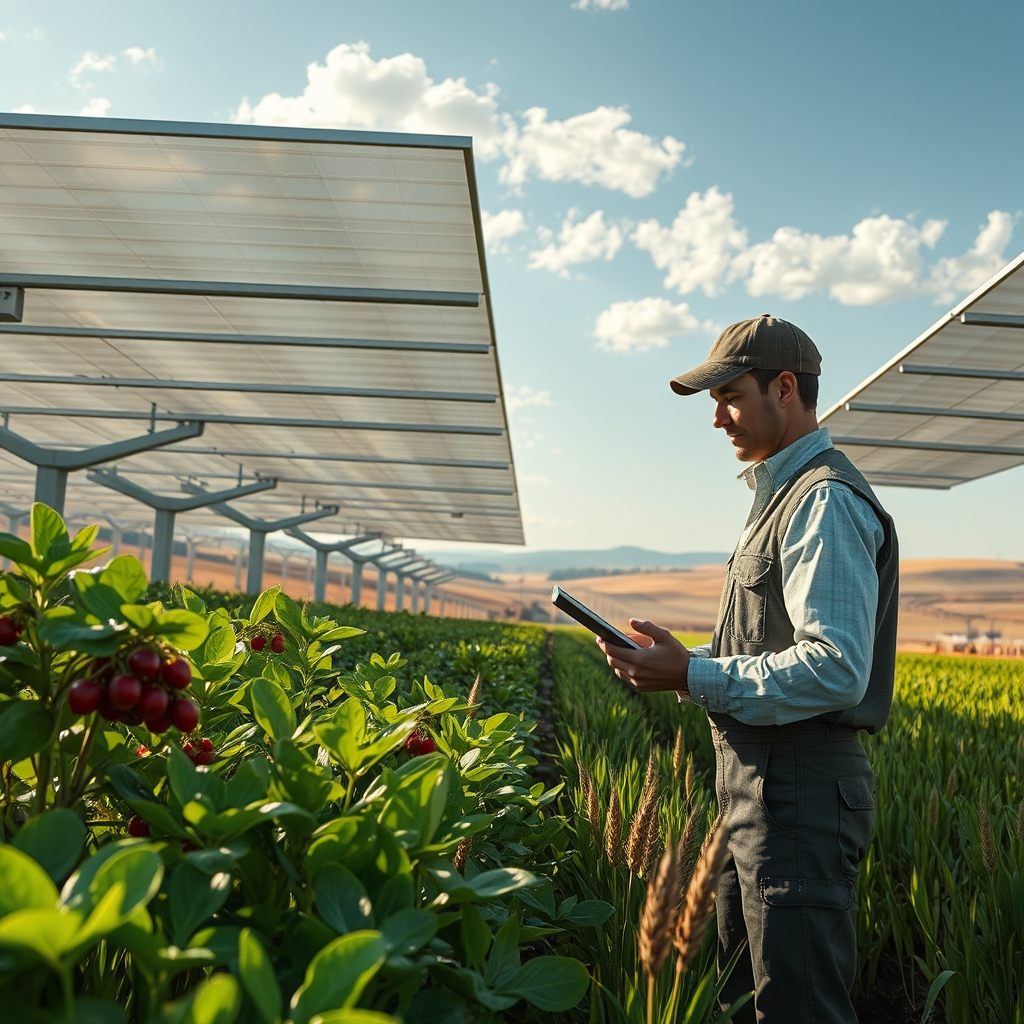
The golden fields of wheat sway gently under the midday sun, their stalks reaching toward the sky as if in silent conversation with the photovoltaic panels standing sentinel above. This is not a scene from a distant utopia, but a glimpse into the future of sustainable agriculture and renewable energy—a future where the land yields not just food, but power. Agrivoltaics, the practice of co-locating solar energy systems with agricultural production, is emerging as one of the most promising intersections of biotechnology innovation and clean energy technology. By integrating solar panels with farmland, we are not only optimizing land use but also unlocking new possibilities for bioengineered crops that thrive in the dappled shade of photovoltaic arrays.
The Symbiosis of Sun and Soil
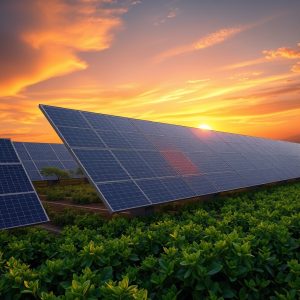
At the heart of agrivoltaics lies a simple yet revolutionary idea: why choose between energy and agriculture when you can have both? Traditional solar farms often face criticism for occupying vast tracts of land that could otherwise be used for farming. Agrivoltaics turns this challenge into an opportunity by elevating solar panels several meters above the ground, allowing crops to grow beneath them. The result is a symbiotic relationship where the panels provide shade, reducing water evaporation and protecting plants from extreme weather, while the crops help cool the panels, improving their efficiency.
Research has shown that certain crops, such as leafy greens, berries, and even some grains, actually perform better under partial shade. This discovery has sparked a wave of innovation in bioengineering, where scientists are developing crop varieties specifically adapted to thrive in agrivoltaic environments. By tweaking the genetic makeup of plants, researchers can enhance their tolerance to shade, improve their water-use efficiency, and even boost their photosynthetic capacity. The marriage of solar technology and bioengineering is not just about coexistence; it’s about creating a system where both energy and agriculture flourish in harmony.
The Role of Smart Grid Technology
For agrivoltaics to reach its full potential, it must be supported by an intelligent energy infrastructure. Smart grid technology plays a pivotal role in this equation, enabling the seamless integration of decentralized energy production with the broader power network. In an agrivoltaic system, solar panels generate electricity that can be used on-site to power irrigation systems, cold storage, or even electric farm equipment. Any excess energy can be fed into the grid, providing farmers with an additional revenue stream while contributing to the local energy supply.
Smart grids also allow for real-time monitoring and management of energy flows, ensuring that the system operates at peak efficiency. For example, during periods of low sunlight, the grid can draw on stored energy from batteries or other renewable sources, while during peak production hours, excess energy can be stored or distributed as needed. This level of flexibility is crucial for making agrivoltaics a viable and scalable solution for farmers around the world.
Bioengineering’s Green Thumb
The integration of bioengineering into agrivoltaics is where the true magic happens. By leveraging advances in genetic engineering and synthetic biology, scientists are creating crops that are not only shade-tolerant but also more resilient to climate change. For instance, researchers are exploring ways to modify the photosynthetic pathways of plants to make them more efficient in low-light conditions. Others are developing crops that require less water, reducing the strain on irrigation systems and making them ideal for arid regions where water scarcity is a growing concern.
One of the most exciting developments in this field is the use of CRISPR and other gene-editing technologies to enhance crop yields in agrivoltaic systems. By precisely editing the DNA of plants, scientists can create varieties that grow faster, produce more biomass, and even have improved nutritional profiles. These bioengineered crops are not just a boon for farmers; they represent a step forward in the global effort to secure food supplies in the face of a changing climate.
The Economic and Environmental Promise
Agrivoltaics is more than just a technological marvel; it’s a practical solution to some of the most pressing challenges of our time. For farmers, the benefits are clear: increased land productivity, reduced water usage, and a diversified income stream from energy production. In regions where farmland is scarce or expensive, agrivoltaics offers a way to maximize the value of every acre. Moreover, the shade provided by solar panels can extend the growing season for certain crops, allowing farmers to cultivate high-value produce even in hotter climates.
From an environmental perspective, agrivoltaics is a game-changer. By combining food and energy production on the same land, it reduces the need for deforestation and habitat destruction, which are often associated with large-scale solar farms. Additionally, the integration of bioengineered crops can help sequester carbon in the soil, further mitigating the impacts of climate change. When paired with energy storage systems, agrivoltaics can also contribute to grid stability, reducing the reliance on fossil fuels and lowering greenhouse gas emissions.
The Path Forward
Despite its promise, agrivoltaics is still in its early stages, and there are challenges to overcome. One of the biggest hurdles is the upfront cost of installing solar panels and bioengineered crops, which can be prohibitive for small-scale farmers. However, as technology advances and economies of scale kick in, these costs are expected to decrease. Governments and private investors are also stepping up to provide funding and incentives for agrivoltaic projects, recognizing their potential to drive sustainable development.
Another challenge is the need for further research to optimize crop selection and panel placement. Not all crops are suited to agrivoltaic systems, and the ideal configuration can vary depending on climate, soil type, and local energy demands. Collaborative efforts between agronomists, solar engineers, and biotechnologists will be essential to fine-tune these systems and ensure their success in diverse environments.
The fields of tomorrow are not just places where food is grown; they are living laboratories where energy is harvested, and innovation takes root. As agrivoltaics continues to evolve, it will redefine our relationship with the land, proving that sustainability is not a zero-sum game but a harmonious balance between human ingenuity and nature’s bounty. The sun, after all, has always been the ultimate source of life on Earth. Now, it is also becoming the catalyst for a new era of abundance, where the boundaries between energy and agriculture blur, and the future grows brighter with every passing season.