
Musk Space Based Data Center Idea Is A Betrayal Of Humanity
Support CleanTechnica’s work through a Substack subscription, on Patreon, or on Stripe. Help us produce all of the high-quality, original content we publish week after week despite the challenges of content-scraping AI, antisocial media, inflation, and other hurdles.
Despite copious evidence that Elon Musk is little more than a snake oil salesman and carnival barker like P. T. Barnum, the world continues to believe the man is somehow smarter than the rest of us. Few seem to realize his empire is built on nothing more than wildly inflated boasts and OPM — other people’s money.
Take away the billions Tesla received over the years from other automakers by selling emissions credits and the company likely would have failed early on. Musk recognized the opportunity those emissions credits offered and seized it with both hands. The existence of SpaceX depends almost entirely on the contracts it has secured from the US government.
People (including some here at CleanTechnica) get all weak in the knees when Musk makes his outlandish claims about robotaxis and Cybercabs, but the truth is that, after a decade, we are still waiting for that Model S to leave California, drive across the country, and park itself in a garage in Manhattan without a human driver ever touching the wheel.
Tesla, the car company, has shrunk its model lineup rather than expanding it. The Model S, Model X, and Cybertruck are now out of production, with no replacements in sight. The Roadster 2.0 is a party trick with a very limited potential market. The $25,000 Tesla is completely off the table.
Are the Model Y and Model 3 pretty good cars? Yes, they are. Yet the competition is bringing dozens of new models to market every month and introducing electric cars to world markets where their lack of exhaust emissions and lower operating costs can be a real benefit to the local population. The fact that Tesla ignores those markets is proof the company is little more than a niche player in the global automotive marketplace.
Musk And AI
Musk’s penchant for issuing pie in the sky predictions and boldly going where no one has gone before is now fully underway in the AI madness. In a recent report by the New York Times by Grace Kay and Ryan Mac, the pair detail the same Muskian passion for making bold claims and then bullying his employees to make them a reality.
Musk has used his connections to the White House to construct a sprawling (and rapidly expanding) data center — which Musk, with his usual modesty, calls Colossus — in a predominantly minority neighborhood in Memphis, Tennessee. That enterprise has now spread to nearby Mississippi. The local utilities could not possible supply all the electrical power those enormous facilities consume, and so Musk is powering them with portable methane fired generators that spew far more emissions into the air than a modern combined cycle generating station would.
Musk cannot wait for environmental reviews and other government restrictions, so he has blanketed the neighborhoods around his data centers with effluvia from those portable generators and used his political clout to suppress opposition to his plans. AI is too important to be delayed by such trivial concerns as people’s health or a massive influx of carbon emissions.
Colossus is home — assuming their is such a thing — to Grok, Musk’s AI invention that features the ability to undress virtually anyone for the amusement of pre-pubescent boys. We hear a lot today about Claude, the AI wizard from Anthropic, and ChatGPT from OpenAI, but Grok is hardly ever mentioned in the same breath as those AI tools.
That has placed Musk in a familiar bind. His dreams are far removed from reality, and so he has been forced to rent out computing power (now known simple as “compute”) to his competitors in order to pay the bills. The Times report says he has told employees that “SpaceX is falling behind in AI development, making it more lucrative to rent the company’s computing power out to rivals than use it to improve its own products,” three people told the Times reporters.
In August, Musk temporarily changed the group chat name for his AI team to “Sell compute because we can’t compete,” the Times was told. Then he did what Musk does so well — he tried motivating his people by threatening them. “Anyone wasting GPUs on bullshit while we are failing to compete will be asked to leave immediately, as this constitutes a betrayal of your team.” This type of bullying is typical of Musk, whose motto seems to be, “The beatings will continue until morale improves.”
Constraints On A Publicly Owned Corporation
Part of the problem is that SpaceX — the nominal owner of Musk’s AI ambitions — is now a public company, after its blockbuster IPO earlier this year. Before, it was a private company with no need to disclose its finances to the outside world. Now, it must justify is lofty valuation with real world results, and the pressure on Musk to justify his bet on AI is intense.
“SpaceX makes way more money right now renting out compute than from Grok,” said Nicolas Owens, an analyst who covers SpaceX for Morningstar Research, told the New York Times. “Grok is not the premier model in town, so I think it’s more doubtful that they would be able to tip the scale to where serving up A.I. off of their own servers is more lucrative than branching it out to Anthropic.”
Miusk told his engineers in August, “At the end of the day, the only thing that matters for competitiveness is revenue per GPU, not benchmarks. If you can’t pay for your GPUs, then you either go bankrupt or you become a computer rental company. Move the needle on revenue.”
And yet, despite such blandishments, the company has shifted resources away from internal AI projects. The Times reports that Mike Nicolls, the president of the AI unit, disbanded the 60 member team behind Grok Imagine, an image and video generation tool that was once a top priority. He told the workers involved the cuts would “better align our structure and resources with critical business priorities.”
Those priorities now appear to be focused on renting out as much “compute” as possible to competitors such as OpenAI, Anthropic, Google, and anyone else who needs extra computing power to drive the AI revolution forward.
One Million Data Centers In Space
In another attempt to distract the world of finance away from SpaceX’s financial struggles here on Earth, Musk now says he has received permission from the Federal Communications Commission to place up to one million data centers into sun-synchronous orbit around the Earth. That means they will be powered by sunlight nearly 24 hours a day, and their cooling needs will be minimized by the low temperatures in space.
SpaceX will build the 98 foot (30 m) long satellites at its Gigasat Factory in Bastrop, Texas, using AI chips manufactured at the 100 million square foot (ten times the size of the Texas Gigafactory) Terafab manufacturing facility in Grimes County, Texas.
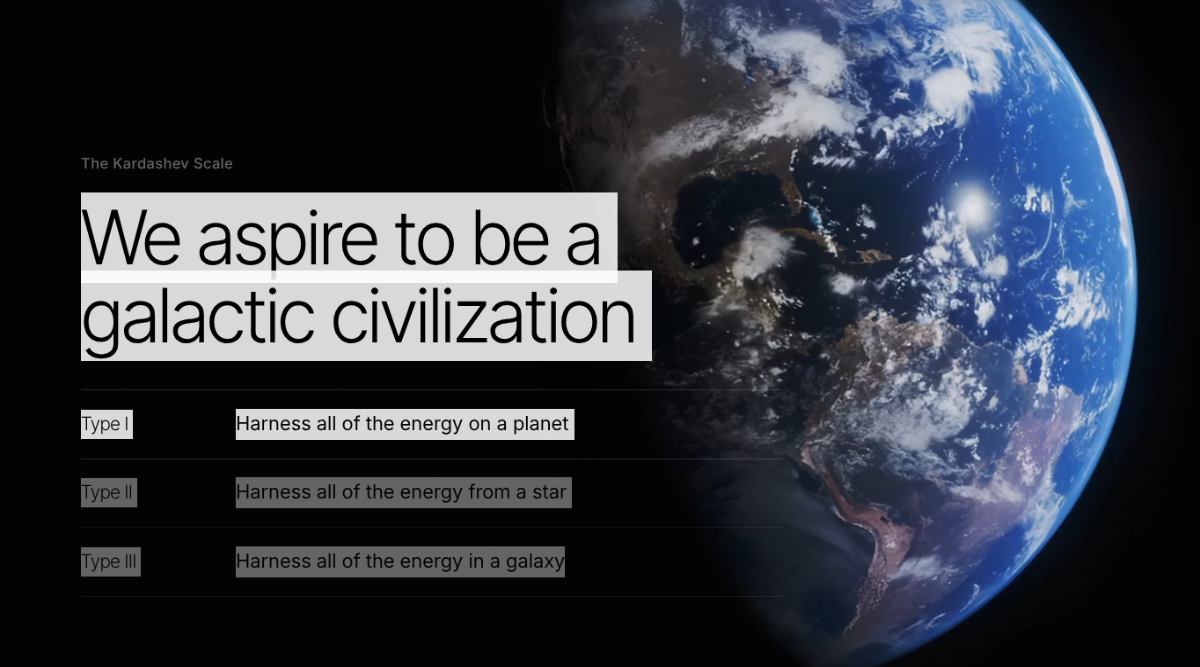
On its website, Terafab modestly announces, “We aspire to be a galactic civilization.” To make that happen, first it intends to “Harness all the energy on a planet,” then “Harness all the energy from a star,” and finally “Harness all of the energy in a galaxy.” Some readers may find all this hype and hysteria reminds them of a phrase made popular during Barry Goldwater’s presidential campaign: “In your heart, you know he’s nuts.”
In a press release, the FCC said it had approved the request to place one million satellites in orbit subject to certain conditions. According to Reuters, SpaceX must begin deployment no later than November 2033, deploy 10 percent of the maximum number no later than November of 2035, and deploy 50 percent by November 2038. Approving the application will permit SpaceX “to pioneer emergent technology that advances American leadership in space and artificial intelligence,” the FCC said.
The enormity of this plan is illustrated by the fact that, at present, there are only a total of 17,000 satellites orbiting the Earth (not counting the moon). SpaceX originally asked for permission to launch 42,000 Starlink satellites, yet today only 11,000 have been deployed.
Starship Is The Key
The satellites will be placed in Earth orbit by Starship, a reusable rocket developed by SpaceX. Those rockets are powered by methane, which has led environmental advocates to question the wisdom of the entire data centers in space project. But Elon has demonstrated by his actions with Colossus in Memphis and Mississippi he doesn’t care a flying fig leaf about the harm burning methane can do.
“Drastically expanding satellites in space has a direct impact on people’s everyday lives as well as the future of our planet,” said Jan Hasselman, senior attorney at Earthjustice. “Agencies that authorize companies looking to space as the next frontier still must operate within the law, and the law requires the FCC to consider all the risks and impacts of these proposals. It is dismaying that the FCC has ignored the law so blatantly and tried to mask the fact with a holiday filing.”
The approval by the FCC seems to be in violation of the National Environmental Protection Act (NEPA). Sharp eyed readers will notice that NEPA will be gutted by the proposed Bipartisan American Affordability and Jobs Act (BAAJA) that may slip through a lame duck Congress before the end of this year.
“This approval to deploy a million data centers in space without any thought to the impacts on Earth is just a glimpse of what we’ll see during the next two years of Trump,” said Sam Sankar, senior vice president at Earthjustice. “This is great example of why Congress should not pass a flawed bill like BAAJA that would lock in terrible projects like this one. Donald Trump is going to do a lot more dirty and lawless deals over the next years, and BAAJA prevents future presidents from reconsidering them.”
Does human civilization need Musk’s Starmind? It seems clear Musk is hellbent on exporting humanity to the moon, Mars, and beyond because he knows for dead solid certain that he and his tech bro cronies will make the Earth uninhabitable in the not too distant future. If you think about what Musk did to Ukraine recently when he unilaterally restricted its access to Starlink, the prospect of him running the world, if not the entire galaxy, should fill you with dread.
A certifiable lunatic with the power to play God? Be afraid; be very afraid.
Sign up for CleanTechnica’s Weekly Substack for Zach and Scott’s in-depth analyses and high level summaries, sign up for our daily newsletter, and follow us on Google News!
Have a tip for CleanTechnica? Want to advertise? Want to suggest a guest for our CleanTech Talk podcast? Contact us here.
Sign up for our daily newsletter for 10–15 new cleantech stories a day. Or sign up for our weekly one on top stories of the week if daily is too frequent.
CleanTechnica uses affiliate links. See our policy here.
CleanTechnica’s Comment Policy


