The Green Circuit: How Resource-Efficient Production is Powering the Future of Sustainable Tech
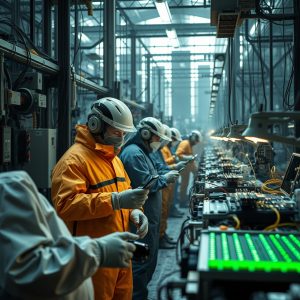
In the heart of a bustling tech hub, where the hum of servers and the clatter of keyboards once dominated, a new rhythm is emerging—one that pulses with the quiet efficiency of sustainable innovation. The shift toward resource-efficient production isn’t just a trend; it’s a fundamental reimagining of how technology is conceived, crafted, and consumed. This transformation is unfolding in factories, labs, and design studios around the world, where engineers and visionaries are proving that high performance and environmental stewardship can coexist harmoniously.
The Blueprint of Efficiency
At the core of resource-efficient production lies a simple yet revolutionary idea: every watt of energy, every gram of material, and every second of production time must be optimized. This philosophy is reshaping manufacturing processes, where traditional linear models—take, make, dispose—are being replaced by circular systems that prioritize longevity, reusability, and minimal waste. Companies are adopting lean manufacturing principles, where excess is eliminated, and every component is designed with its next life in mind. The result? A dramatic reduction in raw material consumption and a significant drop in carbon footprints.
Take, for example, the production of smartphones. A decade ago, the average device required over 70 different materials, many of them rare and environmentally taxing to extract. Today, forward-thinking manufacturers are slashing that number by integrating modular designs that allow for easy repairs and upgrades. Components like batteries, screens, and processors are no longer fused into a single, disposable unit but are instead designed to be swapped out, extending the lifespan of the device and reducing electronic waste. This isn’t just smart design; it’s a radical departure from the throwaway culture that has long plagued the tech industry.
The Energy Equation
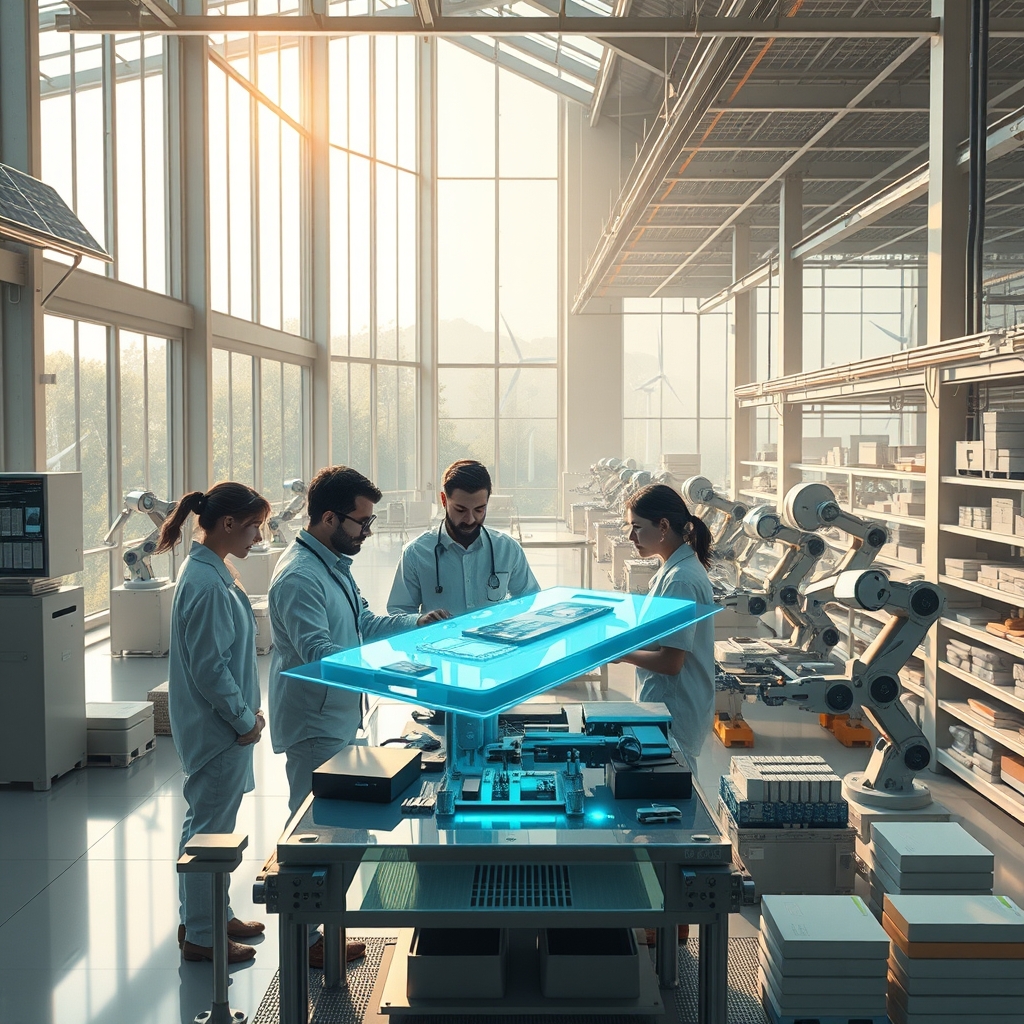
Energy is the lifeblood of tech manufacturing, and its sourcing has become a critical focus for sustainable production. Factories are increasingly powered by renewable energy sources—solar arrays stretch across rooftops, wind turbines spin on the horizon, and geothermal systems tap into the Earth’s natural heat. But the integration of renewables is only part of the equation. The real breakthrough lies in how energy is used. Advanced monitoring systems, powered by artificial intelligence, now track energy consumption in real time, identifying inefficiencies and optimizing usage down to the millisecond. These systems can predict demand spikes, adjust production schedules, and even reroute energy to where it’s needed most, ensuring that not a single kilowatt-hour is wasted.
In some cutting-edge facilities, energy efficiency is taken a step further through the use of microgrids—localized energy networks that combine renewable sources with battery storage. These microgrids not only reduce reliance on the traditional power grid but also enhance resilience, allowing factories to operate independently during outages or peak demand periods. The result is a manufacturing ecosystem that is not only greener but also more reliable and cost-effective.
The Materials Revolution
Beyond energy, the materials used in tech manufacturing are undergoing a profound transformation. Ethical sourcing has moved from a niche concern to a non-negotiable standard, with companies scrutinizing their supply chains to ensure that minerals like cobalt, lithium, and gold are extracted responsibly. But the innovation doesn’t stop at sourcing. Researchers are developing bio-based alternatives to traditional plastics and metals, using materials derived from algae, mushrooms, and even agricultural waste. These bio-materials are not only renewable but often biodegradable, offering a path to tech products that leave no trace behind.
One of the most exciting developments in this space is the rise of self-healing materials. Imagine a smartphone case that repairs its own scratches or a circuit board that mends minor cracks without human intervention. These materials, often infused with microcapsules of healing agents, extend the lifespan of products and reduce the need for replacements. They represent a paradigm shift in how we think about durability and waste, proving that sustainability and cutting-edge technology are not mutually exclusive.
Designing for the Future
The principles of resource-efficient production are also reshaping the way tech products are designed. Minimalist tech design, once a niche aesthetic, has become a cornerstone of sustainable manufacturing. By stripping away unnecessary features and focusing on core functionality, designers are creating products that are lighter, more energy-efficient, and easier to recycle. This approach isn’t just about aesthetics; it’s about rethinking the entire lifecycle of a product, from its initial conception to its eventual disposal.
Companies are also embracing modular design, where products are built from interchangeable components that can be easily upgraded or replaced. This not only extends the lifespan of the product but also reduces the demand for new materials. For instance, a laptop designed with a modular keyboard, trackpad, and battery can be updated piece by piece, rather than requiring a full replacement. This shift toward modularity is a game-changer, particularly in industries where rapid obsolescence has long been the norm.
The Human Element
Behind every innovation in resource-efficient production is a team of engineers, designers, and thinkers who are redefining what it means to create technology responsibly. These pioneers are driven by a shared vision: a future where tech manufacturing doesn’t come at the expense of the planet. Their work is guided by conscious innovation workflows—processes that prioritize sustainability at every stage, from ideation to execution. These workflows often involve cross-disciplinary collaboration, where experts in materials science, energy efficiency, and circular design come together to solve complex challenges.
One such challenge is the integration of life cycle assessment (LCA) into the design process. LCA is a methodology that evaluates the environmental impact of a product from cradle to grave, accounting for everything from raw material extraction to end-of-life disposal. By incorporating LCA into their workflows, companies can identify hotspots of environmental impact and make informed decisions about materials, energy use, and production methods. This data-driven approach ensures that sustainability isn’t just an afterthought but a fundamental consideration in every product.
As the sun sets over a factory powered by renewable energy, its lights flicker not with the wasteful glow of excess but with the precision of a system optimized for efficiency. The machines hum softly, their movements calculated to minimize energy use, their components designed to last. This is the future of tech manufacturing—a future where innovation and sustainability are not just aligned but inseparable. The journey is far from over, but with each breakthrough, the vision of a circular, resource-efficient tech industry comes into sharper focus, proving that the green circuit is not just a path forward but the only path worth taking.