The Quantum Leap: How Solar Energy and Genetic Engineering Are Forging a New Era of Sustainable Power

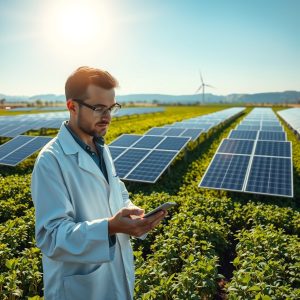
The golden hues of dawn stretch across the horizon, painting the sky with promises of a new day. Yet, beneath this serene spectacle, a quiet revolution is unfolding—one that marries the ancient power of the sun with the cutting-edge precision of genetic engineering. This fusion is not just reshaping how we harness energy; it is redefining the very boundaries of what is possible in the pursuit of sustainability. As the world grapples with the urgent need for cleaner, more efficient energy solutions, the convergence of solar technology and biotechnology is emerging as a beacon of hope, illuminating a path toward a future where energy is not only abundant but also harmonious with the natural world.
The Sun’s Endless Bounty: A Timeless Resource Reimagined
For millennia, humanity has looked to the sun as a source of life and inspiration. Ancient civilizations worshipped it as a deity, while modern science has sought to capture its energy through photovoltaic cells. Today, solar power stands as one of the most promising pillars of renewable energy, offering a clean, inexhaustible alternative to fossil fuels. Yet, despite its potential, solar technology has long been constrained by limitations in efficiency, storage, and scalability. Traditional silicon-based solar panels, while effective, are often criticized for their environmental footprint during production and their relatively modest energy conversion rates. Enter the next generation of solar innovation—a wave of advancements that are not only enhancing the performance of solar systems but also integrating them with biological processes to create something truly revolutionary.
Genetic Engineering: The Catalyst for Solar’s Evolution
At the heart of this transformation lies genetic engineering, a field that has already revolutionized medicine, agriculture, and industry. By manipulating the genetic code of organisms, scientists are now unlocking new ways to optimize solar energy capture and storage. One of the most groundbreaking developments in this space is the creation of biohybrid solar systems, where photosynthetic organisms—such as algae or cyanobacteria—are genetically modified to enhance their natural ability to convert sunlight into energy. These organisms, often referred to as “living solar panels,” offer a host of advantages over traditional photovoltaic technology. They are self-repairing, biodegradable, and capable of operating in a wider range of environmental conditions, from arid deserts to urban rooftops.
Algae: The Unsung Heroes of Solar Innovation
Algae, in particular, have emerged as a frontrunner in the biohybrid solar revolution. These microscopic powerhouses are among the most efficient photosynthetic organisms on Earth, capable of converting up to 90% of the sunlight they absorb into energy—a stark contrast to the 15-20% efficiency of conventional solar panels. Through genetic engineering, researchers have enhanced algae’s natural abilities, enabling them to produce higher yields of biofuels, such as hydrogen or ethanol, directly from sunlight. This process, known as photobiological hydrogen production, holds immense promise for creating a closed-loop energy system where algae not only generate power but also serve as a means of storing it. Imagine a future where vast algae farms double as solar energy plants, quietly and efficiently powering entire cities while absorbing carbon dioxide from the atmosphere.
Cyanobacteria: Nature’s Solar Factories
Cyanobacteria, often called blue-green algae, are another key player in this emerging field. These ancient microorganisms have been harnessing solar energy for billions of years, and scientists are now tapping into their potential to create bio-solar cells. By genetically modifying cyanobacteria to express conductive proteins, researchers have developed living solar cells that can generate electricity directly from sunlight. Unlike traditional solar panels, which require rare and expensive materials like silicon, these bio-solar cells can be grown in labs using simple, sustainable inputs. They are also highly adaptable, capable of thriving in environments where conventional solar technology would falter, such as underwater or in low-light conditions. The implications are profound: from powering remote sensors in the ocean to providing energy in space, cyanobacteria-based solar cells could unlock new frontiers in energy generation.
The Synergy of Smart Grids and Bioenergy Storage
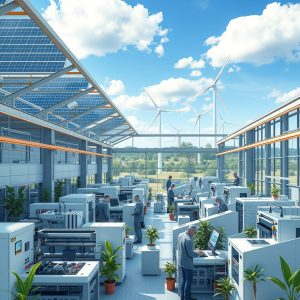
While the advancements in biohybrid solar systems are remarkable, they are only one piece of the puzzle. For solar energy to truly become a cornerstone of the global energy mix, it must be integrated with smart grid technology and advanced energy storage systems. Smart grids, which use digital communication technology to detect and react to local changes in energy usage, are essential for managing the intermittent nature of solar power. By combining smart grids with bioenergy storage solutions—such as algae-based biofuels or genetically engineered microbes that store energy in chemical bonds—we can create a resilient, decentralized energy network. This network would not only be more efficient but also more responsive to the needs of communities, reducing waste and ensuring a steady supply of clean energy, even when the sun isn’t shining.
Energy Storage: The Missing Link
One of the most significant challenges facing solar energy is storage. Traditional batteries, while improving, are still limited by their capacity, lifespan, and environmental impact. Here, too, genetic engineering is offering innovative solutions. Researchers are exploring the use of genetically modified bacteria to produce and store energy in the form of biofuels or even electricity. For example, certain bacteria can be engineered to produce and store hydrogen, a clean-burning fuel that can be used to generate electricity on demand. Others are being designed to create bioelectricity directly, using microbial fuel cells that convert organic matter into power. These bio-based storage systems could revolutionize the way we think about energy, making it possible to store solar power for days, weeks, or even months without the need for bulky, expensive batteries.
A Glimpse into the Future: The Living Energy Ecosystem
As we stand on the cusp of this new era, it is not difficult to imagine a world where energy is no longer something we extract from the earth but something we cultivate. Picture a city where buildings are clad in living solar panels, their surfaces teeming with genetically enhanced algae that capture sunlight and convert it into power. Envision farms where crops are grown not just for food but for fuel, their genetic code optimized to maximize energy production. Consider a grid that is not just smart but alive, where microorganisms work in tandem with digital technology to balance supply and demand in real time. This is not science fiction; it is the tangible future being forged in labs and research centers around the world.
The fusion of solar energy and genetic engineering is more than just a technological breakthrough—it is a paradigm shift. It represents a fundamental rethinking of our relationship with energy, one that moves away from exploitation and toward symbiosis. By harnessing the power of the sun through the lens of biotechnology, we are not only creating cleaner, more efficient energy systems but also laying the foundation for a future where technology and nature coexist in harmony. The sun has always been our greatest ally in the quest for survival; now, with the help of genetic engineering, it may well become our partner in the journey toward a sustainable tomorrow.