The Solar Leaf: How Bio-Mimicry is Revolutionizing Next-Gen Photovoltaic Design
The natural world has always been humanity’s greatest teacher, offering blueprints for innovation that have shaped everything from architecture to aerodynamics. Now, as the renewable energy sector races to meet the demands of a climate-conscious future, scientists are turning once again to nature—this time, to the humble leaf. The result? A groundbreaking fusion of biotechnology and solar engineering that is redefining what photovoltaic (PV) systems can achieve. This is the era of the solar leaf, where bio-mimicry isn’t just an inspiration but a transformative force in clean energy technology.
The Science Behind the Solar Leaf
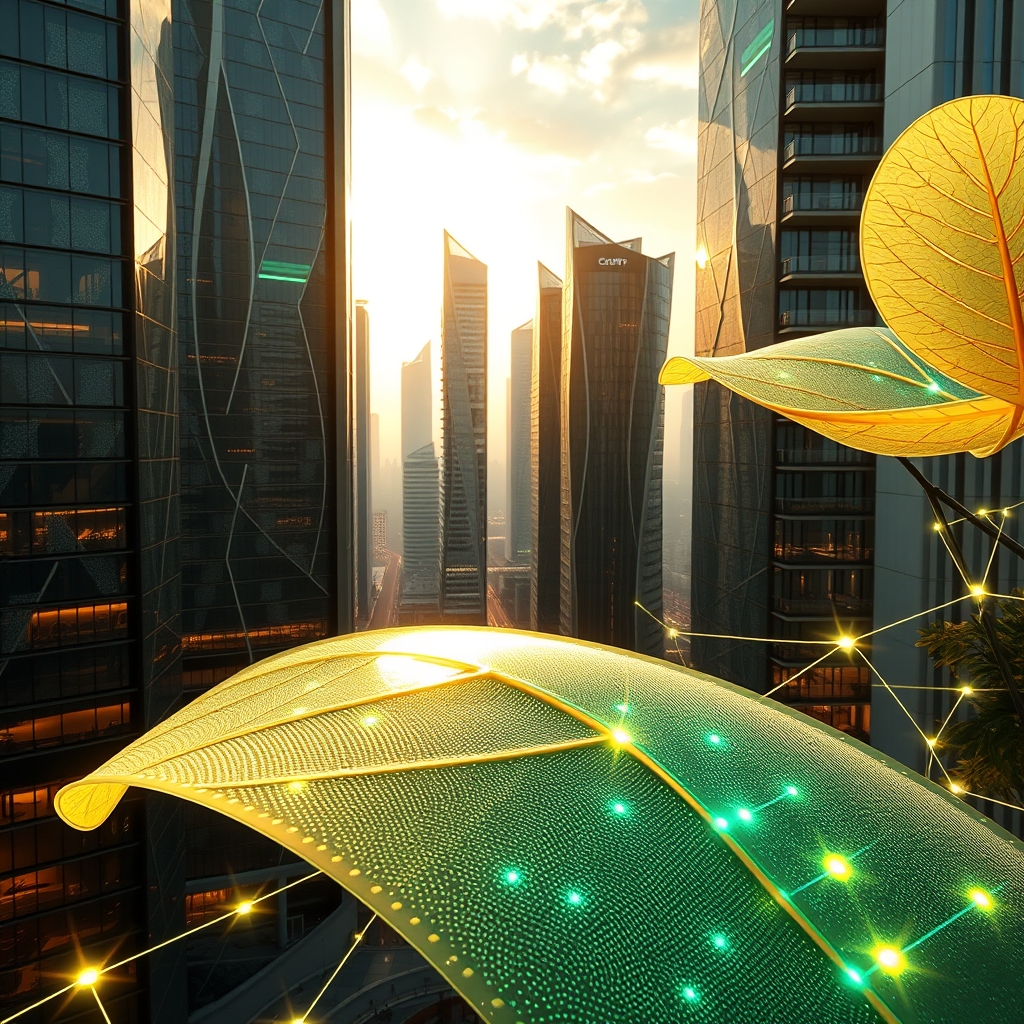
At its core, the solar leaf is a bio-inspired photovoltaic system designed to replicate the efficiency of photosynthesis—the process by which plants convert sunlight into chemical energy. Traditional solar panels, while effective, are limited by their rigid structures, fixed angles, and inability to adapt to dynamic environmental conditions. The solar leaf, however, takes a different approach. By mimicking the hierarchical structure of a leaf, researchers have developed PV systems that are not only more efficient but also more adaptable to real-world conditions.
One of the most promising advancements in this field is the use of perovskite solar cells, which are integrated into flexible, leaf-like substrates. These cells, inspired by the light-absorbing pigments in plant leaves, can capture a broader spectrum of sunlight compared to conventional silicon-based panels. Additionally, the leaf’s natural venation pattern—its network of veins—has inspired the design of microchannels that improve heat dissipation, reducing energy loss and extending the lifespan of the system.
Bioengineering Meets Photovoltaics
The integration of bioengineering into solar technology doesn’t stop at structural mimicry. Researchers are also exploring the use of biohybrid materials—combinations of organic and inorganic components—that can enhance the performance of solar leaves. For instance, certain proteins derived from photosynthetic organisms, such as bacteriorhodopsin, are being incorporated into PV cells to improve their light-harvesting capabilities. These proteins act as natural light antennas, funneling energy more efficiently to the solar cell’s active layers.
Another exciting development is the use of self-repairing polymers, inspired by the way plants heal from damage. These materials can automatically mend micro-cracks in solar panels, a common issue that reduces efficiency over time. By embedding these polymers into the structure of solar leaves, researchers aim to create PV systems that maintain peak performance for decades, drastically reducing maintenance costs and waste.
Adaptive and Responsive Solar Systems
One of the most remarkable features of the solar leaf is its ability to adapt to its environment. Unlike traditional solar panels, which are static and often require manual adjustment to optimize sunlight exposure, solar leaves can dynamically respond to changes in light intensity, angle, and even temperature. This is achieved through the integration of smart materials, such as shape-memory alloys and electroactive polymers, which allow the leaf to bend, twist, or even fold in response to external stimuli.
For example, in low-light conditions, the solar leaf can adjust its angle to maximize sunlight absorption, much like how a real leaf orients itself toward the sun. In high temperatures, the leaf’s microchannels can expand to enhance cooling, preventing overheating and energy loss. This level of adaptability not only improves efficiency but also makes solar leaves ideal for a wide range of environments, from urban rooftops to remote off-grid locations.
The Role of Smart Grids in Solar Leaf Integration
The potential of solar leaves extends beyond individual installations. When integrated into smart grid technology, these systems can create a dynamic, responsive energy network capable of balancing supply and demand in real time. Smart grids equipped with solar leaves can optimize energy distribution based on local weather conditions, time of day, and even the specific energy needs of connected buildings or communities.
For instance, during peak sunlight hours, a network of solar leaves could generate surplus energy, which is then stored in advanced energy storage systems for later use. Conversely, during cloudy or nighttime conditions, the grid can draw from these reserves, ensuring a steady and reliable power supply. This level of integration is a game-changer for renewable energy, making solar power more predictable and scalable than ever before.
The Future of Solar Leaves: From Lab to Landscape
While the solar leaf is still in the experimental phase, its potential applications are vast. In urban settings, solar leaves could be integrated into building facades, windows, or even street furniture, transforming cities into living, breathing energy ecosystems. In rural areas, they could provide off-grid power solutions for communities that lack access to traditional energy infrastructure. And in agricultural settings, solar leaves could be used in agrivoltaic systems, where they coexist with crops to maximize land use efficiency while generating clean energy.
Moreover, the scalability of solar leaves makes them a viable solution for large-scale solar farms. By covering vast areas with these adaptive, bio-inspired systems, we could significantly increase the energy output of renewable installations without expanding their physical footprint. This is particularly important as the world seeks to transition away from fossil fuels while minimizing the environmental impact of energy production.
The journey of the solar leaf from a scientific curiosity to a mainstream energy solution is a testament to the power of interdisciplinary innovation. By blending the principles of biotechnology, materials science, and renewable energy, researchers are not only pushing the boundaries of what solar technology can achieve but also reimagining our relationship with the natural world. As these systems evolve, they promise to bring us closer to a future where energy is not just clean and abundant but also in harmony with the ecosystems that sustain us. The solar leaf is more than a technological marvel—it is a symbol of what happens when we look to nature not just for inspiration, but for solutions.