The Solar Microbiome: How Microbial Fuel Cells Are Electrifying the Future of Green Energy
The sun has long been the cornerstone of renewable energy, its rays harnessed by photovoltaic panels to power homes, businesses, and even entire cities. Yet, as the world races toward a sustainable future, scientists are uncovering revolutionary ways to merge biology with technology, creating systems that don’t just capture energy but thrive on it. Among the most groundbreaking of these innovations is the fusion of microbial life with solar technology—a symbiotic relationship that could redefine how we generate, store, and distribute clean power.
The Invisible Workforce: Microbes as Energy Producers
At the heart of this transformation lies a microscopic powerhouse: bacteria. Certain species of microorganisms, such as Geobacter and Shewanella, possess an extraordinary ability to generate electricity as a byproduct of their metabolic processes. These electroactive microbes break down organic matter, releasing electrons that can be captured and channeled into electrical currents. The result? A living battery, capable of producing energy from waste, wastewater, or even the organic compounds in soil.
Microbial fuel cells (MFCs) are the vessels that harness this potential. Unlike traditional batteries, which rely on chemical reactions, MFCs leverage the natural processes of bacteria to create a continuous flow of electrons. When integrated with solar technology, these systems form a hybrid energy solution that operates around the clock—day and night, rain or shine. The implications are staggering: imagine a world where wastewater treatment plants double as power stations, or where agricultural fields generate electricity from the very soil they cultivate.
The Solar-Microbial Synergy: A Match Made in Energy Heaven
While solar panels excel at capturing energy during daylight hours, their efficiency wanes when the sun sets. Microbial fuel cells, on the other hand, operate independently of sunlight, making them the perfect complement to photovoltaic systems. By combining the two, researchers are creating hybrid energy grids that maximize output while minimizing waste. During the day, solar panels dominate, feeding excess energy into storage systems or the grid. At night, MFCs take over, drawing power from organic matter to maintain a steady supply of electricity.
This synergy extends beyond mere energy production. Microbial fuel cells can also enhance the efficiency of solar farms by breaking down organic debris that might otherwise accumulate on panels, reducing their effectiveness. In agricultural settings, MFCs integrated into irrigation systems can generate power from the nutrients in water runoff, creating a closed-loop system that benefits both energy production and crop health. The possibilities are as vast as they are transformative, offering a glimpse into a future where energy systems are not just sustainable but self-sustaining.
From Lab to Landscape: Real-World Applications
The transition from laboratory experiments to real-world applications is already underway. In rural communities with limited access to traditional power grids, microbial fuel cells are being deployed as decentralized energy solutions. In India, for example, researchers have piloted MFCs in wastewater treatment plants, converting sewage into electricity while simultaneously purifying water. The results have been promising, with some systems generating enough power to light nearby homes and businesses.
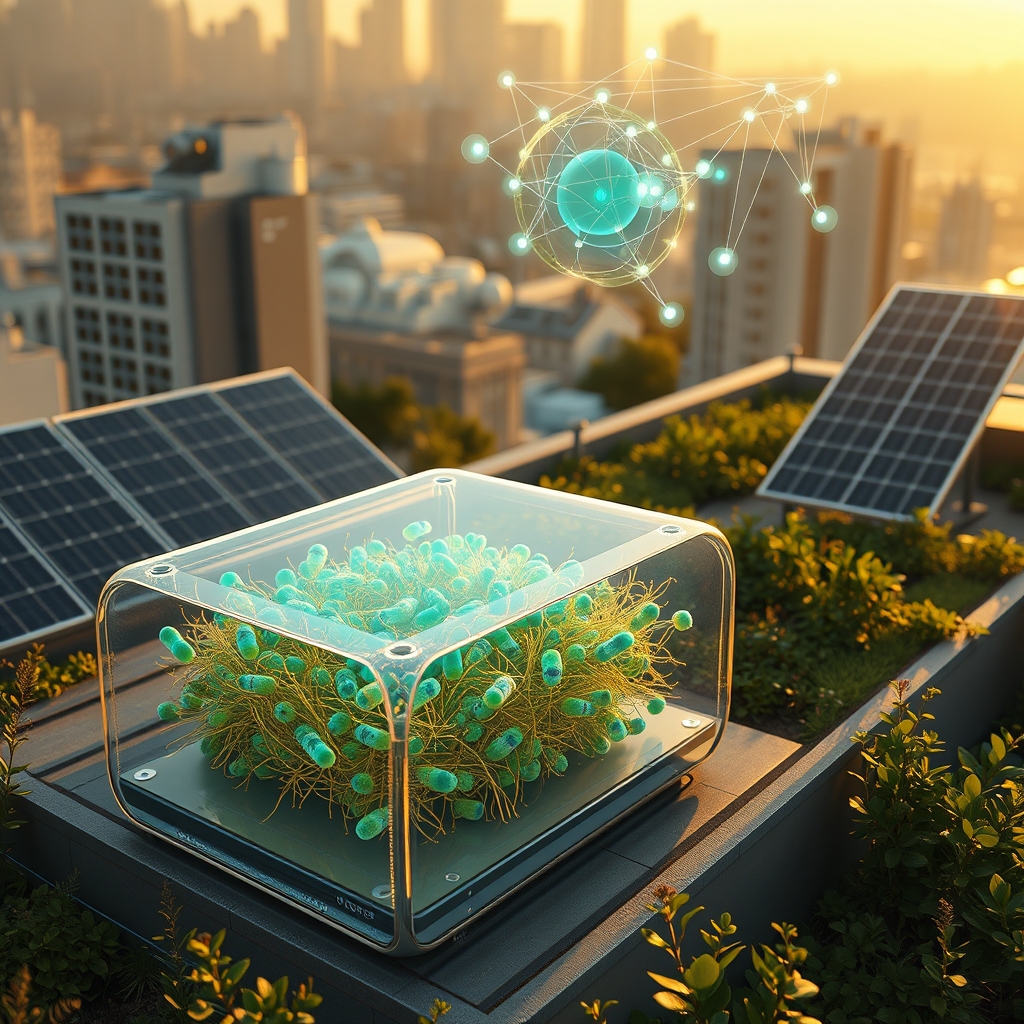
In urban environments, the integration of MFCs with solar technology is taking shape in innovative ways. Green roofs, already prized for their ability to insulate buildings and reduce urban heat, are being reimagined as dual-purpose energy generators. By embedding microbial fuel cells into the soil of these rooftop gardens, buildings can produce electricity from both sunlight and organic waste, turning cities into living, breathing power stations. Similarly, smart grids equipped with MFCs can dynamically balance energy supply and demand, ensuring a stable flow of power even during peak usage hours.
The Challenges Ahead: Scaling Up and Overcoming Barriers
Despite their promise, microbial fuel cells face significant hurdles on the path to widespread adoption. One of the primary challenges is scalability. While MFCs have proven effective in small-scale applications, scaling them up to meet the energy demands of entire communities remains a daunting task. Researchers are exploring ways to increase the power output of individual cells, as well as developing modular systems that can be linked together to form larger arrays.
Another obstacle is cost. The materials used in MFCs, such as platinum and other precious metals, can be prohibitively expensive. Scientists are investigating alternative catalysts, including carbon-based materials and bioengineered enzymes, to reduce costs without sacrificing efficiency. Additionally, the infrastructure required to integrate MFCs with existing energy grids poses logistical and financial challenges, particularly in regions with outdated or unreliable power systems.
The Ethical Dimension: Balancing Innovation with Responsibility
As with any emerging technology, the fusion of microbial and solar energy raises important ethical questions. The use of genetically modified organisms (GMOs) in MFCs, for instance, could enhance their efficiency but also introduces potential risks to ecosystems. Ensuring that these systems are safe, sustainable, and equitable requires careful regulation and public engagement. Transparency in research and development will be key to building trust and ensuring that the benefits of this technology are accessible to all, not just a privileged few.
Moreover, the deployment of microbial fuel cells must be guided by principles of environmental justice. In many parts of the world, communities that have borne the brunt of pollution and climate change stand to benefit the most from clean energy innovations. Prioritizing these regions in the rollout of MFC technology can help address historical inequities while accelerating the global transition to renewable energy.
The fusion of microbial life and solar technology represents more than just a scientific breakthrough—it is a paradigm shift in how we think about energy. No longer are we limited to extracting power from finite resources or relying solely on the whims of the weather. Instead, we are learning to collaborate with the natural world, harnessing the invisible forces that have sustained life for billions of years. As these systems evolve, they promise to blur the lines between technology and biology, creating a future where energy is not just clean but alive. The journey has only just begun, and the possibilities are as limitless as the sun itself.