The Invisible Grid: How Energy Efficiency AI and Solid State Batteries Are Redefining the Backbone of Modern Power

The hum of electricity is so ubiquitous in modern life that we often forget the intricate dance of electrons powering our world. Yet, behind the flick of a switch lies a vast, evolving ecosystem where innovation is quietly rewriting the rules of energy. At the heart of this transformation are two technologies that, while seemingly unrelated, are converging to create a smarter, more resilient grid: energy efficiency AI and solid-state batteries. Together, they are not just improving how we use power—they are redefining what it means to have a grid at all.
The Intelligence Layer: AI as the Grid’s Silent Conductor
Imagine a grid that doesn’t just deliver power but anticipates demand, adjusts in real time, and learns from every fluctuation. This is the promise of energy efficiency AI, a technology that is turning the grid from a passive network into an adaptive, self-optimizing system. By analyzing vast datasets—from weather patterns to consumer behavior—AI algorithms can predict peaks in demand before they happen, reroute power to prevent outages, and even identify inefficiencies in transmission that would otherwise go unnoticed.
One of the most compelling applications of AI in this space is demand response. Traditionally, utilities have relied on blunt instruments like rolling blackouts to manage supply during peak hours. AI changes the game by enabling dynamic pricing and automated load shifting. Smart thermostats, for instance, can adjust temperatures in homes and businesses based on real-time grid conditions, reducing strain without sacrificing comfort. In industrial settings, AI-driven systems can optimize machinery schedules to align with periods of low demand, cutting costs and carbon footprints simultaneously.
The impact of these innovations extends beyond mere convenience. By smoothing out demand curves, AI reduces the need for peaker plants—those fossil-fuel-powered facilities that only kick in during periods of high demand. The result is a grid that is not only more efficient but also cleaner, as renewable energy sources like solar and wind can be integrated more seamlessly.
The Storage Revolution: Solid State Batteries and the Quest for Perfect Power
If AI is the brain of the modern grid, then storage is its beating heart. For decades, lithium-ion batteries have dominated the conversation, but their limitations—safety concerns, degradation over time, and limited energy density—have spurred a search for alternatives. Enter solid-state batteries, a technology that promises to overcome these challenges and unlock new possibilities for grid storage.
Unlike their liquid-electrolyte counterparts, solid-state batteries use a solid material to conduct ions between the anode and cathode. This design eliminates the risk of leaks or fires, a critical advantage for large-scale applications. More importantly, solid-state batteries can store significantly more energy in the same footprint, making them ideal for everything from electric vehicles to grid-scale storage. Companies like QuantumScape and Solid Power are racing to commercialize the technology, with early prototypes demonstrating energy densities that could double or even triple those of traditional lithium-ion batteries.
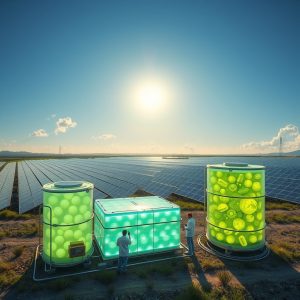
The implications for the grid are profound. With solid-state batteries, utilities can store excess renewable energy more efficiently, smoothing out the intermittency that has long been a barrier to widespread adoption. Imagine a solar farm that doesn’t just generate power during the day but stores it for use at night, or a wind turbine that captures energy during a storm and releases it when the air is still. Solid-state batteries make these scenarios not just possible but practical, turning renewables from a supplemental power source into the backbone of the grid.
The Synergy: When AI Meets Solid State
The true magic happens when energy efficiency AI and solid-state batteries converge. AI can optimize the charging and discharging of batteries based on real-time grid conditions, extending their lifespan and maximizing their utility. For example, an AI system might decide to charge a battery during a period of low demand when renewable energy is abundant, then discharge it during peak hours when electricity is most expensive. This not only reduces costs for consumers but also eases the strain on the grid during critical periods.
This synergy is already being tested in pilot projects around the world. In Australia, a virtual power plant (VPP) uses AI to coordinate thousands of rooftop solar panels and home batteries, creating a decentralized network that can respond to grid demands in real time. In Japan, solid-state batteries are being integrated into smart grids to provide backup power during natural disasters, ensuring resilience in the face of adversity. These projects are just the beginning, offering a glimpse of a future where the grid is not just smart but self-healing.
The Ripple Effect: Beyond the Grid
The benefits of this technological convergence extend far beyond the grid itself. By making energy storage more efficient and reliable, solid-state batteries are accelerating the adoption of electric vehicles, which in turn reduces emissions and dependence on fossil fuels. Meanwhile, AI-driven energy efficiency is helping industries from manufacturing to agriculture cut waste and operate more sustainably. Even cities are getting smarter, with AI-powered systems optimizing everything from street lighting to public transit, reducing energy consumption without sacrificing quality of life.
Yet, for all its promise, this transformation is not without challenges. The deployment of AI and solid-state batteries requires significant investment in infrastructure, as well as regulatory frameworks that can keep pace with technological change. There are also ethical considerations, such as data privacy and the equitable distribution of benefits. But these hurdles are not insurmountable. With the right policies and partnerships, the invisible grid of the future could become a reality sooner than we think.
The grid we rely on today was designed for a different era, one where power flowed in one direction and demand was predictable. But the world has changed, and so too must our approach to energy. As AI and solid-state batteries weave their way into the fabric of the grid, they are not just improving an old system—they are building something entirely new. A system that is smarter, cleaner, and more resilient. A system that doesn’t just power our lives but adapts to them, seamlessly and silently, like the very air we breathe.