
The Solar Synapse: How Neural-Inspired Smart Grids Are Electrifying the Future of Renewable Energy
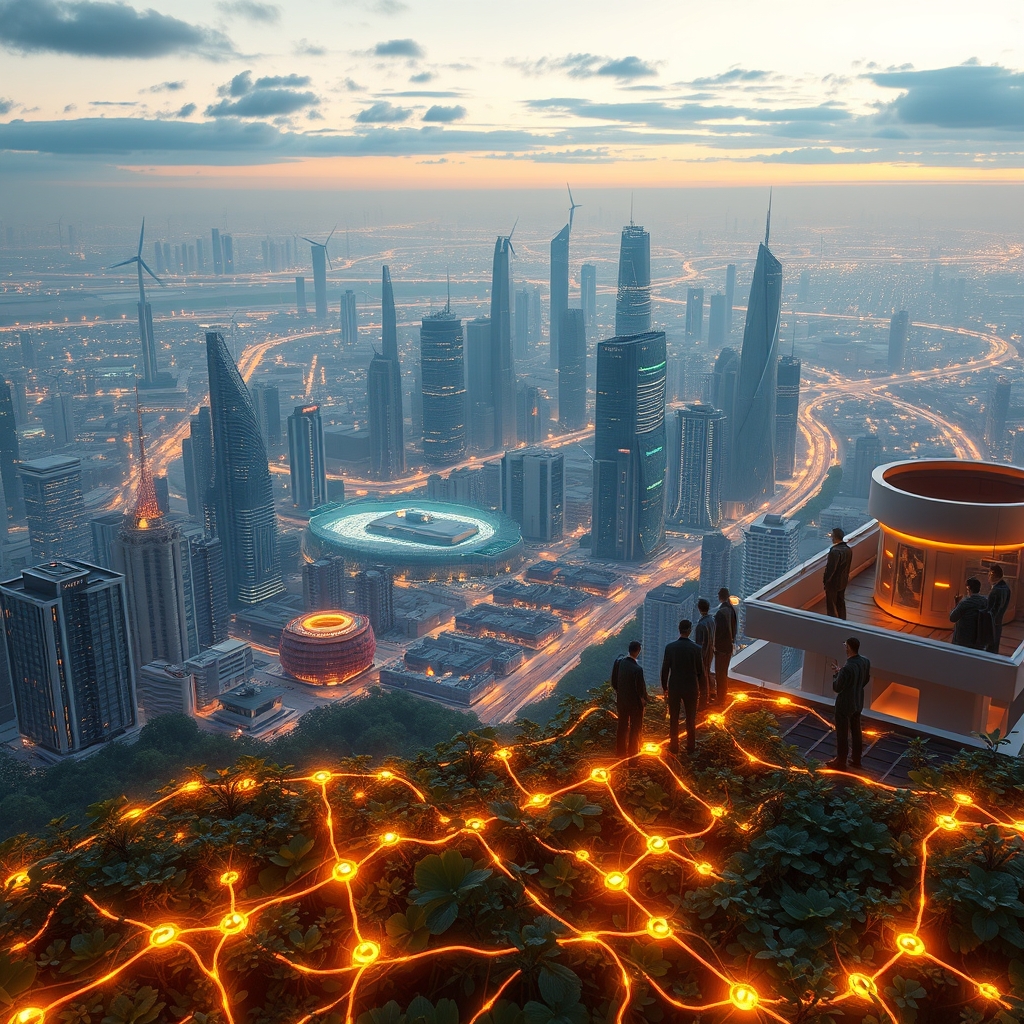
The hum of a city at dawn is no longer just the sound of engines and footsteps—it is the quiet pulse of a new kind of intelligence, one that flows through the veins of our energy infrastructure like synapses firing in a vast, interconnected brain. This is the promise of neural-inspired smart grids, a revolutionary leap in how we generate, distribute, and consume renewable energy. Unlike traditional power networks, which operate on rigid, one-way flows, these next-generation systems mimic the adaptability and resilience of biological neural networks, dynamically rerouting energy where it’s needed most, optimizing efficiency, and even learning from patterns of consumption and generation.
The Brain Behind the Grid
At the heart of this transformation lies a fusion of artificial intelligence, advanced biotechnology, and renewable energy innovation. Neural-inspired smart grids are not merely automated—they are *cognitive*. They leverage machine learning algorithms trained on vast datasets of energy usage, weather patterns, and grid performance to predict demand surges, anticipate solar output fluctuations, and preemptively balance loads. This is not unlike the way neurons in the human brain form predictive models of the world, allowing us to react to stimuli before they fully unfold.
For example, consider a solar farm in the Mojave Desert, where the intensity of sunlight shifts with the time of day and the whims of passing clouds. A traditional grid would struggle to adapt to these fluctuations, often resulting in wasted energy or sudden shortfalls. But a neural-inspired smart grid can analyze real-time data from sensors embedded in solar panels, weather satellites, and even local wildlife patterns (which may indicate changes in cloud cover) to adjust energy distribution in milliseconds. The result? A seamless, self-regulating system that maximizes efficiency and minimizes waste.
Biotechnology’s Role in the Neural Grid
The intersection of biotechnology and smart grid technology is where things get truly fascinating. Researchers are exploring how bioengineered materials and living systems can enhance the resilience and adaptability of these grids. One groundbreaking avenue is the use of bioelectronic interfaces—materials that bridge the gap between biological and electronic systems. These interfaces could enable smart grids to interact directly with living organisms, such as plants or algae, which naturally respond to environmental changes.
Imagine a grid that doesn’t just monitor solar output but also communicates with a network of genetically modified plants engineered to produce conductive proteins. These plants could act as living sensors, detecting shifts in humidity, temperature, or sunlight and relaying that information to the grid in real time. Such a system would create a feedback loop where the grid and the natural environment co-evolve, each adapting to the other’s needs. This is not science fiction—early experiments in plant-based bioelectronics have already demonstrated the feasibility of such an approach, hinting at a future where energy systems are as alive as the ecosystems they power.
The Energy Internet: A Web of Renewable Intelligence
The neural-inspired smart grid is not just a local phenomenon; it is part of a larger vision known as the Energy Internet. This concept, pioneered by researchers at institutions like the Massachusetts Institute of Technology and the European Union’s Horizon 2020 program, envisions a global network of interconnected energy systems that operate with the same fluidity and intelligence as the internet itself. In this model, every solar panel, wind turbine, and energy storage system becomes a node in a vast, decentralized web, capable of sharing energy and data across continents.
One of the most compelling applications of this idea is in peer-to-peer energy trading. With neural-inspired smart grids, individual households and businesses equipped with solar panels or wind turbines can sell excess energy directly to their neighbors, bypassing traditional utilities altogether. This not only democratizes energy production but also creates a more resilient system, where localized disruptions—such as a storm knocking out a substation—can be mitigated by rerouting energy from nearby sources. The grid, in this sense, becomes a living organism, constantly adapting and evolving to meet the needs of its users.
Energy Storage: The Neural Grid’s Memory
No discussion of smart grids would be complete without addressing the critical role of energy storage. Neural-inspired systems are revolutionizing this space as well, moving beyond the limitations of traditional batteries to embrace a new generation of biohybrid storage solutions. These systems combine the best of biological and synthetic materials to create storage technologies that are not only more efficient but also more sustainable.
One promising development is the use of bioengineered supercapacitors, which leverage the natural energy storage capabilities of certain proteins and enzymes. These supercapacitors can charge and discharge energy at speeds far exceeding those of lithium-ion batteries, making them ideal for smoothing out the intermittent nature of solar and wind power. Additionally, researchers are exploring how microbial fuel cells—which generate electricity through the metabolic processes of bacteria—could be integrated into smart grids to provide a continuous, low-level supply of energy. These innovations are not just incremental improvements; they represent a fundamental reimagining of what energy storage can be.
The Human Factor: Designing Grids for People
For all their technological sophistication, neural-inspired smart grids are ultimately tools designed to serve human needs. This means that their success hinges not just on their technical capabilities but also on their ability to integrate seamlessly into the lives of the people who rely on them. One of the most exciting developments in this space is the rise of user-centric grid design, where energy systems are tailored to the behaviors, preferences, and even the emotional states of their users.
For instance, imagine a smart grid that doesn’t just optimize energy distribution based on usage patterns but also takes into account the psychological and social factors that influence energy consumption. A grid that knows when a household is likely to be home (and thus requires more energy for heating or cooling) because it has learned the family’s weekly routines. Or a grid that can detect when a neighborhood is hosting a large event, such as a festival or sports game, and temporarily increase energy supply to accommodate the surge in demand. These are not distant possibilities but near-term realities, made possible by the convergence of AI, biotechnology, and renewable energy innovation.
As the sun sets over a city powered by a neural-inspired smart grid, the lights do not flicker or dim. Instead, they glow with the steady, intelligent pulse of a system that has learned to harmonize with the rhythms of nature and human life. This is not just the future of energy—it is the future of how we live, a testament to our ability to create technologies that are as adaptive, resilient, and alive as the world they serve. The grid of tomorrow is not a static network of wires and substations; it is a dynamic, breathing entity, a true synapse of the solar age, connecting us not just to power, but to the very essence of what it means to thrive in a sustainable world.


