
The Solar Catalyst: How Enzymatic Photovoltaics Are Accelerating the Clean Energy Transition
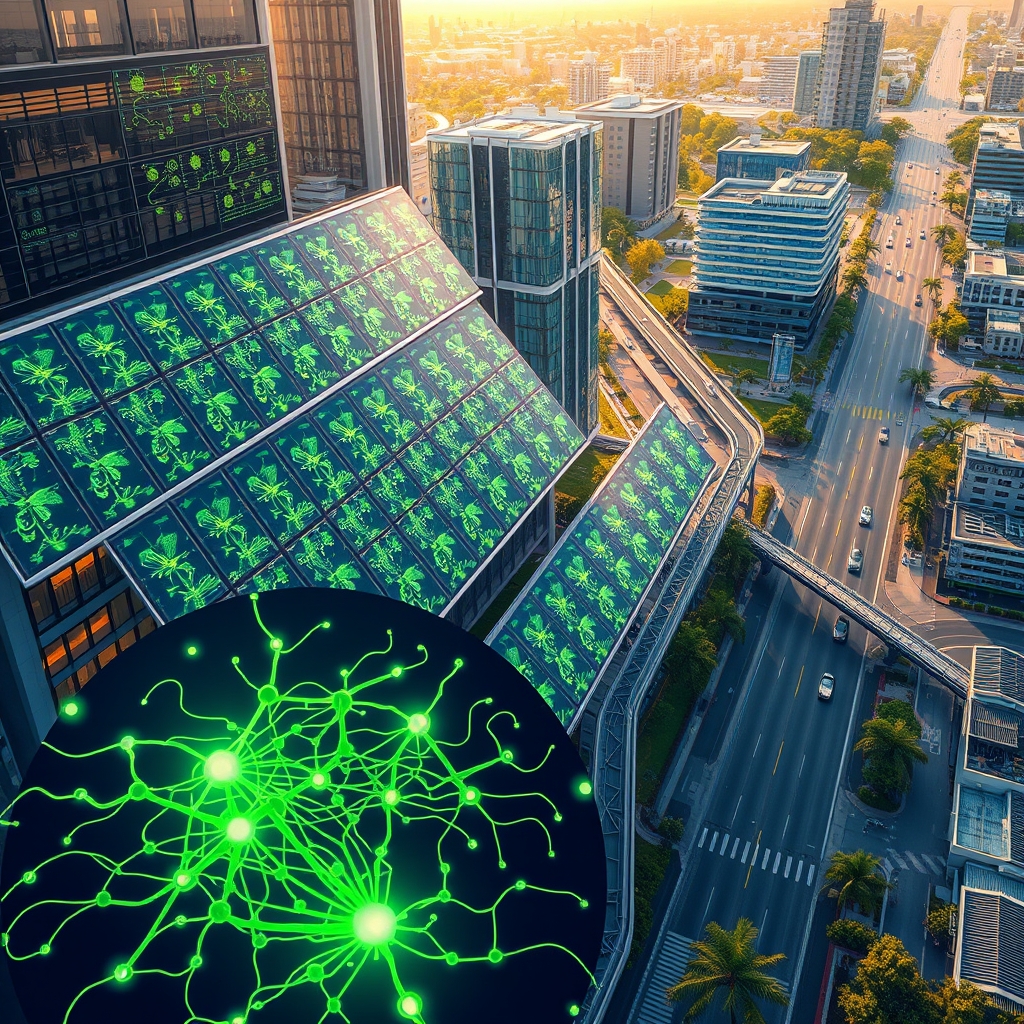
The sun has always been the Earth’s most abundant and democratic energy source, yet humanity has only scratched the surface of its potential. While traditional solar panels have made remarkable strides in efficiency and affordability, a new frontier is emerging—one where biology and photovoltaics converge to unlock unprecedented possibilities. Enzymatic photovoltaics, a cutting-edge fusion of biotechnology and solar energy, are poised to redefine how we harness sunlight, offering a glimpse into a future where energy systems are not just sustainable but self-optimizing.
The Science Behind Enzymatic Photovoltaics
At the heart of enzymatic photovoltaics lies the marriage of photosynthetic proteins and advanced materials science. Unlike conventional silicon-based solar cells, which rely on inorganic semiconductors to convert sunlight into electricity, enzymatic photovoltaics leverage the natural efficiency of biological molecules—specifically, enzymes derived from photosynthetic organisms like algae and cyanobacteria. These enzymes, such as photosystem I (PSI) and photosystem II (PSII), have evolved over billions of years to capture and transfer solar energy with near-perfect efficiency.
Researchers have discovered that by embedding these enzymes into conductive nanomaterials—such as graphene or carbon nanotubes—they can create hybrid systems that mimic the natural process of photosynthesis while generating electricity. The result is a solar cell that doesn’t just passively absorb light but actively participates in the energy conversion process, much like a living organism. This biohybrid approach could overcome some of the fundamental limitations of traditional photovoltaics, including efficiency losses due to heat and the environmental cost of manufacturing silicon-based panels.
The Efficiency Paradox: Why Biology Holds the Key
One of the most persistent challenges in solar technology is the Shockley-Queisser limit, a theoretical cap on the efficiency of single-junction solar cells, which maxes out at around 33%. While multi-junction cells and perovskite technologies have pushed beyond this boundary, they often come with trade-offs in cost, stability, and scalability. Enzymatic photovoltaics, however, offer a tantalizing workaround. Because biological systems have evolved to optimize energy transfer at the molecular level, they can achieve near-unity quantum efficiency—meaning nearly every photon absorbed is converted into usable energy.
Recent experiments have demonstrated that PSI-based biohybrid solar cells can achieve external quantum efficiencies exceeding 80%, a figure that dwarfs even the most advanced silicon cells. Moreover, these systems operate effectively under low-light conditions, making them ideal for regions with less direct sunlight or for indoor energy harvesting. The implications are profound: enzymatic photovoltaics could enable solar panels that not only generate more power but do so with a fraction of the material requirements, reducing both cost and environmental impact.
The Sustainability Advantage: A Circular Energy Ecosystem
Beyond efficiency, enzymatic photovoltaics promise to revolutionize the sustainability of solar energy. Traditional solar panels, while clean in operation, rely on energy-intensive manufacturing processes and rare earth materials, some of which are mined under environmentally and ethically questionable conditions. In contrast, biohybrid solar cells can be produced using low-energy, solution-based methods, often leveraging renewable resources like plant-derived enzymes or lab-grown proteins.
Perhaps even more compelling is the potential for these systems to be self-repairing. Biological molecules naturally degrade over time, but researchers are exploring ways to integrate enzymatic photovoltaics with synthetic biology techniques that allow for continuous regeneration. Imagine solar panels that, like living organisms, can heal minor damage or even adapt their structure to optimize performance under changing environmental conditions. This could dramatically extend the lifespan of solar installations, reducing waste and further lowering the carbon footprint of renewable energy.
From Lab to Grid: The Path to Scalability
While enzymatic photovoltaics are still in the experimental phase, the pace of innovation is accelerating. Startups and research institutions are racing to develop scalable production methods, from 3D-printed biohybrid cells to roll-to-roll manufacturing techniques that could one day enable mass production. Challenges remain, particularly in stabilizing biological components for long-term use and integrating them with existing energy infrastructure. However, the potential rewards—higher efficiency, lower costs, and a truly circular energy system—make this a field worth watching.
One of the most exciting applications lies in the integration of enzymatic photovoltaics with smart grid technology. By embedding biohybrid cells into building materials, road surfaces, or even wearable devices, we could create a decentralized energy network that generates power where it’s needed most. Paired with advanced energy storage systems, such as bioengineered batteries or flow cells, this could pave the way for a fully renewable energy grid that operates seamlessly, regardless of weather conditions or time of day.
The Ethical Horizon: Navigating the Bioenergy Frontier
As with any emerging technology, enzymatic photovoltaics raise important ethical and environmental questions. The use of genetically modified enzymes or lab-grown proteins could spark debates about biosafety, intellectual property, and equitable access to clean energy. There are also concerns about the long-term ecological impact of scaling up biohybrid systems, particularly if they rely on engineered organisms that could interact with natural ecosystems.
Yet, these challenges are not insurmountable. By fostering collaboration between scientists, policymakers, and communities, we can ensure that enzymatic photovoltaics are developed responsibly, with safeguards in place to mitigate risks. The goal is not just to create a new generation of solar technology but to reimagine our relationship with energy—one where innovation is guided by principles of sustainability, equity, and resilience.
The fusion of biotechnology and solar energy is more than just a scientific breakthrough; it’s a testament to humanity’s ability to learn from nature and adapt its wisdom to our greatest challenges. As enzymatic photovoltaics inch closer to commercial viability, they remind us that the future of clean energy isn’t just about harnessing the sun—it’s about becoming part of the natural systems that have sustained life on Earth for millennia. In this light, the transition to renewable energy is not just a technological shift but a profound evolution in how we power our world, one that could finally align human progress with the rhythms of the planet itself.