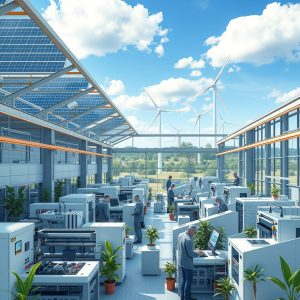
The Unseen Symphony: How Resource-Efficient Production and Bio-Based Materials Are Composing the Future of Sustainable Tech
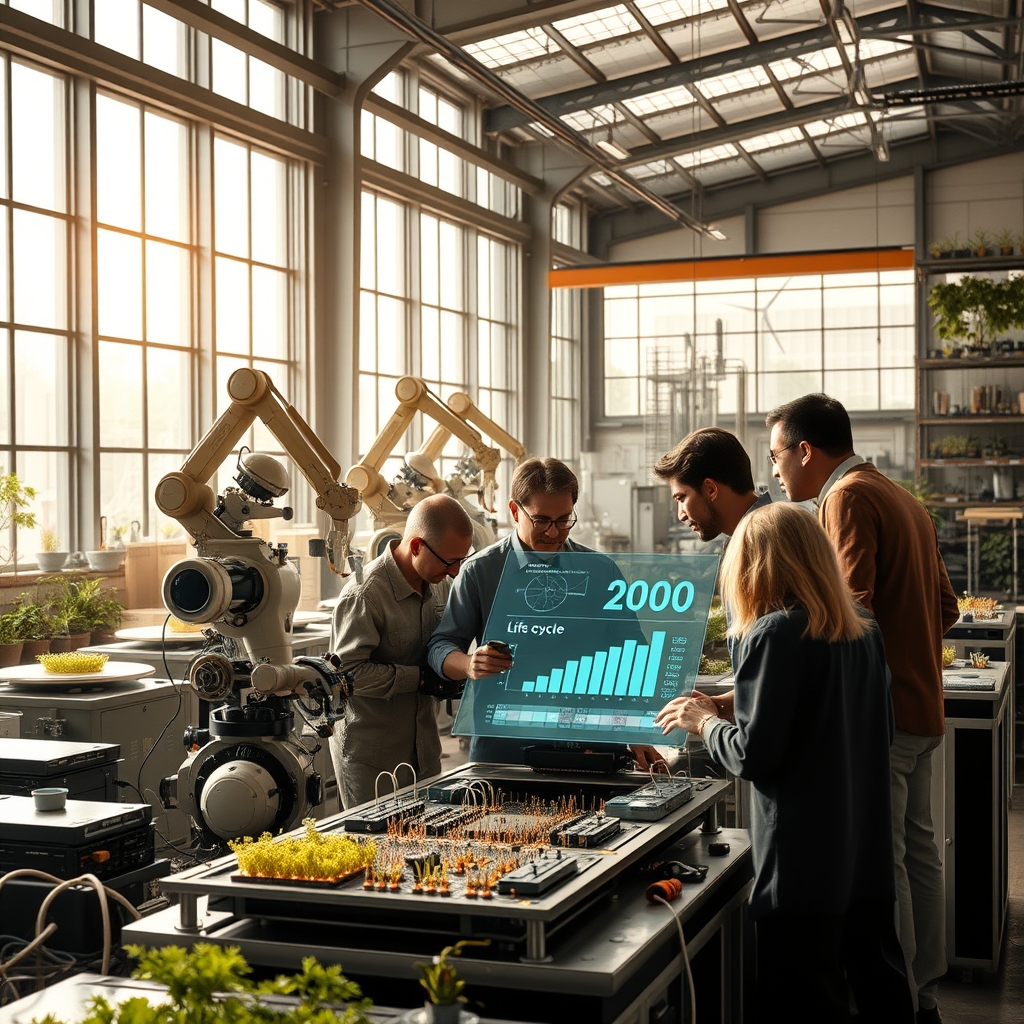
In the quiet hum of a modern manufacturing floor, something extraordinary is unfolding. It is not the deafening clatter of machinery or the blinding glow of molten metal, but the subtle, almost imperceptible shift toward a new kind of harmony—one where technology and nature move in synchrony. This is the realm of sustainable tech manufacturing, where every component, every process, and every decision is measured not just by efficiency or cost, but by its impact on the planet. Here, the old paradigms of extraction and waste are giving way to a more elegant solution: a circular dance of resource-efficient production and bio-based materials that promises to redefine what it means to create.
The Alchemy of Resource Efficiency
Resource-efficient production is not merely about doing more with less; it is about reimagining the very essence of creation. In traditional manufacturing, resources are often treated as infinite, consumed without thought for their origin or their end. But in the world of sustainable tech, every gram of material, every watt of energy, and every drop of water is accounted for. Advanced analytics and AI-driven systems now optimize production lines in real time, reducing waste to near-zero levels. Factories are no longer cavernous spaces of excess but finely tuned ecosystems where inputs and outputs are balanced with precision.
Take, for example, the production of printed circuit boards (PCBs), the backbone of modern electronics. In conventional manufacturing, the etching process can generate hazardous waste and consume vast amounts of water. But innovative companies are now adopting laser direct imaging and additive manufacturing techniques that eliminate the need for chemical etchants altogether. The result? A process that is not only cleaner but also more adaptable, allowing for rapid prototyping and customization without the environmental toll. This is resource efficiency in its purest form: a seamless fusion of innovation and responsibility.
The Promise of Bio-Based Materials
If resource efficiency is the rhythm of this new symphony, then bio-based materials are its melody. For decades, the tech industry has relied on petroleum-derived plastics and rare earth metals, materials that are as harmful to extract as they are difficult to dispose of. But nature, in its infinite wisdom, offers alternatives that are not only sustainable but often superior in performance. From mycelium-based packaging to algae-derived bioplastics, the possibilities are as vast as they are inspiring.
One of the most exciting developments in this space is the rise of bio-based polymers for electronic components. Researchers have discovered that certain plant-based materials, such as cellulose nanofibers and lignin, can be engineered to exhibit properties comparable to traditional plastics—conductivity, durability, and flexibility—without the environmental baggage. Imagine a smartphone case made from mushroom mycelium or a circuit board derived from agricultural waste. These are not distant fantasies but tangible realities, already being tested in labs and pilot projects around the world. The shift toward bio-based materials is not just a trend; it is a fundamental rethinking of how we define progress.
The Role of Closed Loop Systems
No discussion of sustainable tech manufacturing would be complete without addressing the critical role of closed loop systems. In a linear economy, products are made, used, and discarded, creating a relentless cycle of waste. But in a circular economy, waste is not an endpoint but a beginning. Closed loop systems ensure that materials are continuously reused, recycled, or repurposed, minimizing the need for virgin resources and reducing the strain on landfills.
Companies like Fairphone and Dell are leading the charge, designing products with disassembly in mind. Their devices are modular, allowing components to be easily replaced or upgraded, extending the product’s lifespan and reducing e-waste. Even more impressive are initiatives that recover precious metals from discarded electronics, turning what was once considered waste into a valuable resource. This is not just recycling; it is a radical reimagining of value, where nothing is ever truly discarded but instead finds new life in another form.
Energy as the Invisible Conductor
Behind every sustainable manufacturing process lies an often-overlooked factor: energy. The shift toward renewable energy integration is not just about powering factories with solar or wind; it is about redefining the relationship between production and power. Microgrids, energy storage systems, and smart grids are enabling factories to operate with unprecedented efficiency, balancing supply and demand in real time. Some facilities are even becoming energy-positive, generating more power than they consume and feeding the excess back into the grid.
In Scandinavia, for instance, tech manufacturers are harnessing the region’s abundant hydropower and geothermal energy to create some of the greenest production facilities in the world. These factories are not just reducing their carbon footprint; they are setting a new standard for what it means to be a responsible corporate citizen. The integration of renewable energy is not a peripheral concern but a central pillar of sustainable tech manufacturing, proving that progress and preservation can go hand in hand.
The Human Element: Conscious Innovation Workflows
At the heart of this transformation lies a fundamental shift in mindset. Sustainable tech manufacturing is not just about technology; it is about the people who design, build, and use it. Conscious innovation workflows prioritize collaboration, transparency, and ethical decision-making at every stage of the process. Designers are no longer working in isolation but in cross-functional teams that include environmental scientists, ethicists, and even end-users. This holistic approach ensures that sustainability is not an afterthought but a guiding principle.
Companies are also embracing transparency in their supply chains, allowing consumers to trace the journey of their products from raw material to finished good. This level of openness builds trust and accountability, proving that sustainability is not just a marketing buzzword but a core value. When employees, customers, and stakeholders are all aligned in their commitment to responsible innovation, the impact is profound. It is no longer enough to ask, “Can we build this?” The question now is, “Should we?”
The Ripple Effect of Minimalist Design
In a world obsessed with more—more features, more power, more speed—minimalist tech design offers a refreshing counterpoint. By stripping away the unnecessary, designers are not only reducing material use but also creating products that are more intuitive, more durable, and more beautiful. Minimalism in tech is not about deprivation; it is about refinement, about distilling a product to its essence and eliminating anything that does not serve a purpose.
Consider the rise of modular smartphones, where users can customize their devices by adding or removing components as needed. This approach not only reduces e-waste but also empowers consumers to take ownership of their technology. Similarly, companies like Framework are designing laptops that can be easily repaired and upgraded, challenging the throwaway culture that has dominated the tech industry for decades. Minimalist design is not just a trend; it is a rebellion against excess, a declaration that less can indeed be more.
The journey toward sustainable tech manufacturing is not a sprint but a marathon, a continuous evolution of ideas, technologies, and mindsets. It is a journey that demands patience, creativity, and an unwavering commitment to the future. As factories hum with renewable energy, as bio-based materials replace their petroleum counterparts, and as closed loop systems ensure that nothing is wasted, we are not just witnessing a change in how things are made. We are witnessing a transformation in how we think about progress itself. The symphony is still being composed, but the first notes are already resonating, a promise of a world where technology and nature coexist in perfect harmony.