
The Silent Giants: How Decentralized Energy Markets and Sustainable Aviation Fuel Are Redrawing the Skies of Tomorrow
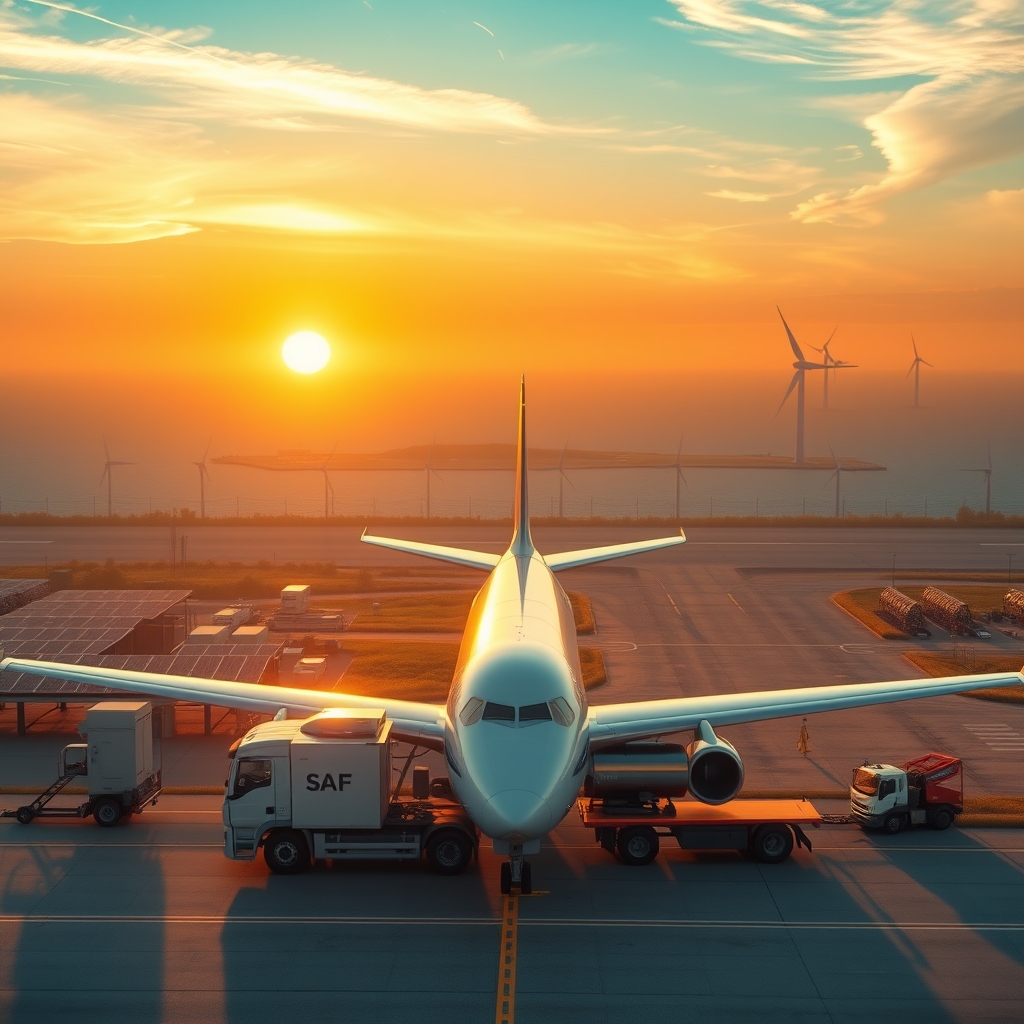
The hum of a modern airport is a symphony of ambition—engines roaring, passengers bustling, and the faint scent of jet fuel lingering in the air. Yet beneath this familiar rhythm, a quiet revolution is taking shape, one that promises to redefine not just how we fly, but how we power our world. At the heart of this transformation lies an unlikely pairing: decentralized energy markets and sustainable aviation fuel (SAF). Together, they are not merely reducing carbon footprints; they are rewriting the rules of energy consumption, distribution, and innovation.
The Rise of Decentralized Energy Markets
For decades, energy has flowed in one direction—from centralized power plants to consumers, a model as rigid as it is inefficient. But the tide is turning. Decentralized energy markets are emerging as the backbone of a more resilient, flexible, and sustainable grid. These markets empower individuals, businesses, and communities to produce, store, and trade energy locally, often leveraging renewable sources like solar photovoltaics, wind, and even small-scale geothermal systems. The result? A grid that is no longer a monolith but a dynamic network, capable of adapting to demand, weather, and technological shifts in real time.
Imagine a neighborhood where rooftop solar panels feed excess energy into a local microgrid, where electric vehicle batteries double as storage units during peak demand, and where businesses trade energy credits like stocks in a marketplace. This is not a distant dream but a rapidly unfolding reality. In Germany, the Energiewende movement has already demonstrated the potential of decentralized energy, with over 40% of the country’s electricity now generated from renewable sources, much of it locally produced. Similarly, in Australia, virtual power plants (VPPs) are aggregating thousands of home solar and battery systems to create a distributed energy resource that rivals traditional power stations in scale and reliability.
The Role of Technology in Decentralization
The engine driving this shift is a suite of technologies that are as innovative as they are interconnected. Smart grid management systems use artificial intelligence to predict demand, optimize energy flows, and prevent outages before they occur. Blockchain technology ensures transparent, secure transactions in peer-to-peer energy markets, while advanced battery storage—including solid-state and sodium-ion batteries—provides the stability needed to balance intermittent renewable sources. Even carbon capture technology is finding its place in this new ecosystem, turning emissions from industrial processes into valuable commodities that can be traded or repurposed.
But perhaps the most transformative aspect of decentralized energy markets is their ability to democratize power—literally. By giving communities control over their energy futures, these markets are fostering a sense of ownership and responsibility. They are also creating economic opportunities, from jobs in renewable energy installation to new revenue streams for farmers participating in agrivoltaics—where solar panels coexist with crops, maximizing land use and energy production.
The Skyward Shift: Sustainable Aviation Fuel
While decentralized energy markets are reshaping the ground beneath our feet, sustainable aviation fuel is taking to the skies. Aviation accounts for roughly 2.5% of global carbon emissions, a figure that is only expected to grow as air travel demand increases. Traditional jet fuel, derived from petroleum, is a significant contributor to this footprint. SAF, however, offers a lifeline—a way to decarbonize an industry that has long been considered one of the hardest to abate.
SAF is produced from renewable feedstocks such as used cooking oil, agricultural waste, and even algae. Unlike fossil fuels, SAF can reduce lifecycle carbon emissions by up to 80%, depending on the feedstock and production process. What’s more, it is a drop-in fuel, meaning it can be used in existing aircraft engines without modification. This compatibility with current infrastructure makes SAF a practical and scalable solution, one that airlines are increasingly adopting. In 2023, over 450,000 flights worldwide used SAF blends, a number that is projected to grow exponentially as production scales up and costs come down.
The Synergy with Decentralized Energy
The connection between SAF and decentralized energy markets may not be immediately obvious, but it is profound. Decentralized energy systems can provide the renewable electricity needed to produce SAF through processes like electrolysis, which splits water into hydrogen and oxygen. This green hydrogen can then be combined with captured carbon to create synthetic fuels, further reducing the carbon footprint of aviation. In regions with abundant renewable resources—such as offshore wind energy in the North Sea or solar photovoltaics in the Middle East—localized SAF production could become a reality, reducing the need for long-distance fuel transport and its associated emissions.
Moreover, decentralized energy markets can help manage the energy demands of SAF production. For example, excess wind or solar power generated during off-peak hours can be stored in long-duration storage systems, such as flow batteries or compressed air energy storage, and then used to power electrolysis when demand is high. This not only optimizes energy use but also makes SAF production more cost-effective and sustainable.
The Road Ahead: Challenges and Opportunities
Despite the promise of decentralized energy markets and SAF, challenges remain. For decentralized energy, regulatory hurdles, grid integration complexities, and the need for significant infrastructure investment can slow progress. In many regions, energy markets are still dominated by legacy utilities resistant to change, and policies often favor centralized models. Overcoming these barriers will require collaboration between governments, businesses, and communities, as well as innovative financing models to make decentralized energy accessible to all.
For SAF, the primary challenge is scale. Current production levels are a fraction of what is needed to meet global aviation demand. Scaling up will require massive investment in production facilities, as well as policies that incentivize SAF adoption, such as carbon pricing or mandates for blending SAF with traditional jet fuel. Research into new feedstocks and production methods—such as direct air capture of CO2 for synthetic fuels—will also be critical to driving down costs and improving efficiency.
Yet the opportunities far outweigh the challenges. Decentralized energy markets and SAF are not just tools for reducing emissions; they are catalysts for a broader economic and social transformation. They promise to create jobs, spur innovation, and empower communities to take control of their energy futures. They also offer a path to energy independence, reducing reliance on fossil fuel imports and the geopolitical vulnerabilities that come with them. As these technologies mature, they will not only reshape the energy landscape but also redefine what is possible in the fight against climate change.
The skies of tomorrow are not just a canvas for aircraft but a frontier for innovation. As decentralized energy markets and sustainable aviation fuel take flight, they carry with them the potential to turn the dream of a carbon-neutral future into a tangible reality. The journey will be complex, demanding collaboration, investment, and a willingness to embrace change. But the destination—a world where energy is clean, abundant, and accessible to all—is worth every effort. The silent giants of decentralization and sustainability are not just whispering change; they are roaring it into existence, one watt and one flight at a time.


