
The Unseen Architecture: How Recyclable Product Design is Reshaping Sustainable Tech Manufacturing
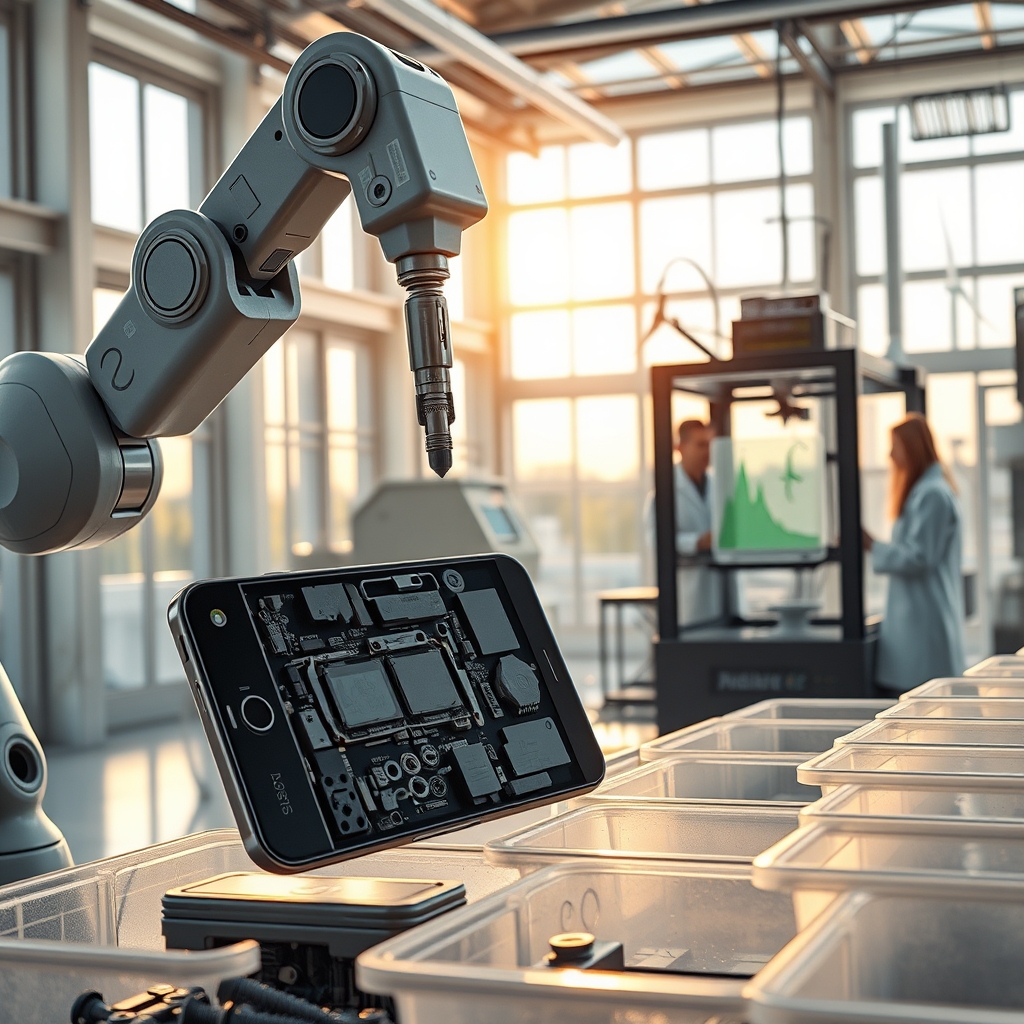
The hum of a server farm, the glow of a smartphone screen, the quiet whir of a laptop cooling fan—these are the sounds and sights of our digital age. Yet, beneath the sleek surfaces and polished interfaces lies a hidden truth: the technology we rely on is often built on a foundation of waste. From rare earth minerals extracted under questionable conditions to plastic casings destined for landfills, the lifecycle of our devices has long been linear—take, make, dispose. But what if the future of tech manufacturing didn’t end with disposal? What if every component, every circuit, every screw was designed not just to function, but to return?
The Philosophy of Circularity in Tech
Recyclable product architecture isn’t merely about making devices easier to dismantle at the end of their lives. It’s a fundamental shift in how we conceive of technology from the very first sketch. Imagine a smartphone where the battery isn’t glued in place but secured with modular clips, where the screen isn’t fused to the frame but attached with biodegradable adhesives, and where every material—from the aluminum chassis to the glass display—is selected not just for performance, but for its ability to be reincarnated into something new. This is the essence of circular design: products built to be un-built.
Companies like Fairphone have already begun to challenge the status quo, creating devices where 40% of the plastic used is recycled, and where users can replace individual components like cameras and batteries without specialized tools. But the movement extends beyond smartphones. In the world of enterprise tech, Dell has pioneered closed-loop recycling for its computers, using plastics recovered from old devices to manufacture new ones. The result? A reduction in carbon emissions and a step toward a future where tech manufacturing doesn’t just minimize harm but actively regenerates resources.
The Materials Revolution
At the heart of recyclable product architecture lies a question: What if the materials we use today could become the raw ingredients of tomorrow? Traditional tech manufacturing relies heavily on virgin resources—metals mined from the earth, plastics derived from fossil fuels—but a new wave of innovation is turning that model on its head. Bio-based polymers, derived from algae or plant waste, are emerging as alternatives to petroleum-based plastics. These materials don’t just reduce reliance on finite resources; they can also be composted or recycled with far less energy than their conventional counterparts.
Then there are the metals. Cobalt, lithium, and rare earth elements are the lifeblood of modern electronics, but their extraction often comes at a human and environmental cost. Researchers are now exploring ways to recover these materials from discarded devices using advanced hydrometallurgical processes, which use water-based solutions to extract metals with minimal waste. Meanwhile, companies like Apple are investing in robotics to disassemble iPhones and recover gold, copper, and other precious materials with precision. The goal isn’t just to recycle but to create a closed loop where every gram of metal is accounted for, reused, and never lost to landfill.
Designing for Disassembly
The most recyclable product in the world is useless if it can’t be taken apart. That’s why forward-thinking engineers are embracing design for disassembly (DfD), a principle that prioritizes ease of dismantling from the outset. Think of it as the opposite of the infamous “glued-together” laptops that frustrate repair technicians. Instead, DfD products use snap-fit joints, standardized screws, and modular components that can be separated with minimal effort. This approach not only makes recycling more efficient but also extends the lifespan of devices by making repairs and upgrades accessible to everyone, not just specialists.
A prime example is the Framework Laptop, a device designed to be user-serviceable in every sense. Its components—RAM, storage, even the mainboard—can be swapped out and upgraded, reducing the need for entirely new devices. The laptop’s chassis is made from 50% post-consumer recycled aluminum, and its packaging is 100% recyclable. It’s a testament to how recyclable architecture doesn’t have to come at the expense of performance or aesthetics.
The Role of Renewable Energy in Closing the Loop
Recyclable product architecture doesn’t exist in a vacuum. For it to truly thrive, the energy powering the manufacturing process must also be sustainable. Renewable energy integration is the silent partner in this equation, ensuring that the act of recycling—or even producing—tech components doesn’t contribute to the very problems it seeks to solve. Solar-powered factories, wind-powered data centers, and hydroelectric-driven assembly lines are no longer futuristic concepts but tangible realities shaping the industry.
Take the example of TSMC, the world’s largest semiconductor manufacturer. The company has committed to using 100% renewable energy by 2040, with interim goals to power its operations with 25% green energy by 2030. This shift isn’t just about reducing carbon footprints; it’s about aligning the entire supply chain with the principles of circularity. When the energy used to recycle a smartphone comes from the sun or wind, the loop isn’t just closed—it’s powered by the very forces that sustain life on Earth.
The Ripple Effect of Conscious Innovation
The impact of recyclable product architecture extends far beyond the tech industry. When a company designs a device to be disassembled, it sends a signal to consumers that sustainability isn’t an afterthought but a core value. This, in turn, fosters a culture of responsibility where users are more likely to recycle, repair, or resell their devices rather than discard them. It’s a ripple effect that starts with a single design choice and spreads across supply chains, communities, and economies.
Consider the rise of e-waste recycling programs in cities around the world. Initiatives like Apple’s Trade In or Samsung’s Galaxy Upcycling encourage users to return old devices, which are then either refurbished or broken down into raw materials. These programs don’t just reduce waste; they create jobs, support local economies, and reduce the demand for new mining operations. The more recyclable a product is, the more valuable it becomes—not just to the manufacturer, but to the planet.
Yet, for all its promise, recyclable product architecture is still in its infancy. The tech industry is only beginning to scratch the surface of what’s possible when design, materials science, and renewable energy converge. The challenges are significant—from the technical hurdles of recycling complex components to the economic pressures of competing with cheaper, less sustainable alternatives. But the momentum is undeniable. Every modular phone, every bio-based circuit board, every solar-powered factory is a step toward a future where technology doesn’t just serve humanity but sustains it.
As we stand on the brink of this new era, it’s worth asking: What if the devices of tomorrow weren’t just smarter, but wiser? What if they were designed not just to connect us to the world, but to preserve it? The architecture of recyclability isn’t just about building better tech—it’s about reimagining what tech can be. And in that reimagining, we might just find the blueprint for a future where innovation and sustainability aren’t just aligned, but inseparable.