Microgrid Autonomy: Building Resilient, Self-Sufficient Energy Systems
In an era where energy reliability and sustainability are paramount, microgrids emerge as a transformative solution, offering autonomy and resilience in power distribution. These localized energy systems, capable of operating independently or in conjunction with the main grid, are redefining how communities, industries, and institutions secure their energy future. By integrating renewable sources, advanced control systems, and innovative economic models, microgrids are not just a technological advancement—they are a necessity for a world grappling with climate change, energy insecurity, and the growing demand for decentralized power.
The Anatomy of a Microgrid: Design and Components
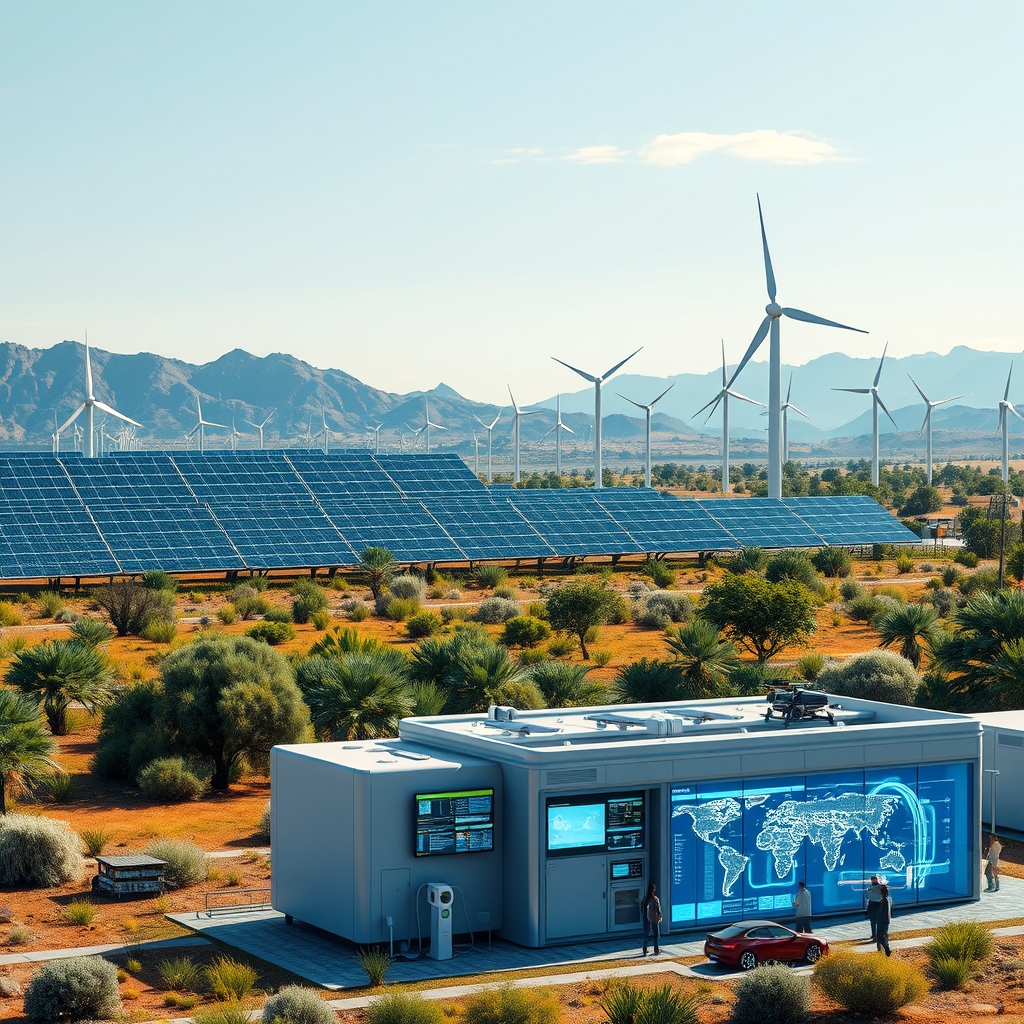
At its core, a microgrid is a small-scale power grid that can operate autonomously or connect to a larger grid. Its design hinges on three primary components: generation, distribution, and control. Generation sources are diverse, ranging from solar panels and wind turbines to diesel generators and battery storage systems. The choice of energy sources depends on factors like location, resource availability, and energy demand patterns. For instance, a microgrid in a sun-rich desert might prioritize solar energy, while one in a coastal area could leverage wind power.
Distribution within a microgrid is managed through a network of switches, transformers, and smart meters that ensure efficient energy flow. These components work in tandem to balance supply and demand, minimize losses, and maintain voltage stability. The control system, often the brain of the microgrid, employs advanced algorithms to optimize operations, switch between grid-connected and islanded modes, and ensure seamless transitions during outages or fluctuations.
Control Strategies: The Backbone of Microgrid Autonomy
The control architecture of a microgrid is what sets it apart from traditional energy systems. It can be centralized, decentralized, or a hybrid of both, each offering unique advantages. Centralized control systems rely on a single entity to manage the entire microgrid, making decisions based on real-time data from sensors and meters. This approach is efficient for smaller microgrids with predictable load patterns but can become a bottleneck in larger, more complex systems.
Decentralized control, on the other hand, distributes decision-making across multiple nodes, allowing for greater flexibility and resilience. Each component, such as a solar inverter or battery storage unit, operates semi-autonomously, communicating with other nodes to maintain stability. This model is particularly effective in microgrids with high penetration of renewable energy, where variability and unpredictability are common. Hybrid control systems combine the best of both worlds, using centralized oversight for macro-level decisions and decentralized control for local optimization.
The Role of AI in Microgrid Optimization
Artificial intelligence is revolutionizing microgrid control by enabling predictive analytics, real-time optimization, and adaptive learning. AI-driven systems can forecast energy generation and demand with remarkable accuracy, adjusting operations to maximize efficiency and minimize costs. For example, machine learning algorithms can analyze historical weather data to predict solar output, allowing the microgrid to preemptively store or redistribute energy. Similarly, AI can optimize battery charging and discharging cycles, extending the lifespan of storage systems and reducing operational costs.
Moreover, AI enhances the resilience of microgrids by enabling self-healing capabilities. In the event of a fault or outage, AI systems can quickly identify the issue, isolate the affected area, and reroute power to minimize disruptions. This level of autonomy is particularly valuable in remote or disaster-prone areas, where human intervention may be delayed or impossible.
Economic Models: Making Microgrids Financially Viable
The economic viability of microgrids is a critical factor in their adoption. Traditional energy systems rely on economies of scale, but microgrids thrive on modularity and flexibility. Several economic models have emerged to support microgrid development, including public-private partnerships, energy-as-a-service (EaaS), and community-owned microgrids.
Public-private partnerships are particularly effective in funding large-scale microgrid projects, where governments and private entities collaborate to share costs and risks. For example, a municipality might partner with a renewable energy company to build a microgrid that serves public facilities, reducing energy costs and carbon emissions. Energy-as-a-service models, on the other hand, allow businesses and institutions to outsource their energy management to third-party providers, who install, operate, and maintain the microgrid in exchange for a subscription fee. This model lowers the barrier to entry for organizations that lack the capital or expertise to develop their own microgrids.
Community-owned microgrids empower local residents to take control of their energy future. These models often involve cooperative structures, where members invest in the microgrid and share the benefits, such as lower energy costs and increased resilience. Community microgrids are particularly popular in remote or underserved areas, where access to reliable power is limited.
Applications of Microgrids: From Remote Areas to Disaster Recovery
Microgrids are versatile, serving a wide range of applications across different sectors. One of their most impactful uses is in remote areas, where extending the main grid is often cost-prohibitive or logistically challenging. In these regions, microgrids provide a lifeline, powering homes, schools, and healthcare facilities with clean, reliable energy. For example, in Alaska, microgrids have enabled remote villages to transition from diesel generators to renewable energy, reducing costs and environmental impact.
In disaster recovery, microgrids play a crucial role in restoring power quickly and efficiently. Natural disasters like hurricanes, wildfires, and earthquakes can cripple the main grid, leaving communities without power for days or even weeks. Microgrids, with their ability to island from the main grid, can provide critical backup power to hospitals, emergency shelters, and communication networks. The Borrego Springs microgrid in California, for instance, kept the lights on for thousands of residents during a major wildfire, demonstrating the power of localized energy systems in times of crisis.
Military Installations: Security and Resilience
Military bases are another key application for microgrids, where energy security and resilience are non-negotiable. These installations require uninterrupted power to support critical operations, from communication systems to medical facilities. Microgrids provide a solution by integrating renewable energy, battery storage, and backup generators, ensuring that military bases can operate independently of the main grid. The U.S. Department of Defense has been a pioneer in microgrid adoption, with projects like the Marine Corps Air Station Miramar in California, which features a microgrid powered by solar, wind, and energy storage.
Case Studies: Success Stories in Microgrid Implementation
Several microgrid projects around the world serve as testament to their potential. In Brooklyn, New York, the Brooklyn Microgrid project has created a peer-to-peer energy trading platform, allowing residents to buy and sell solar energy within their community. This model not only reduces energy costs but also fosters a sense of local energy independence. Similarly, the Isle of Eigg in Scotland has achieved near-total energy self-sufficiency through a community-owned microgrid that combines wind, solar, and hydro power.
In Africa, microgrids are transforming rural electrification. The PowerGen Renewable Energy company has deployed microgrids in countries like Kenya and Tanzania, bringing electricity to off-grid communities for the first time. These projects have not only improved quality of life but also spurred economic growth by enabling small businesses to operate after dark.
As the world continues to grapple with the challenges of climate change and energy insecurity, microgrids offer a beacon of hope. They represent a shift from centralized, fossil-fuel-dependent energy systems to decentralized, renewable-powered networks that prioritize resilience, sustainability, and community empowerment. The journey toward microgrid autonomy is not without its challenges—technological, economic, and regulatory hurdles remain—but the successes achieved so far underscore their transformative potential. In a future where energy is not just a commodity but a fundamental right, microgrids stand as a testament to human ingenuity and the power of localized solutions.