
The Living Circuit: How Bio-Inspired Design is Breathing Life into Sustainable Tech Manufacturing
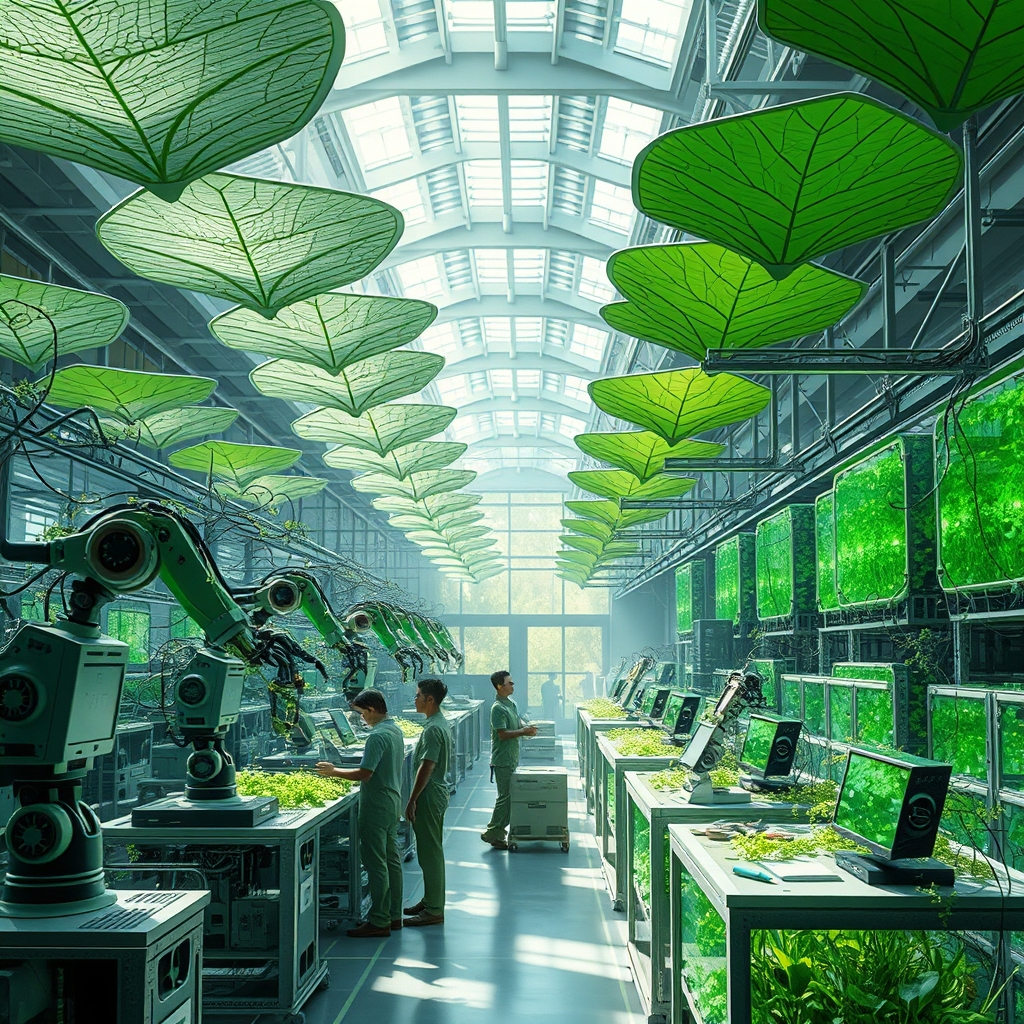
The hum of a modern electronics factory is often a symphony of precision—robots whirring, conveyors gliding, and machines stamping out components with relentless efficiency. Yet, beneath this mechanical ballet lies an uncomfortable truth: the tech industry, despite its futuristic veneer, remains one of the most resource-intensive sectors on the planet. The extraction of rare earth metals, the energy-guzzling fabrication processes, and the mountains of e-waste generated each year paint a stark picture of linear consumption. But what if the next revolution in sustainable tech manufacturing didn’t come from a lab or a factory floor, but from the natural world itself?
The Wisdom of Nature’s Blueprint
For centuries, engineers and designers have looked to nature for inspiration—from the aerodynamic shape of a kingfisher’s beak influencing bullet train designs to the self-cleaning properties of lotus leaves inspiring water-repellent surfaces. Yet, when it comes to sustainable manufacturing, the lessons of biomimicry run deeper than mere form. Nature operates on a principle of circularity, where waste from one process becomes the raw material for another. A fallen leaf decomposes into nutrients that feed the soil, which in turn nourishes new growth. This closed-loop system, honed over millions of years, is the antithesis of the tech industry’s take-make-waste model.
Bio-inspired design in sustainable tech manufacturing isn’t just about mimicking natural shapes; it’s about adopting nature’s strategies for resilience, efficiency, and regeneration. Take, for example, the concept of mycelium-based materials. Mycelium, the root structure of fungi, can be grown into lightweight, durable, and compostable packaging or even circuit boards. Unlike traditional plastics or fiberglass, mycelium requires minimal energy to produce, absorbs CO2 as it grows, and can be returned to the earth at the end of its life. Companies like Ecovative Design are already harnessing this technology to create alternatives to Styrofoam and other petroleum-based materials, proving that nature’s solutions can outperform synthetic ones in both function and sustainability.
From Linear to Cyclical: The Rise of Biomimetic Manufacturing
The shift from linear to circular manufacturing is perhaps the most profound transformation bio-inspired design can offer. Traditional electronics production follows a one-way path: raw materials are extracted, processed into components, assembled into products, and eventually discarded. In contrast, biomimetic manufacturing seeks to emulate ecosystems where every output is an input for another process. This approach is exemplified by closed-loop systems that prioritize modularity, reparability, and recyclability.
One striking example is the work being done by Fairphone, a company that designs smartphones with longevity and recyclability in mind. Their devices are built to be easily disassembled, with components that can be upgraded or replaced rather than discarded. This not only extends the lifespan of the product but also ensures that valuable materials like gold, copper, and rare earth metals can be recovered and reused. By treating electronics as temporary assemblages of materials rather than disposable objects, Fairphone’s approach mirrors the way natural systems continuously repurpose resources without generating waste.
The Alchemy of Renewable Energy Integration
Nature doesn’t just inspire the design of products; it also offers blueprints for the energy systems that power them. The sun, wind, and water have long been harnessed as renewable energy sources, but bio-inspired design takes this a step further by optimizing how these resources are integrated into manufacturing processes. For instance, photosynthesis-inspired solar cells are being developed to mimic the way plants convert sunlight into energy with remarkable efficiency. These cells, often referred to as artificial leaves, use materials like perovskite to achieve higher energy conversion rates than traditional silicon-based panels, all while being lighter and more flexible.
Beyond solar, bio-inspired energy systems are also transforming how factories operate. Algae bioreactors, for example, are being used to capture CO2 emissions from manufacturing plants and convert them into biofuels or biodegradable plastics. This not only reduces the carbon footprint of production but also creates a valuable byproduct that can be sold or reused. Companies like Algenol are pioneering this technology, demonstrating how industrial processes can be aligned with natural cycles to create a net-positive impact on the environment.
The Ethics of Material Sourcing: Learning from Ecosystems
Ethical material sourcing is another area where bio-inspired design is making waves. Traditional mining practices for metals like cobalt, lithium, and gold are often associated with environmental degradation, human rights abuses, and geopolitical conflicts. In contrast, nature sources its materials locally, sustainably, and without exploitation. Bio-mining, a process that uses microorganisms to extract metals from ores, is emerging as a greener alternative to conventional mining. This method reduces the need for toxic chemicals and high-energy processes, instead relying on bacteria to leach metals from low-grade ores or even electronic waste.
Researchers at the University of Birmingham, for example, have developed a bio-mining technique that uses Acidithiobacillus ferrooxidans, a bacterium that naturally oxidizes iron and sulfur, to recover copper, gold, and other metals from discarded electronics. This not only reduces the environmental impact of mining but also addresses the growing problem of e-waste. By turning waste into a resource, bio-mining embodies the circular economy principles that nature has perfected over millennia.
The Future of Tech: A Living, Breathing Ecosystem
As the tech industry grapples with its environmental footprint, bio-inspired design offers a path forward that is both innovative and intuitive. By learning from nature’s time-tested strategies, manufacturers can create products that are not only sustainable but also regenerative—giving back to the planet as much as they take. This shift requires more than just technological advancements; it demands a fundamental rethinking of how we design, produce, and consume technology. The factories of the future may not just be powered by renewable energy but designed to function like living ecosystems, where waste is nonexistent, energy is abundant, and every process contributes to the health of the planet.
The journey toward sustainable tech manufacturing is not without its challenges. Scaling bio-inspired solutions, overcoming industry inertia, and navigating economic pressures are formidable hurdles. Yet, the potential rewards—cleaner air, healthier ecosystems, and a more equitable world—are worth the effort. As we stand on the brink of this new era, one thing is clear: the future of tech isn’t just about smarter machines; it’s about learning to live in harmony with the natural world that sustains us all. The circuits of tomorrow may not just be made of silicon and metal, but of life itself, pulsing with the same intelligence and resilience that has guided nature for billions of years.