The Solar-Bio Interface: How Synthetic Biology is Engineering the Next Generation of Photovoltaic Systems
The golden age of renewable energy is not merely upon us—it is evolving at the intersection of two revolutionary fields: synthetic biology and solar technology. As the demand for cleaner, more efficient energy solutions intensifies, scientists are turning to the very building blocks of life to reimagine how we capture, store, and utilize the sun’s boundless energy. The fusion of biological systems with photovoltaic innovation is not just a scientific curiosity; it is a paradigm shift that promises to redefine the boundaries of what is possible in clean energy.
The Biological Blueprint of Solar Efficiency
Nature has spent billions of years perfecting the art of energy conversion. Photosynthesis, the process by which plants, algae, and some bacteria convert sunlight into chemical energy, is one of the most efficient energy systems known to science. Yet, despite its elegance, natural photosynthesis operates at an efficiency rate of only about 1-2%. This limitation has long intrigued researchers, who see untapped potential in harnessing and enhancing biological processes to create more efficient solar technologies.
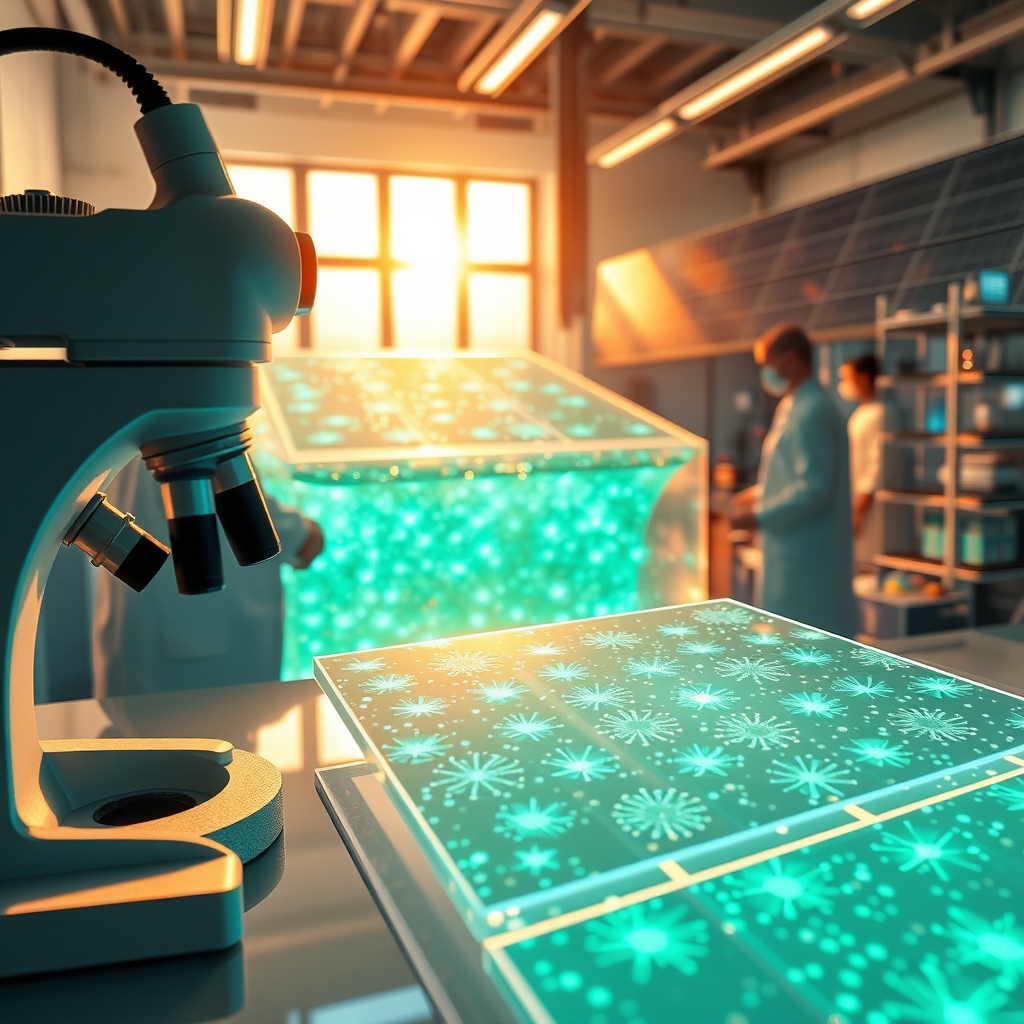
Enter synthetic biology—a field that applies engineering principles to biological systems, enabling the design and construction of new biological parts, devices, and systems. By reprogramming microorganisms, scientists are now developing biohybrid solar cells that integrate biological components with traditional photovoltaic materials. These systems leverage the natural efficiency of biological processes while overcoming their inherent limitations, such as the narrow spectrum of light absorption and the instability of organic molecules under prolonged sunlight exposure.
Engineering Light-Harvesting Proteins
One of the most promising avenues in this space is the use of light-harvesting proteins, such as bacteriorhodopsin and chlorophyll-binding proteins, to enhance the performance of solar cells. These proteins, derived from photosynthetic organisms, can absorb light across a broader spectrum than traditional silicon-based photovoltaics. When integrated into solar cell designs, they can significantly boost energy capture, particularly in low-light conditions where conventional panels struggle.
Researchers at institutions like MIT and the University of Cambridge have already demonstrated the potential of these biohybrid systems. By embedding light-harvesting proteins into thin-film solar cells, they have achieved efficiency gains of up to 30% compared to traditional designs. The implications are profound: solar panels that not only generate more power but also do so more consistently, regardless of weather or time of day.
The Rise of Living Solar Panels
Beyond enhancing existing solar technologies, synthetic biology is paving the way for entirely new classes of photovoltaic systems—ones that are alive. Imagine solar panels that grow, self-repair, and adapt to their environment, much like a living organism. This is not science fiction; it is the frontier of bio-integrated solar technology.
Self-Assembling Solar Cells
One of the most groundbreaking developments in this area is the creation of self-assembling solar cells using genetically engineered bacteria. Scientists have successfully programmed bacteria to produce conductive nanowires, which can then be used to construct the core components of a solar cell. These nanowires, made from proteins and other biological materials, offer several advantages over traditional silicon-based systems. They are lightweight, flexible, and can be produced at a fraction of the cost, using sustainable, low-energy processes.
Moreover, these bio-fabricated solar cells have the potential to self-repair. When damaged, the bacteria can regenerate the nanowires, extending the lifespan of the solar panel and reducing maintenance costs. This capability addresses one of the most significant challenges in solar energy: the degradation of panels over time due to environmental exposure.
Photosynthetic Solar Farms
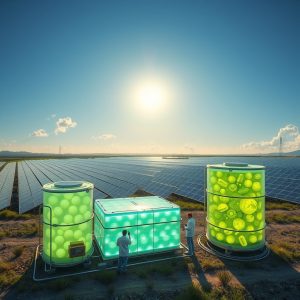
Another exciting prospect is the development of photosynthetic solar farms, where genetically modified algae or cyanobacteria are used to generate electricity directly. These microorganisms can be cultivated in large-scale bioreactors, where they absorb sunlight and convert it into electrical energy through a process known as bio-photovoltaics. Unlike traditional solar farms, which require vast tracts of land, these bioreactors can be deployed in urban environments, on rooftops, or even integrated into building facades, making them a versatile solution for decentralized energy production.
Overcoming the Challenges of Biohybrid Systems
While the potential of biohybrid solar technologies is immense, the path to commercialization is not without its hurdles. One of the primary challenges is the stability and longevity of biological components. Proteins and microorganisms are sensitive to environmental conditions, such as temperature fluctuations, humidity, and UV radiation, which can degrade their performance over time. Researchers are addressing this issue by developing protective coatings and encapsulation techniques that shield biological materials from external stressors while allowing them to function optimally.
Scaling Up Production
Another critical challenge is scaling up production. While lab-scale demonstrations of biohybrid solar cells have shown promise, translating these successes into large-scale manufacturing is a complex endeavor. It requires not only advances in synthetic biology but also innovations in materials science, engineering, and manufacturing processes. Collaborations between academia, industry, and government agencies are essential to overcoming these barriers and bringing biohybrid solar technologies to market.
Ethical and Environmental Considerations
The integration of biological systems into energy infrastructure also raises important ethical and environmental questions. For instance, the release of genetically modified organisms into the environment could have unforeseen ecological consequences. To mitigate these risks, researchers are exploring contained systems, such as closed-loop bioreactors, where the organisms are isolated from the natural environment. Additionally, regulatory frameworks must evolve to ensure the safe and responsible development of these technologies.
The Future of Solar Energy: A Symbiotic Vision
The convergence of synthetic biology and solar technology is more than just a scientific breakthrough; it is a testament to humanity’s ability to draw inspiration from nature to solve some of its most pressing challenges. As we stand on the cusp of this new era, the possibilities are as vast as they are exhilarating. From self-repairing solar panels to photosynthetic cities, the future of solar energy is not just about harnessing the sun’s power—it is about reimagining what energy systems can be.
The journey toward a sustainable energy future is not a solitary one. It requires the collective efforts of scientists, engineers, policymakers, and communities to turn these innovations into realities. As synthetic biology continues to unlock new frontiers in solar technology, we are not merely witnessing the evolution of energy—we are participating in the creation of a world where technology and nature coexist in harmony, powering a brighter, cleaner future for generations to come.