
The Symphony of Sun and Soil: How Agrivoltaics and Energy Efficiency AI Are Cultivating a Sustainable Future
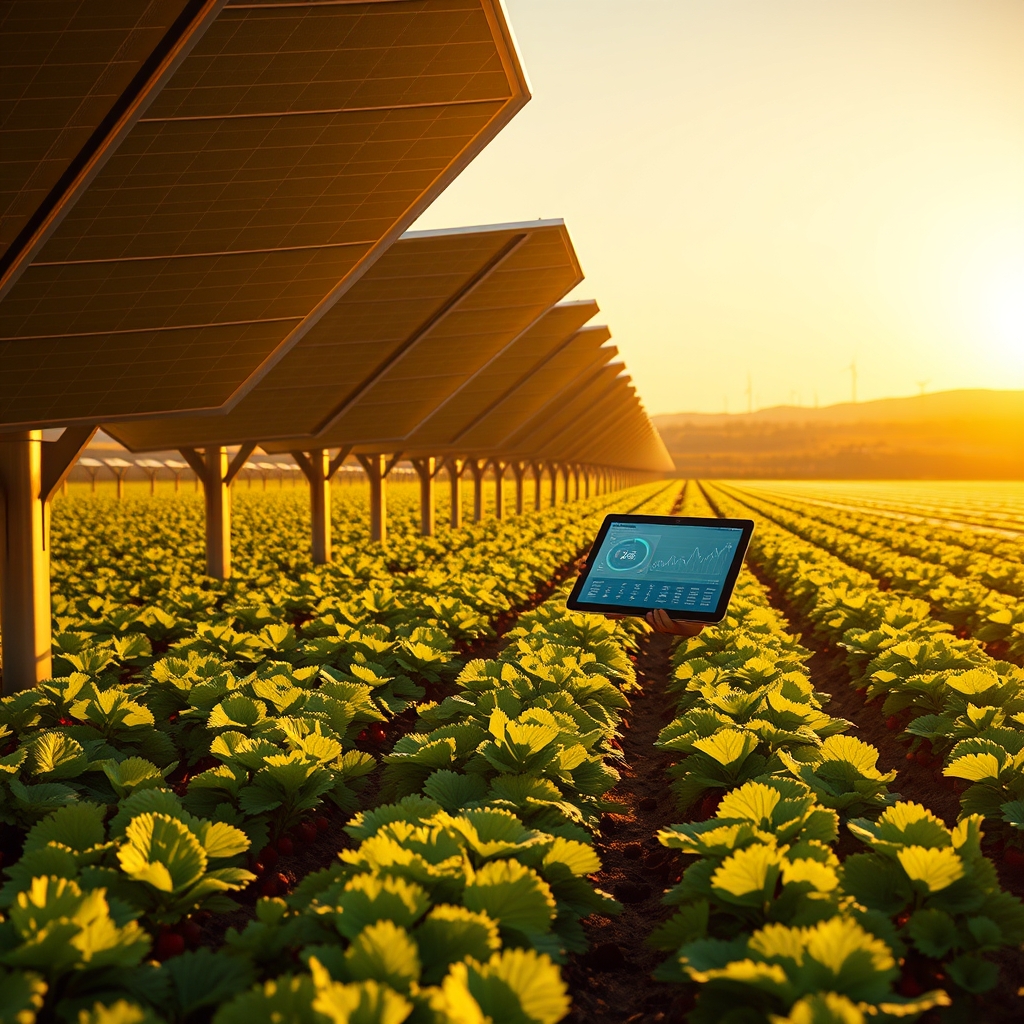
The golden fields stretch under the vast, unblinking eye of the sun, a timeless dance of light and life that has sustained civilizations for millennia. Yet, in this age of climate urgency, the same sun that ripens crops and warms the earth is being harnessed in ways that transcend traditional agriculture. Above the rows of wheat, soybeans, or vineyards, sleek solar panels rise like sentinels, their dark surfaces drinking in the sunlight not just to power homes and cities, but to nourish the very soil beneath them. This is the promise of agrivoltaics—a harmonious fusion of solar photovoltaics and agriculture that is redefining what it means to cultivate the land.
The Dual Harvest: More Than Just Energy
Agrivoltaics, or dual-use solar farming, is a practice where solar panels are installed above agricultural land, allowing crops to grow underneath. The concept is elegantly simple: by elevating the panels, farmers can generate clean energy while continuing to produce food, fiber, or even livestock forage. But the benefits extend far beyond mere coexistence. Studies have shown that certain crops thrive in the partial shade provided by solar arrays, particularly in arid regions where water scarcity is a growing concern. The panels reduce evaporation, lowering irrigation needs by as much as 20%, while the cooler microclimate beneath them can boost yields for shade-tolerant plants like lettuce, spinach, and berries.
In Japan, where arable land is scarce, agrivoltaic systems have become a lifeline for farmers. Strawberry growers, for instance, have reported higher-quality fruit under the dappled sunlight of solar canopies, as the reduced heat stress leads to sweeter, more vibrant berries. Similarly, in the sunbaked fields of Arizona, researchers have found that agrivoltaics can increase the efficiency of solar panels by up to 10%, as the cooler air beneath the panels prevents them from overheating—a common issue in desert environments. The land, once a battleground between food and energy production, is now a stage for collaboration.
The AI Conductor: Orchestrating Energy Efficiency
Yet, the true magic of agrivoltaics lies not just in its physical design, but in the invisible hand of artificial intelligence that now guides its evolution. Energy Efficiency AI is transforming how we manage and optimize these dual-use systems, turning static solar farms into dynamic, responsive ecosystems. Machine learning algorithms analyze vast datasets—weather patterns, soil moisture, crop health, and energy demand—to make real-time adjustments that maximize both agricultural output and energy generation.
Imagine a vineyard in California, where AI-driven sensors monitor the vines for signs of stress, adjusting the angle of the solar panels above to provide just the right amount of shade. As the sun climbs higher in the sky, the panels tilt to capture more energy, but as the afternoon heat intensifies, they shift to shield the grapes from scorching rays. Meanwhile, the AI predicts energy demand spikes in nearby cities, storing excess solar power in advanced battery systems or even converting it into green hydrogen for later use. This is not science fiction; it is the reality of modern agrivoltaic farms, where every photon of sunlight is accounted for, and every drop of water is cherished.
The Ripple Effect: From Fields to Grids
The integration of agrivoltaics with AI doesn’t stop at the farm gate. These systems are becoming integral components of smarter, more resilient energy grids. By generating power at the point of consumption, agrivoltaic farms reduce the strain on transmission infrastructure, lowering the risk of blackouts and energy losses. When paired with distributed energy resources like home solar panels and battery storage, they form the backbone of virtual power plants—decentralized networks that can balance supply and demand with unprecedented precision.
In Germany, a pilot project has demonstrated how agrivoltaic farms can act as anchor points for microgrids, providing stable power to rural communities while also feeding excess energy into the national grid. During periods of low sunlight, the AI seamlessly switches to stored energy or even draws from nearby wind turbines, ensuring a steady flow of electricity. This level of integration is a game-changer for regions prone to extreme weather, where traditional energy infrastructure is vulnerable to disruption. The farm, once a passive consumer of energy, is now an active participant in the grid’s stability.
Cultivating a New Ethos
Agrivoltaics and Energy Efficiency AI are more than just technological innovations; they represent a shift in how we perceive the relationship between humanity and the natural world. For centuries, industrialization has pitted progress against nature, extracting resources with little regard for the consequences. But these systems offer a different path—one where technology and ecology coexist, where every advancement is measured not just in kilowatt-hours or bushels per acre, but in the health of the soil, the purity of the air, and the resilience of communities.
As the sun sets over an agrivoltaic farm, the panels hum softly, their work done for the day. Below them, the crops sway gently in the evening breeze, their leaves glistening with dew. The AI, ever vigilant, prepares for the night ahead, optimizing energy storage and predicting tomorrow’s weather. In this quiet moment, it’s clear that the future of energy isn’t just about harnessing the power of the sun or the wind—it’s about weaving them into the fabric of life itself, creating a world where every harvest is a testament to harmony, and every watt of energy is a step toward a more sustainable tomorrow.


